Clinical Report: Supportive Care Needs as Prognostic Factor in Liver Cancer
Overview
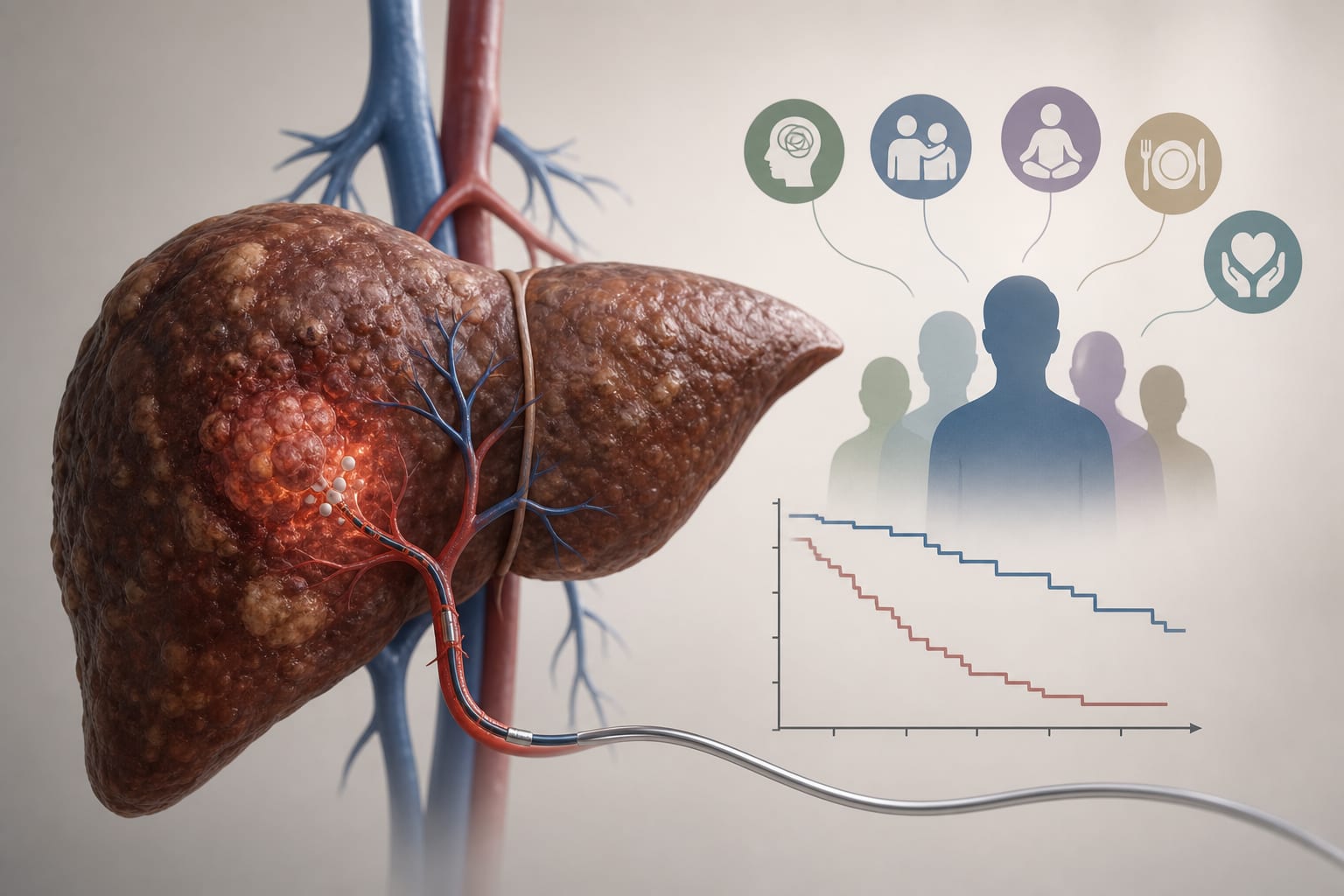
This study identifies supportive care needs (SCN) as a significant prognostic factor for survival in patients with advanced liver cancer. Higher SCN scores were associated with increased mortality risk.
Background
Advanced liver cancer is a leading cause of cancer-related mortality, with patients often facing complex treatment challenges and high levels of unmet supportive care needs. Understanding the relationship between SCN and survival outcomes is crucial.
Data Highlights
Variable
Hazard Ratio (HR)
95% Confidence Interval (CI)
Baseline SCNS Total Score
1.95
1.44–2.65
Time-Dependent SCNS Score
3.17
2.04–4.92
Lagged SCNS Score
2.37
1.64–3.42
Key Findings
167 patients were enrolled, receiving TACE combined with targeted therapy and immunotherapy.
Higher SCN scores were significantly associated with increased mortality risk.
Each 1-SD increase in baseline SCNS total score correlated with higher mortality risk (HR = 1.95).
Progressive disease was linked to higher SCNS total scores, while partial response correlated with lower scores.
Longitudinal SCN was influenced by psychosocial and clinical factors such as treatment response and caregiver burden.
Clinical Implications
The findings indicate that regular assessment of supportive care needs should be considered in clinical follow-up for patients with advanced liver cancer.
Conclusion
Supportive care needs are a significant prognostic indicator in advanced liver cancer.