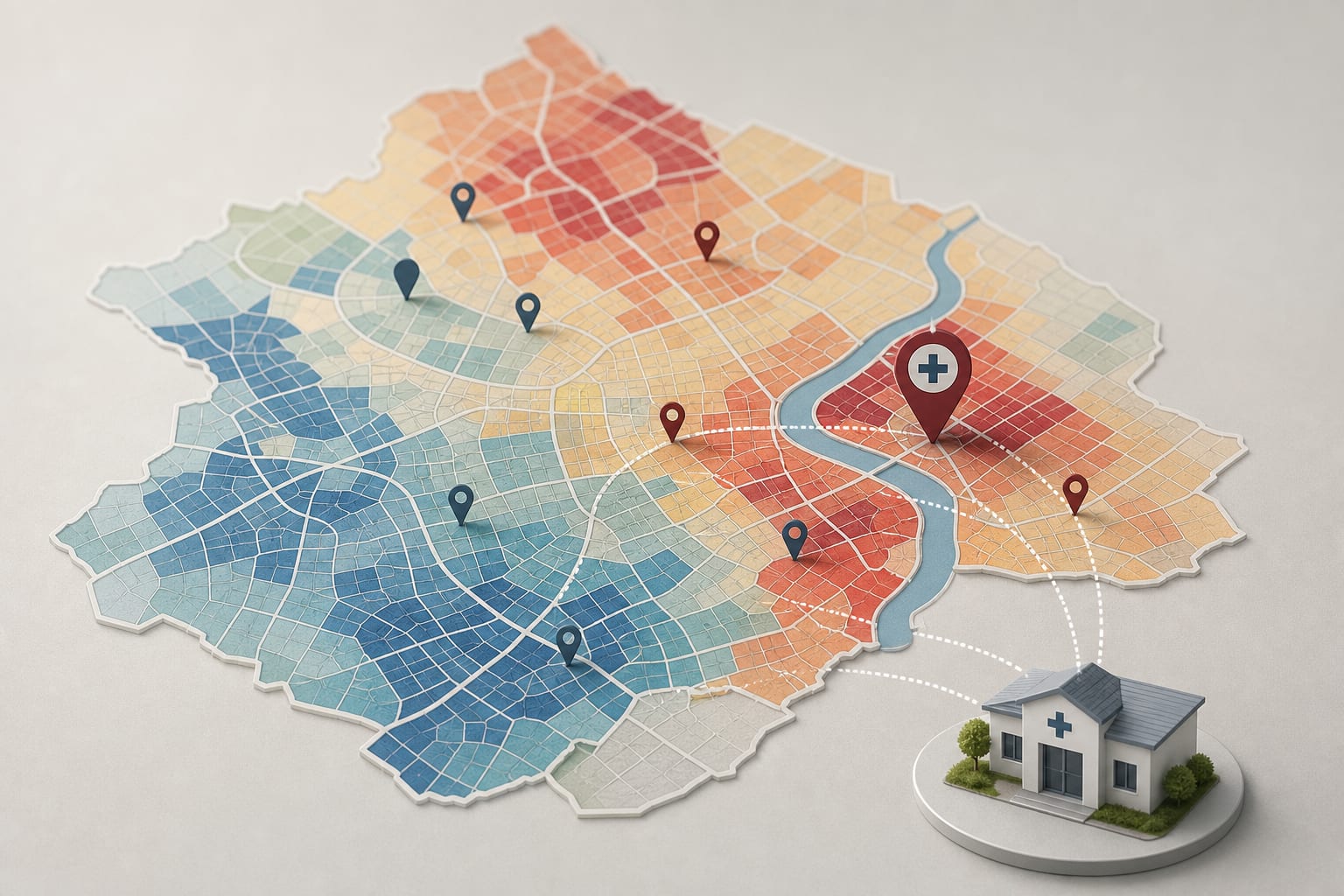
Clinical Report: Assessing the Reliability of Social Risk Indices
Overview
This study evaluates the correlation of three social risk indices across different geographic levels and their association with chronic disease outcomes. The findings aim to guide researchers in incorporating social risk into analyses, acknowledging the limitations posed by the lack of small-area location data in many datasets.
Background
Social risks in an individual’s environment can negatively affect health through mechanisms such as poor air quality, inadequate health care access, and deficient transportation infrastructure. Understanding these risks is crucial for addressing health disparities and improving healthcare access. However, the lack of small-area location data in many datasets complicates the assessment of these risks.
Data Highlights
Numerical data and trial data are not presented in the article, but various data points are discussed throughout the findings.
Key Findings
Three social risk indices were evaluated: Reproducible Area Deprivation Index (ReADI), Social Deprivation Index (SDI), and Social Vulnerability Index (SVI).
Indices were calculated using data from the American Community Survey for the years 2016 to 2020.
Correlations between social risk indices varied significantly based on geographic levels and addresses.
Health outcomes assessed included chronic kidney disease, type 2 diabetes, and hypertension.
Missing race and ethnicity data were imputed using a bayesian improved first name surname geocoding algorithm, as detailed in the study.
Clinical Implications
Researchers should be cautious when using social risk indices calculated at higher geographic levels due to potential discrepancies with individual-level data.
Conclusion
The study highlights the complexities of using area-based social risk indices in health research, particularly in the absence of small-area location data.