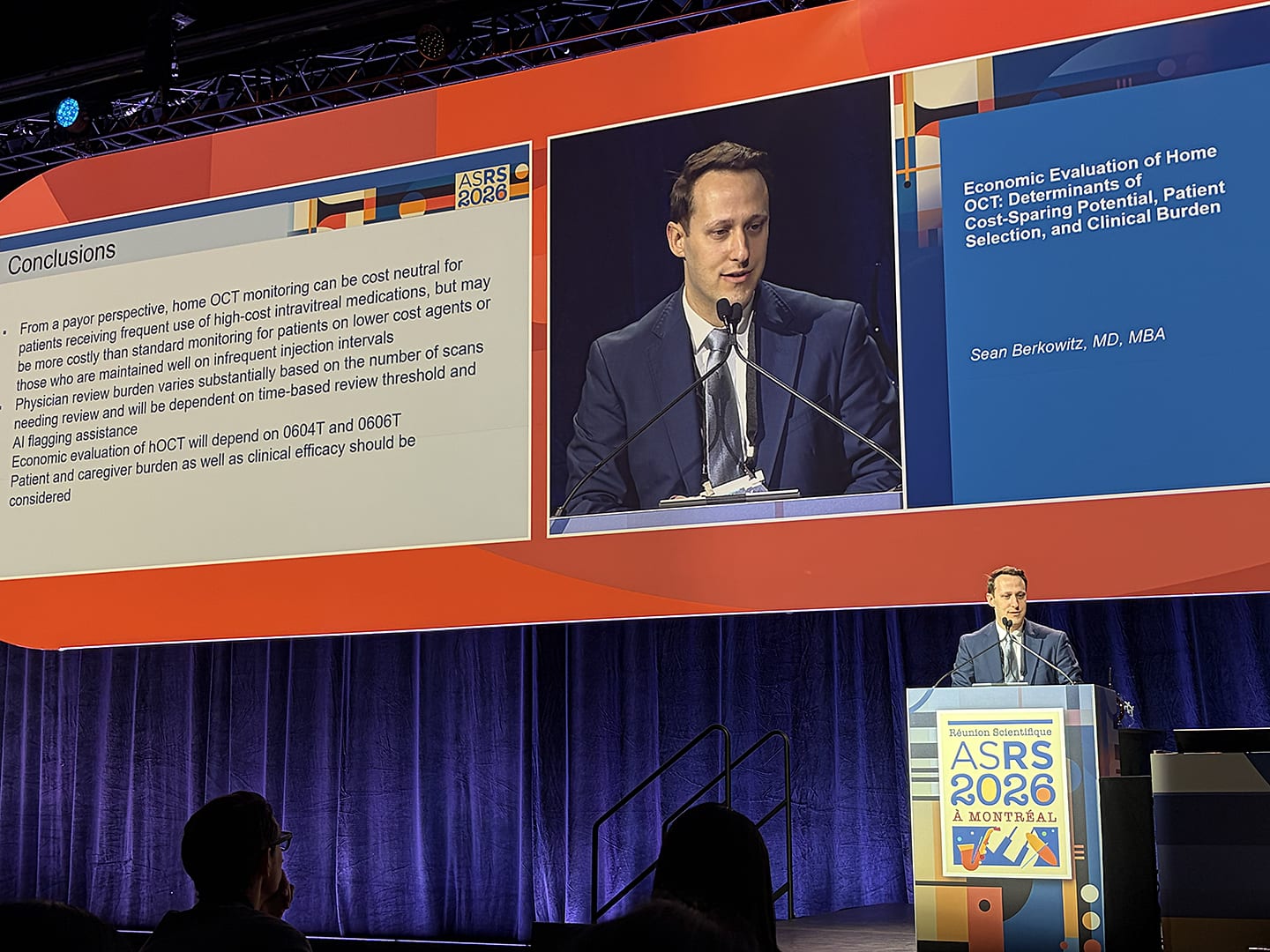
A modeling study presented at ASRS 2026 evaluated the economic feasibility of home OCT monitoring for wet AMD, revealing that cost neutrality varies significantly by anti-VEGF agent and treatment regimen. Home OCT was found to be less cost-effective for certain agents compared to standard treatment.
Background
Home optical coherence tomography (OCT) monitoring for neovascular age-related macular degeneration (nAMD) is an emerging technology. Understanding the economic implications of home OCT is crucial for healthcare providers as it may impact patient management strategies and healthcare costs. The analysis presented at ASRS 2026 highlights the need for careful consideration of the financial aspects of implementing home monitoring.
Data Highlights
No numerical data available in the source material.
Key Findings
Home OCT was not cost-effective for patients receiving bevacizumab or ranibizumab at any injection interval evaluated.
Cost neutrality for home OCT was achievable with higher-cost agents like aflibercept and faricimab, depending on the reduction in annual injections.
For aflibercept 2 mg, reducing treatment by 6 injections annually was necessary for cost neutrality.
Physician workload for reviewing home OCT scans could be significantly reduced by limiting reviews to the latest scan.
The economic value of home OCT will evolve with changes in reimbursement rates for associated CPT codes.
Clinical Implications
Healthcare providers should consider the economic factors associated with home OCT monitoring when developing treatment plans for nAMD.
Conclusion
The economic analysis of home OCT monitoring for nAMD highlights the complexity of integrating new technologies into clinical practice.
At OIS Retina in Montreal, Riad Sherif, MD, discussed Oculis’s optic neuritis program and why neuroprotection may represent the next frontier in retinal therapeutics.