Association between perfluoroalkyl and polyfluoroalkyl substances and response to the COVID-19 vaccine in a paediatric prospective observational cohort in Arizona - Report - MDSpire
Clinical Report: Link Between PFAS and COVID-19 Vaccine Efficacy in Children
Overview
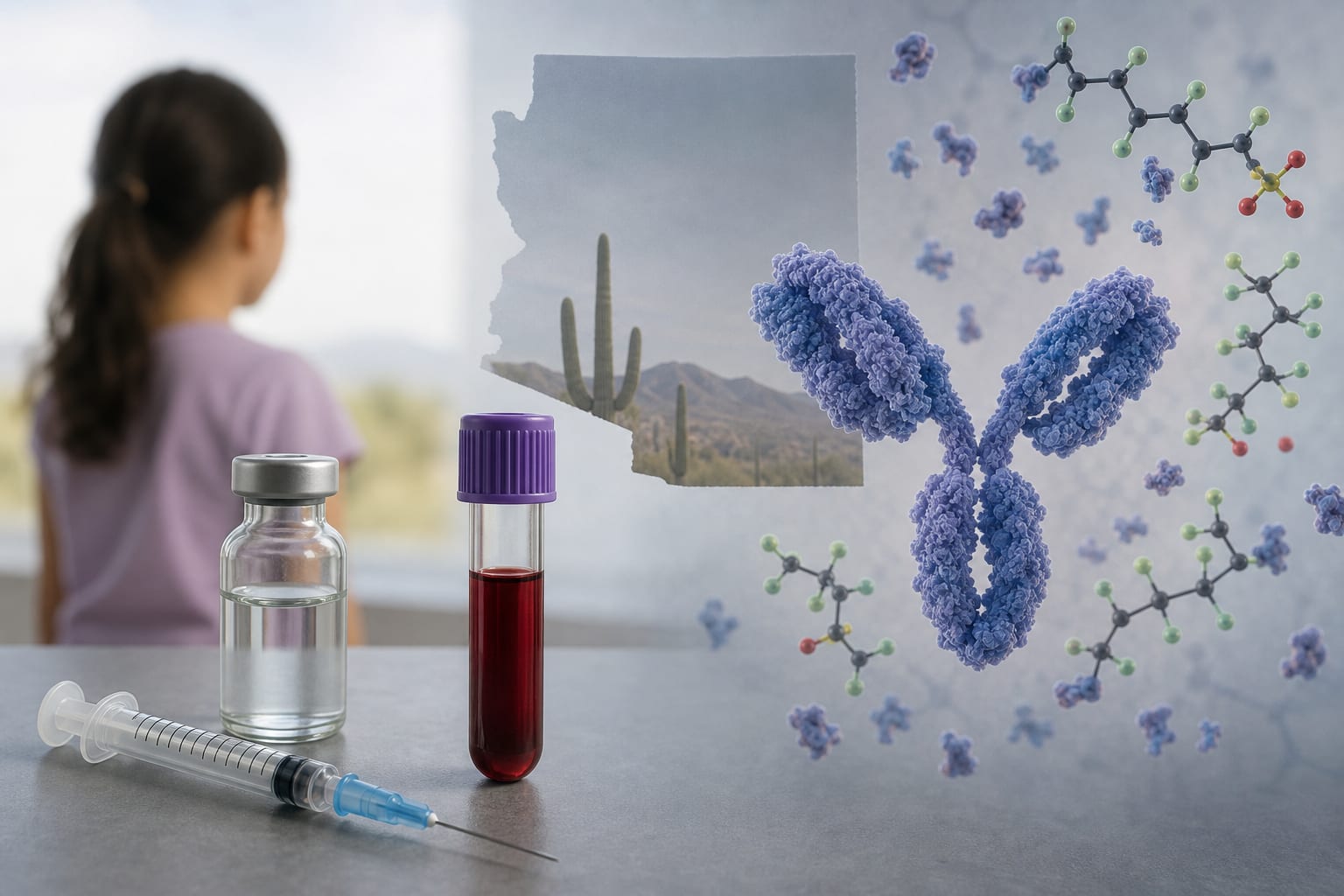
This study investigates the association between serum PFAS concentrations and COVID-19 vaccine efficacy in a pediatric cohort.
Background
Perfluoroalkyl and polyfluoroalkyl substances (PFAS) are synthetic chemicals known for their persistence in the environment and potential health risks, including immune function disruption. Previous research has established a connection between PFAS exposure and diminished vaccine responses in children.
Data Highlights
PFAS Chemical
Decrease in RBD AUC (%)
95% Confidence Interval
Total log-PFOS
5.0
−8.1% to −1.8%
Linear PFOS
4.8
−7.9% to −1.6%
Branched PFOS
4.9
−8.0% to −1.7%
Key Findings
120 children aged 1 to 16 years participated in the study.
An SD increase in total log-PFOS concentration was associated with a 5.0% decrease in RBD AUC.
Linear and branched isomers of PFOS were linked to decreases of 4.8% and 4.9% in RBD AUC, respectively.
The study utilized a semi-quantitative ELISA to measure antibody binding to SARS-CoV-2 spike protein domains.
Participants had no evidence of prior SARS-CoV-2 infection before vaccination.
Clinical Implications
The findings suggest that PFAS exposure may negatively impact the immune response to COVID-19 vaccinations in children. Clinicians should consider environmental exposure assessments in pediatric patients receiving vaccinations.
Conclusion
This study highlights the potential immunosuppressive effects of PFAS exposure on vaccine efficacy in children, warranting further investigation into environmental health factors affecting vaccination outcomes.