Independent factors associated with renal impairment in preeclampsia and its association with maternal and neonatal adverse outcomes - Report - MDSpire
Advertisement
Independent factors associated with renal impairment in preeclampsia and its association with maternal and neonatal adverse outcomes
Factors Independently Linked to Renal Dysfunction in Preeclampsia
Overview
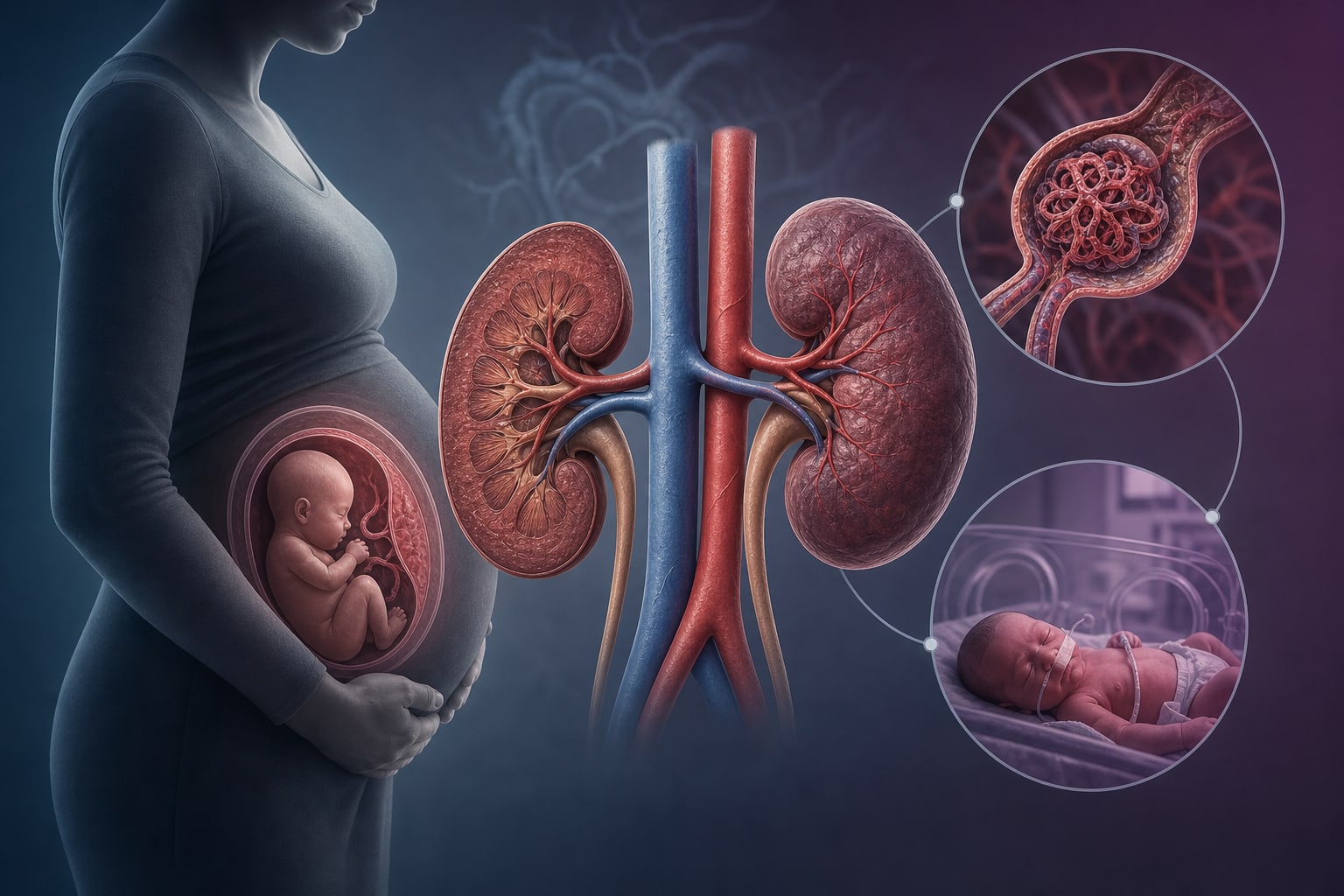
This study identifies independent factors associated with renal impairment in preeclampsia. Key findings indicate that renal impairment correlates with increased odds of significant complications during hospitalization.
Background
Preeclampsia is a major cause of maternal morbidity and perinatal complications, affecting up to 10% of pregnancies worldwide. Renal impairment in preeclampsia is a critical indicator of systemic dysfunction.
Data Highlights
Factor
Adjusted Odds Ratio (aOR)
95% Confidence Interval (CI)
Early-onset PE
1.68
1.02–2.78
Mean Arterial Pressure (MAP)
1.73
1.26–2.37
24-h Urinary Protein
1.58
1.25–2.00
Serum Uric Acid-to-Creatinine Ratio
0.36
0.26–0.51
Albumin
0.87
0.81–0.94
Key Findings
Higher BMI, MAP, and uric acid levels are associated with renal impairment in preeclampsia.
Later gestational age, higher albumin, and higher platelet count are inversely associated with renal impairment.
Renal impairment is linked to a composite adverse maternal outcome with an aOR of 2.08.
Intensive care unit admission is significantly associated with renal impairment (aOR 3.39).
Renal impairment correlates with increased rates of eclampsia and adverse neonatal outcomes.
Clinical Implications
Monitoring renal function may be critical during hospitalization.
Conclusion
Renal impairment in preeclampsia serves as a significant marker for adverse maternal and neonatal outcomes.
A living clinical guideline outlines a treatment hierarchy for selected pharmacologic therapies in patients with obesity and selected patients with overweight.