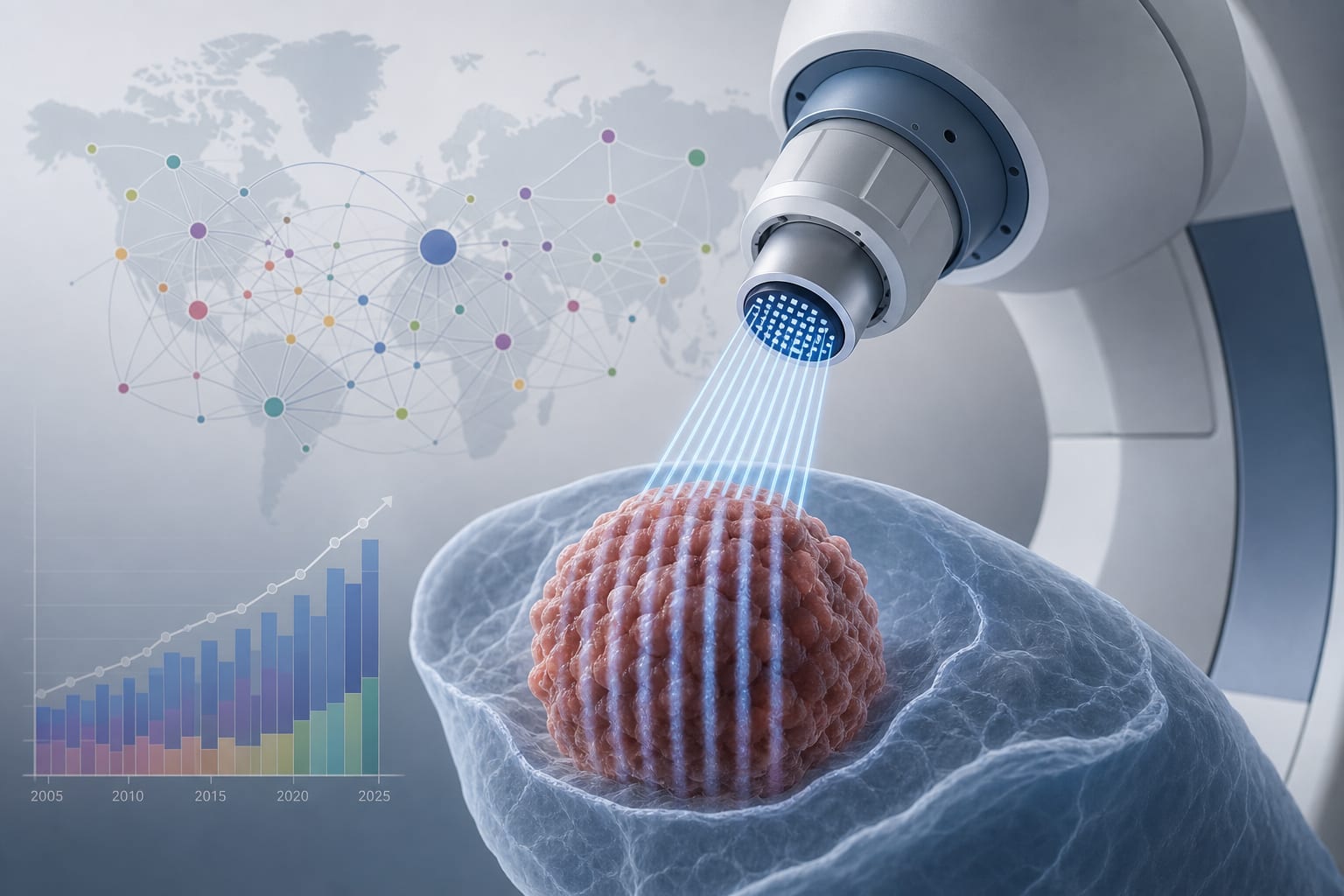
Clinical Report: Global Research Trends in Spatially Fractionated Radiotherapy
Overview
This bibliometric evaluation maps the research landscape of Spatially Fractionated Radiotherapy (SFRT) from 2005 to 2025, highlighting a significant increase in publications and citations, particularly from 2020 to 2025. The study identifies key research clusters and emphasizes the need for future investigations into biological markers and standardized protocols.
Background
SFRT is an innovative technique in radiation oncology that aims to optimize tumor ablation while minimizing damage to surrounding healthy tissue. As the field evolves, understanding research trends is crucial for guiding future studies and clinical applications. This evaluation provides insights into the global research environment, which is essential for advancing SFRT's clinical implementation.
427 publications analyzed, including 385 primary articles and 42 reviews.
United States leads in cumulative research output; France shows high institutional productivity.
Five core research clusters identified, indicating thematic evolution in SFRT.
Notable shift from microbeam technology to advancements in proton minibeam therapy.
Future research should focus on biological markers and standardized protocols for clinical trials.
Clinical Implications
Clinicians should be aware of the evolving landscape of SFRT and the importance of integrating findings from recent studies into practice. Emphasis on biological markers and standardized protocols will be critical for the safe and effective implementation of SFRT in clinical settings.
Conclusion
SFRT represents a growing interdisciplinary field with significant potential for clinical application. Continued research and collaboration are essential to establish robust protocols and enhance treatment efficacy.