Clinical Report: Development of Fibrin-Associated Large B-Cell Lymphoma
Overview
This report presents a rare case of fibrin-associated large B-cell lymphoma (FA-LBCL) originating from cystic lymphangiomatous lesions in the adrenal gland of a 42-year-old female. The findings highlight the diagnostic challenges and the importance of recognizing this lymphoma subtype as a distinct entity.
Background
Fibrin-associated large B-cell lymphoma (FA-LBCL) is a rare malignancy linked to Epstein–Barr virus (EBV) and characterized by its occurrence in areas of chronic fibrin accumulation. It has been classified as a separate entity in the WHO classification, emphasizing the need for awareness among clinicians due to its atypical presentation and potential for misdiagnosis. Understanding FA-LBCL is crucial for appropriate management and treatment outcomes.
Data Highlights
No numerical data or trial data is presented in the article.
Key Findings
FA-LBCL is recognized as a distinct entity in the WHO classification of hematolymphoid tumors.
The case involved a 42-year-old female with incidental diagnosis during adrenalectomy.
FA-LBCL typically arises in chronic inflammatory contexts, often without forming a distinct mass.
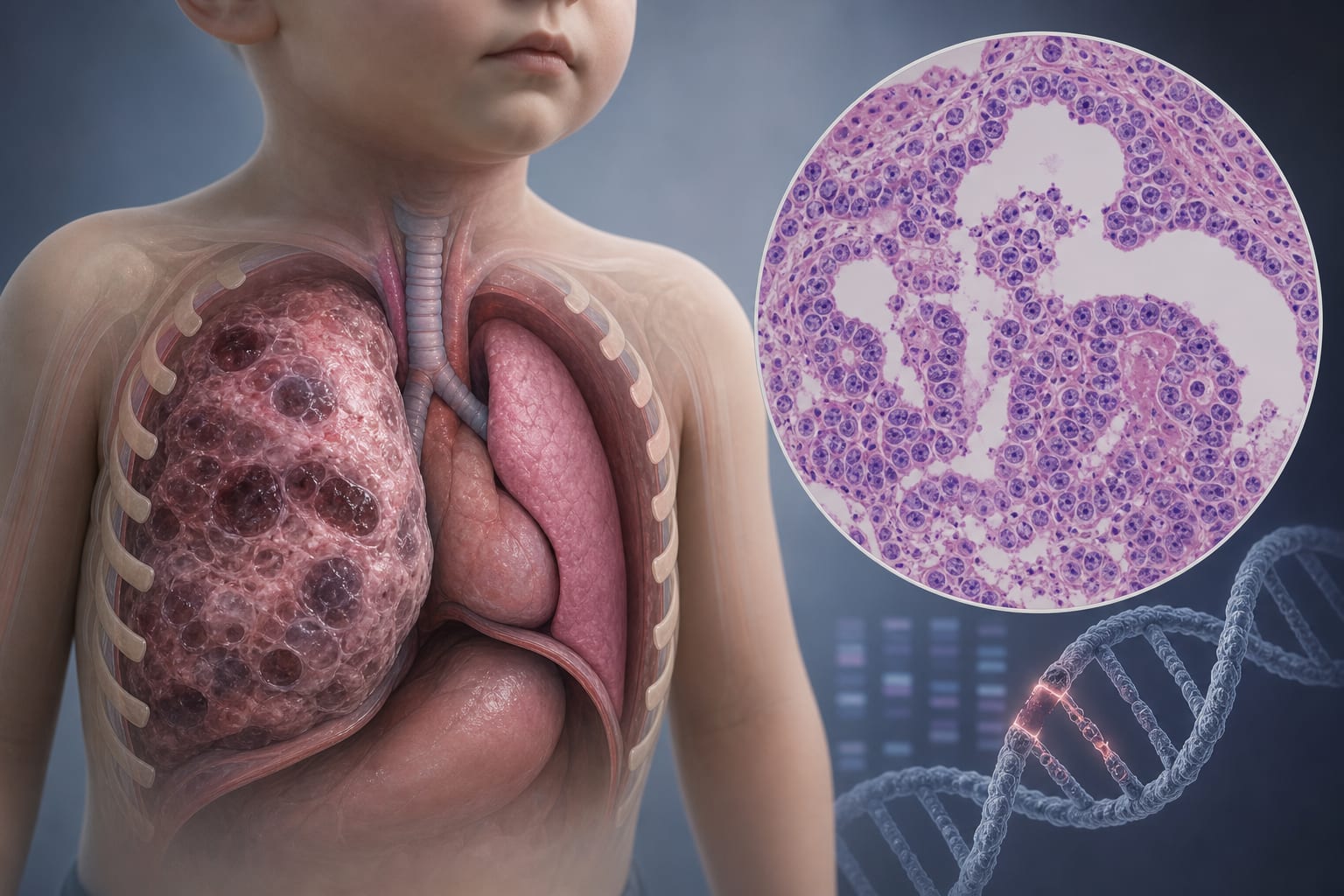
Histological examination revealed sparse aggregates of malignant cells within a cystic lesion.
EBV positivity is commonly associated with FA-LBCL, contributing to its pathogenesis.
Diagnostic challenges exist due to the rarity and atypical presentation of FA-LBCL.
Clinical Implications
Clinicians should maintain a high index of suspicion for FA-LBCL in patients with cystic lesions of the adrenal gland, particularly when associated with chronic inflammation. Thorough histological sampling and immunophenotyping are essential for accurate diagnosis and differentiation from other lymphomas.
Conclusion
This case underscores the importance of recognizing FA-LBCL as a distinct lymphoma subtype, particularly in atypical presentations. Enhanced awareness and diagnostic strategies are necessary to improve patient outcomes.