Thyroid function and risk of sepsis: a population-based prospective cohort study with traditional and genetic epidemiological analyses - Report - MDSpire
Advertisement
Thyroid function and risk of sepsis: a population-based prospective cohort study with traditional and genetic epidemiological analyses
Clinical Report: The Relationship Between Thyroid Function and Sepsis Risk
Overview
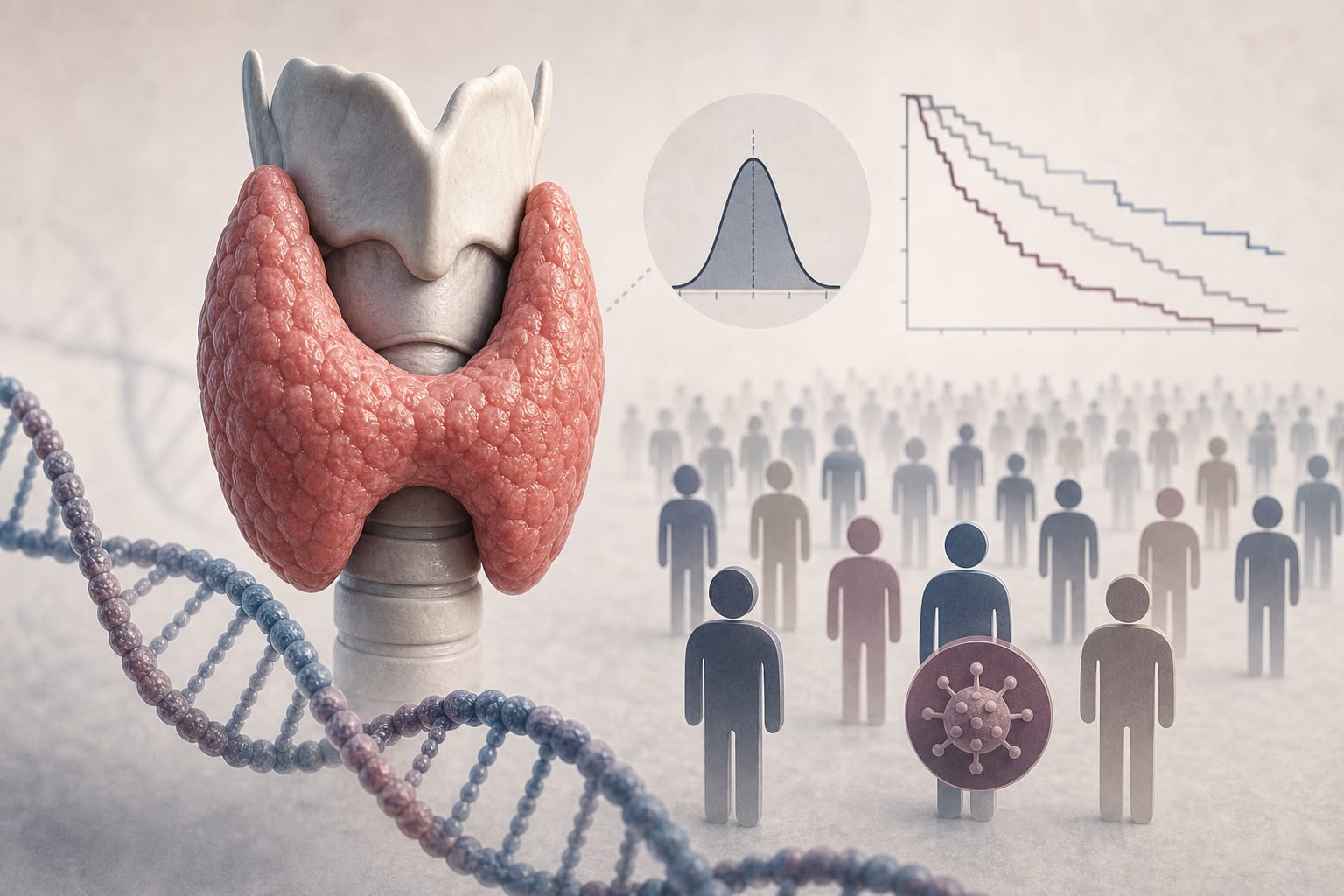
This study investigates the association between thyroid-stimulating hormone (TSH) levels and the risk of sepsis and severe infectious diseases. TSH levels below 0.5 mU/L are associated with increased sepsis risk.
Background
Thyroid dysfunction affects a significant portion of the global population and is linked to immune system modulation. Understanding the relationship between thyroid function and infection risk is crucial, as infections can lead to severe outcomes like sepsis. Previous studies have shown mixed results regarding thyroid hormone levels and infection risk.
Data Highlights
No significant association was found between baseline normal-range TSH and sepsis risk in observational analyses of 45,364 subjects. TSH levels <0.5 mU/L were associated with a higher sepsis risk (HR 1.50, 95% CI 1.19–1.90). Mendelian randomization analyses involving 271,040 subjects showed no association between normal-range TSH and sepsis risk (OR 1.04, 95% CI 0.98–1.10).
Key Findings
No association between baseline normal-range TSH and sepsis risk (HR 0.98, 95% CI 0.93–1.04).
TSH levels <0.5 mU/L associated with higher sepsis risk (HR 1.50, 95% CI 1.19–1.90).
Mendelian randomization analyses showed no link between normal-range TSH and sepsis risk (OR 1.04, 95% CI 0.98–1.10).
Secondary analyses indicated no association between thyroid function and risk of lower respiratory tract infections or upper urinary tract infections.
Clinical Implications
Monitoring TSH levels within the normal range may not be beneficial for assessing sepsis risk.
Conclusion
Variations in thyroid function within the normal range do not causally influence the risk of sepsis or its common precursors.
by Marianne S. Thorkildsen, Lise T. Gustad, Bjørn O. Åsvold, Randi M. Mohus, Christina Ellervik, Alexander Teumer, Eirini Marouli, Marco Medici, Jan K. Damås, Helene M. Flatby, Tormod Rogne