Uptake of Clinical Decision Support Systems Among Health Care Professionals in Six European Countries and the United States: Cross-Sectional Survey Within the I-CARE4OLD Project - Report - MDSpire
Advertisement
Uptake of Clinical Decision Support Systems Among Health Care Professionals in Six European Countries and the United States: Cross-Sectional Survey Within the I-CARE4OLD Project
Adoption of Clinical Decision Support Systems by Healthcare Providers
Overview
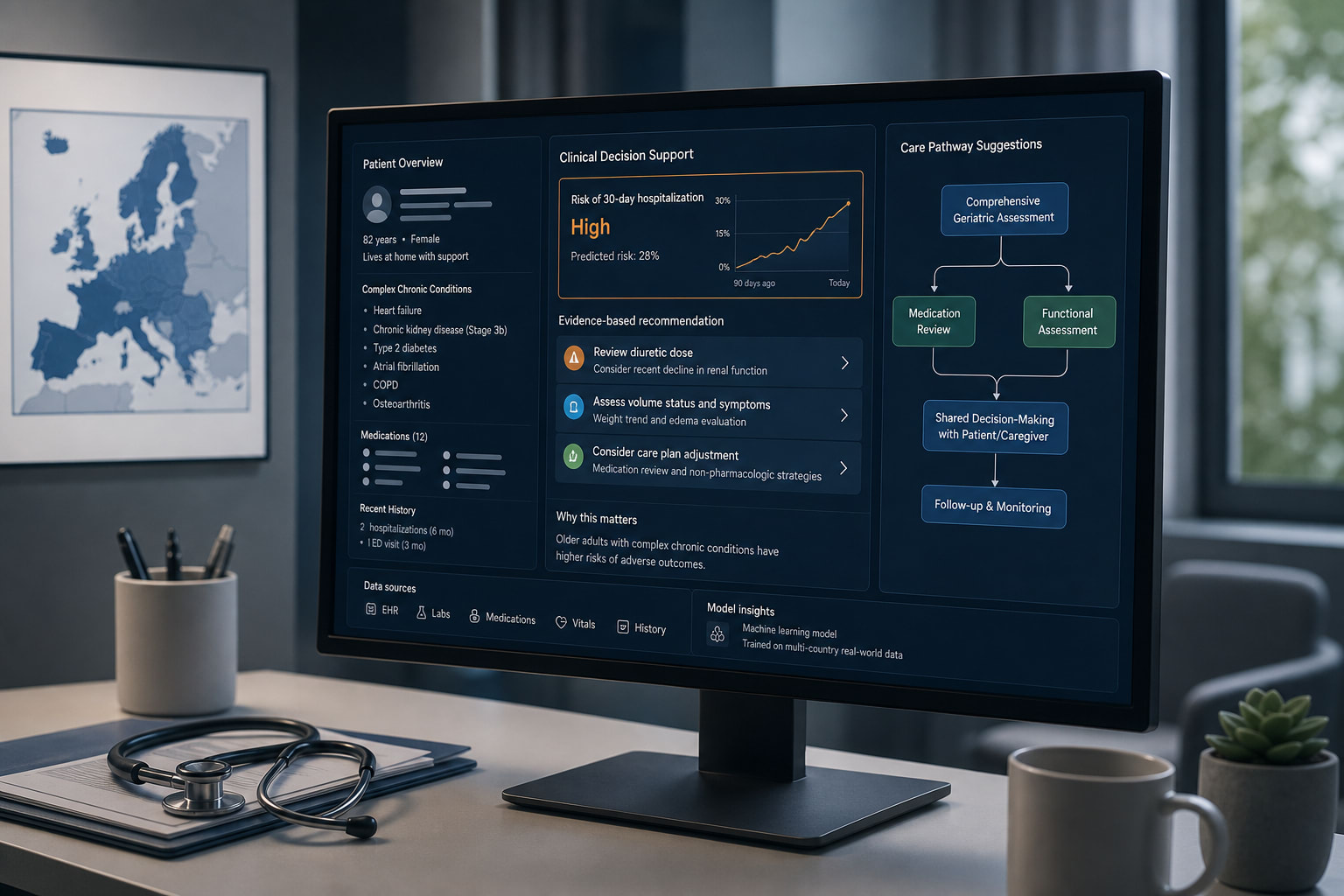
This study analyzes the use of Clinical Decision Support Systems (CDSS) among healthcare professionals in six European countries and the United States, focusing on their application in managing older adults with complex chronic conditions. The findings highlight the varying levels of adoption and attitudes towards CDSS among providers.
Background
Clinical Decision Support Systems (CDSS) are essential tools designed to assist healthcare professionals in making informed clinical decisions, particularly for older adults with complex chronic conditions. The integration of these systems within electronic health records (EHRs) has the potential to enhance patient care by providing real-time, evidence-based recommendations. Understanding the adoption and effectiveness of CDSS is crucial for improving healthcare outcomes and addressing the challenges faced by clinicians in community and long-term care settings.
Data Highlights
No numerical data was provided in the source material.
Key Findings
CDSS can mitigate unnecessary variation in healthcare and enhance patient outcomes.
Healthcare professionals' attitudes towards CDSS vary significantly across different countries.
The iCARE tool was developed to support clinicians in making decisions about care paths for older adults.
Integration of CDSS with EHRs can facilitate real-time recommendations.
Barriers to CDSS adoption include concerns about the interpretability and trustworthiness of the information provided.
Clinical Implications
The findings suggest that while CDSS has the potential to improve clinical decision-making, healthcare providers may face challenges in their adoption due to varying perceptions and concerns. Addressing these barriers is essential for maximizing the benefits of CDSS in clinical practice.
Conclusion
The study underscores the importance of understanding healthcare professionals' perceptions of CDSS to enhance their adoption and effectiveness in managing complex patient populations.
by Collin JC Exmann, Anna-Maria Hiltunen, Ira Haavisto, Anna Salminen, Maikki Messo, Mikko Nuutinen, Mark Hoogendoorn, Wiebe Boorsma, Elizabeth P Howard, Vanja Pešić, Mor Alon, Federica Mammarella, Rosa Liperoti, Olena Švihnosová, Daniela Fialová, Natalia Drapała, Katarzyna Szczerbińska, Anja Declercq, Hein PJ van Hout, Johanna De Almeida Mello