Subfecundity, Infertility Treatment, and Child Neurodevelopment - Report - MDSpire

Subfecundity, Infertility Treatment, and Child Neurodevelopment

  • By

  • Linda G. Kahn

  • Alison E. Hipwell

  • Joseph B. Stanford

  • Noya Galai

  • Haozuo Zhao

  • Akram N. Alshawabkeh

  • Judy L. Aschner

  • Emily S. Barrett

  • Ricardo P. Bertolla

  • Kim Nail Cajachagua Torres

  • Carlos A. Camargo

  • Jose F. Cordero

  • Lisa A. Croen

  • Sean C. Deoni

  • Semsa Gogcu

  • Julie B. Herbstman

  • Margaret R. Karagas

  • Kaja Z. LeWinn

  • Kristen Lyall

  • Cynthia T. McEvoy

  • Kimberlee McKay

  • Thomas G. O’Connor

  • J. Richard Pilsner

  • Susan L. Schantz

  • Rebecca J. Schmidt

  • Alicia K. Smith

  • Greta N. Wilkening

  • E. Zhang

  • Yeyi Zhu

  • Akhgar Ghassabian

  • ECHO Cohort Consortium

  • June 8, 2026

  • 0 min

Share

Impact of Subfertility and Infertility Interventions on Neurodevelopment in Children

Overview

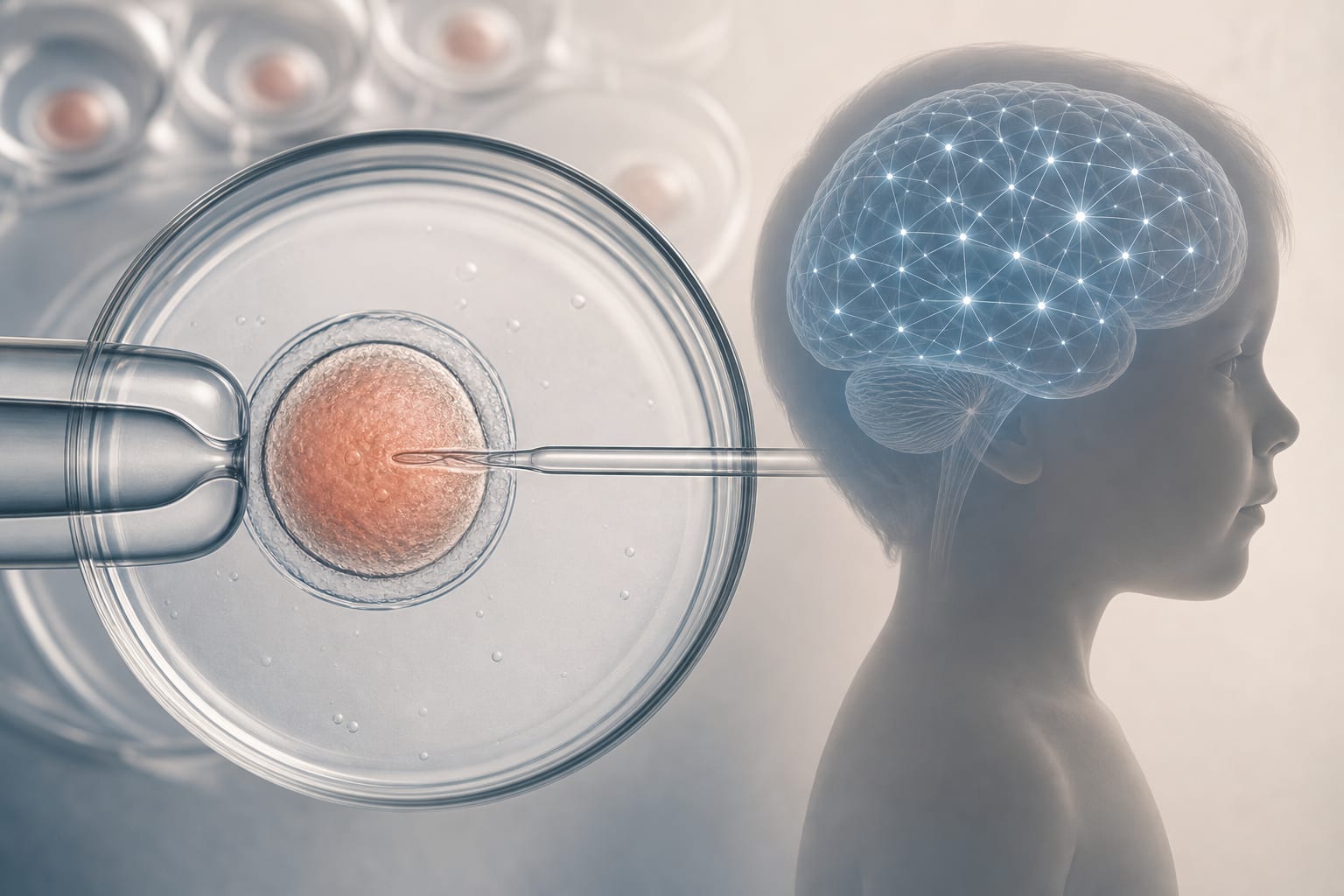
This study investigates the relationship between subfertility, infertility interventions, and neurodevelopmental outcomes in children. It utilizes data from the ECHO Cohort to analyze caregiver-reported behavioral problems and diagnoses among children conceived through various methods.

Background

Concerns regarding the impact of assisted reproduction on child neurodevelopment have been raised, particularly regarding the use of exogenous hormones during IVF. Previous studies have shown mixed results, with many indicating no significant associations between assisted reproduction and neurodevelopmental outcomes. Understanding the role of underlying subfecundity is crucial, as it may confound the effects attributed to infertility treatments.

Data Highlights

MeasureFindings
Study Population15,382 mother-child dyads
Conception MethodsIVF, non-IVF, natural conception
Age Range2 to 10 years

Key Findings

  • IVF and subfecundity groups showed similar rates of early intervention enrollment compared to fecund groups.
  • Neither IVF nor subfecundity was linked to increased rates of autism spectrum disorder (ASD) in offspring.
  • Children conceived via IVF, non-IVF treatments, and those with a history of infertility had similar rates of attention-deficit/hyperactivity disorder (ADHD).
  • Data were collected from a large cohort across 44 ECHO sites, enhancing the robustness of findings.
  • Subfecundity was defined as prior infertility consultation, treatment, or diagnosis, or a history of miscarriages.

Clinical Implications

The findings suggest that underlying subfecundity may be a more significant factor in neurodevelopmental outcomes than the method of conception itself. Clinicians should consider the reproductive history of patients when evaluating potential neurodevelopmental risks in children.

Conclusion

This study highlights the importance of distinguishing between the effects of infertility treatments and underlying subfecundity on child neurodevelopment. Further research is needed to refine these associations.

Related Resources & Content

  1. Frontiers in Neurology, 2026 -- Transdisciplinary fetal-neonatal neurology training integrates women’s and children’s health with life-course brain capital strategies: a narrative review
  2. JAMA Network Open, 2023 -- Maternal Intellectual and Developmental Disabilities and Infant Outcomes
  3. Drugs - Real World Outcomes, 2021 -- Antidepressant Administration in Pregnant Women and Its Possible Impact on Motor Skills and Cognitive Development in Children: A Comprehensive Review
  4. Scientific and Clinical Advances Advisory Committee (SCAAC), 2025 -- Matters arising - 3rd February 2025
  5. Neurodevelopmental or behavioral disorders in children conceived after assisted reproductive technologies: a nationwide cohort study, 2024
  6. Frontiers in Oncology — Time to chemotherapy and oncofertility counseling in pediatric hematology/oncology patients: a single-center retrospective review
  7. HFEA Scientific and Clinical Advances Advisory Committee Review
  8. Neurodevelopmental or behavioral disorders in children conceived after assisted reproductive technologies: a nationwide cohort study - ScienceDirect
  9. Neurodevelopmental status of children aged 12 to 60 months conceived with artificial oocyte activation in a Cross-Sectional study | Scientific Reports

Original Source(s)

Related Content