Case Report: Giant coronary artery aneurysm with cardiac compression successfully managed by surgical resection and bypass in a normolipidemic patient - Report - MDSpire
Conexiant’s news site is now MDSpire News. Learn more
Advertisement
Successful Surgical Resection and Bypass of a Giant Right Coronary Artery Aneurysm Causing Cardiac Compression in a Patient with Normal Lipid Levels: A Case Study
Successful Surgical Resection and Bypass of a Giant Right Coronary Artery Aneurysm
Overview
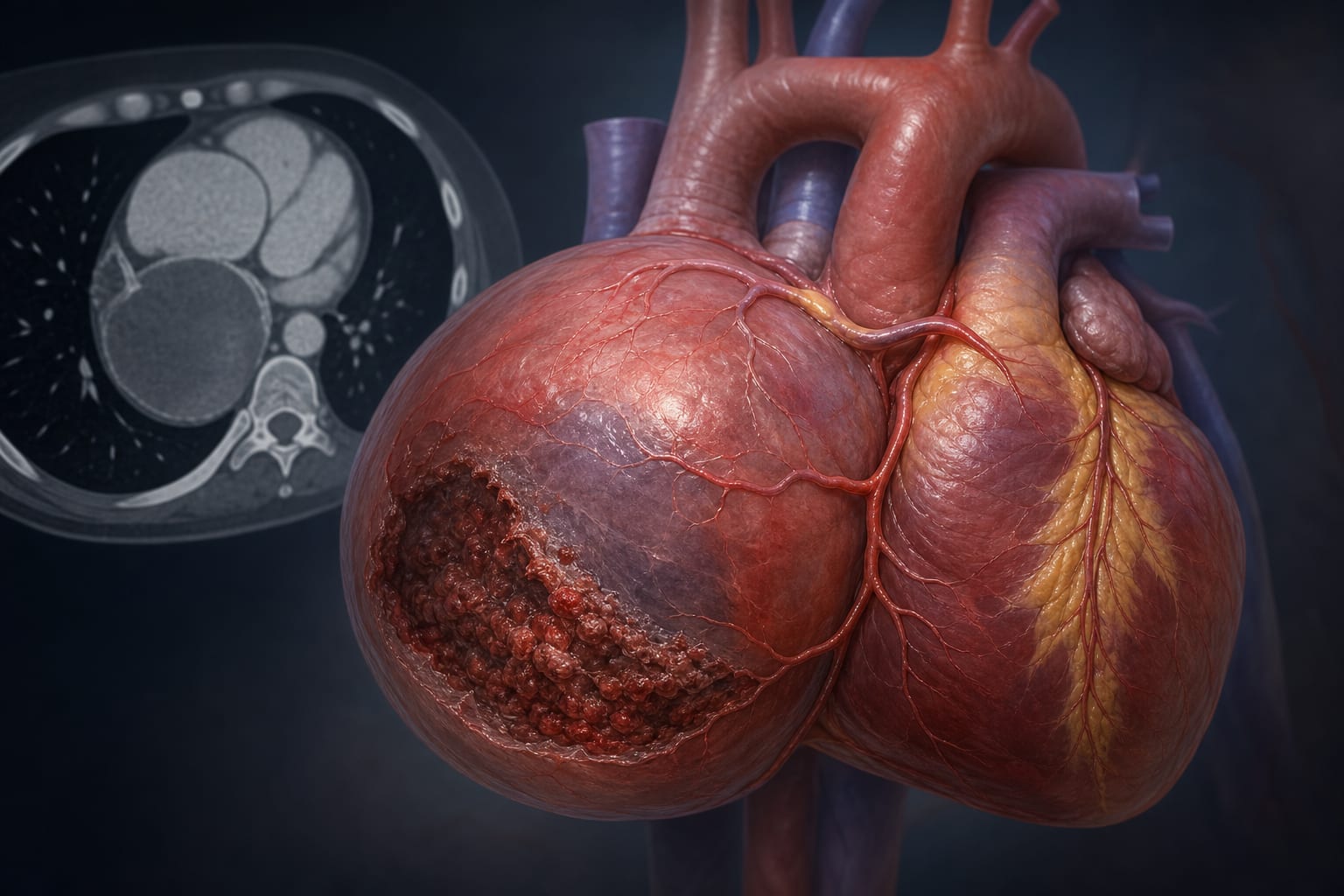
This case study details the successful surgical intervention for a giant right coronary artery aneurysm in a 53-year-old woman, who presented with acute chest pain and signs of cardiac compression. The patient underwent resection and bypass, resulting in significant postoperative improvement.
Background
Giant coronary artery aneurysms (CGAAs) are rare and can lead to serious complications such as thrombosis and cardiac compression. Understanding the clinical presentation and management of CGAAs is crucial for timely intervention, especially in patients without traditional cardiovascular risk factors. This case highlights the importance of multimodal imaging in diagnosing and planning treatment for such anomalies.
Data Highlights
Parameter
Value
Maximum Diameter of Aneurysm
15.6 cm
High-Sensitivity Cardiac Troponin I
18.216 ng/mL
Total Cholesterol
154.7 mg/dL
LDL Cholesterol
93.6 mg/dL
HDL Cholesterol
44.1 mg/dL
Triglycerides
83.3 mg/dL
HbA1c
5.2%
Key Findings
The patient had a giant right coronary artery aneurysm with a maximum diameter of 15.6 cm.
Multimodal imaging confirmed cardiac compression and thrombus presence within the aneurysm.
The surgical procedure included aneurysm resection, thrombus evacuation, and bypass grafting.
Postoperative recovery showed a significant decrease in central venous pressure and resolution of symptoms.
The graft remained patent at the 3-month follow-up.
Clinical Implications
This case underscores the necessity of thorough imaging and evaluation in patients presenting with unexplained chest pain and signs of cardiac compression. Surgical intervention can be effective in managing giant coronary artery aneurysms, even in patients without traditional risk factors.
Conclusion
The successful management of this case illustrates the importance of prompt diagnosis and intervention for giant coronary artery aneurysms, which can present with significant clinical challenges.