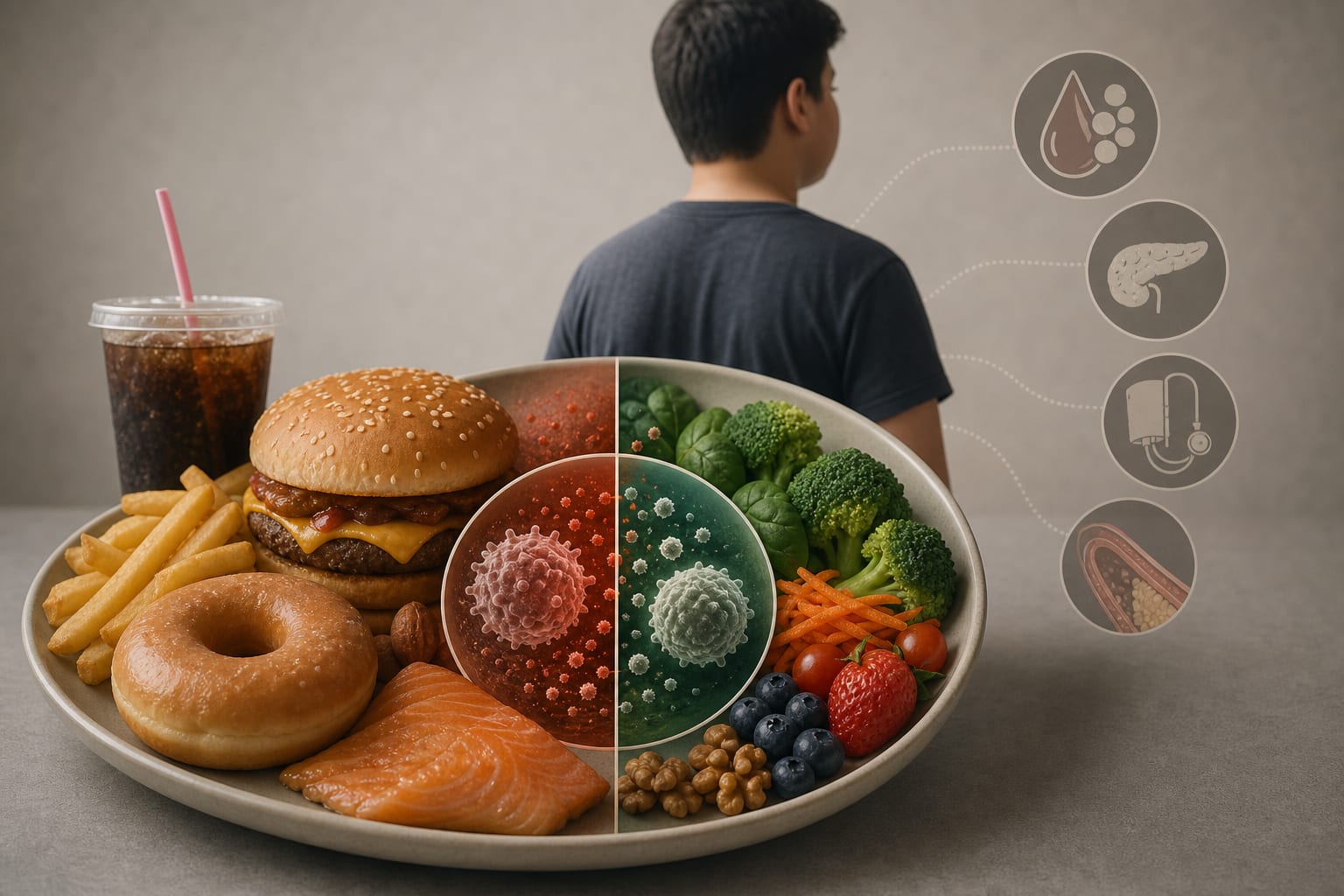
Clinical Report: Dietary Inflammatory Potential and Cardiometabolic Risk in Adolescents
Overview
This study evaluates the associations between the Dietary Inflammatory Index (DII) and Children's Dietary Inflammatory Index (C-DII) with cardiometabolic risk indicators in Brazilian adolescents.
Background
The rising prevalence of obesity and cardiometabolic risk factors among adolescents is a significant public health issue, particularly in low- and middle-income countries.
Data Highlights
No numerical data or trial results were provided in the source material.
Key Findings
The DII and C-DII are tools designed to assess the inflammatory potential of diets.
Adolescents often consume diets high in energy density and low in fiber.
The C-DII was adapted to better reflect the dietary habits of children and adolescents.
There is a lack of studies validating the C-DII across different age groups and cultural contexts.
This study is the first to apply the C-DII in Brazilian adolescents.
Clinical Implications
The use of DII and C-DII can help healthcare professionals assess dietary inflammatory potential.
Conclusion
Further research is needed to validate the C-DII in diverse populations.
by Luana de Oliveira Leite, Mônica Leila Portela de Santana, Nadjane Ferreira Damascena, Jacqueline Costa Dias Pitangueira, Priscila Ribas de Farias Costa