Screening of serum biomarkers for coronary artery calcification using DIA quantitative proteomics and construction of a regression model - Report - MDSpire
Advertisement
Screening of serum biomarkers for coronary artery calcification using DIA quantitative proteomics and construction of a regression model
Clinical Report: Evaluation of Serum Biomarkers for Coronary Artery Calcification
Overview
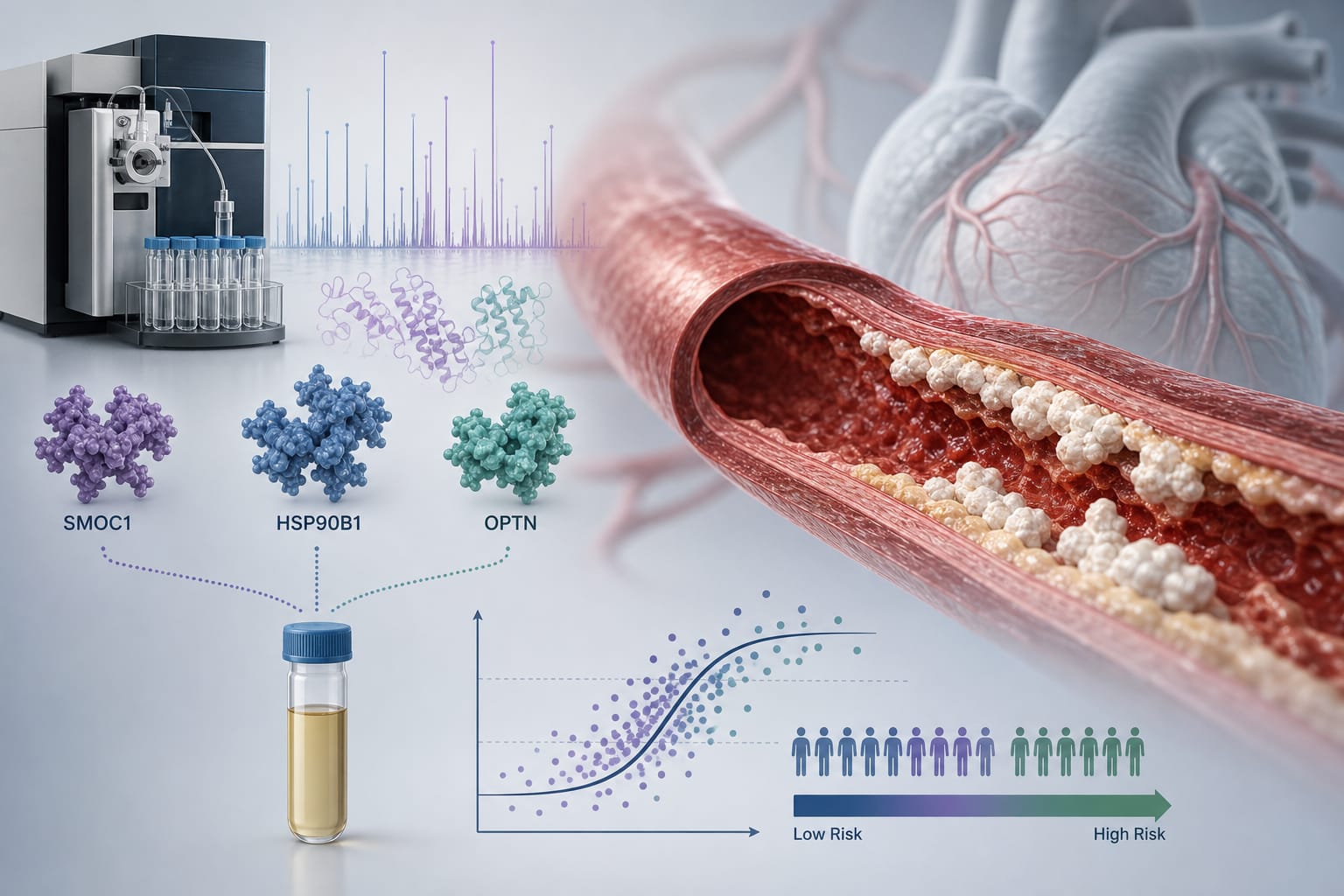
This study identifies SMOC1, HSP90B1, and OPTN as potential serum biomarkers for coronary artery calcification (CAC) and develops a predictive regression model. The model demonstrates improved predictive performance compared to traditional clinical indicators.
Background
Coronary artery calcification (CAC) is a significant marker for coronary atherosclerosis and is associated with increased cardiovascular risk. Traditional risk assessment methods have limitations, necessitating the identification of novel biomarkers to enhance predictive accuracy. Understanding the molecular mechanisms of CAC can lead to better prevention and treatment strategies for cardiovascular disease.
Data Highlights
Biomarker
Expression Trend
SMOC1
Upregulated
HSP90B1
Downregulated
OPTN
Downregulated
Key Findings
39 differentially expressed proteins identified, with 18 upregulated and 21 downregulated.
SMOC1, HSP90B1, and OPTN were highlighted as candidate biomarkers for CAC.
The AUC for the predictive model incorporating biomarkers was 0.894, outperforming the baseline model (AUC = 0.845).
Calibration curves showed good agreement between predicted and observed probabilities.
Decision curves indicated a positive clinical net benefit for the model within the 0.1–0.8 probability threshold range.
Clinical Implications
The identification of SMOC1, HSP90B1, and OPTN as biomarkers for CAC can aid in early detection and risk stratification of cardiovascular disease. Implementing the nomogram model in clinical practice may enhance patient management and treatment decisions.
Conclusion
The study presents promising serum biomarkers for CAC and a robust predictive model that could improve cardiovascular risk assessment and management.