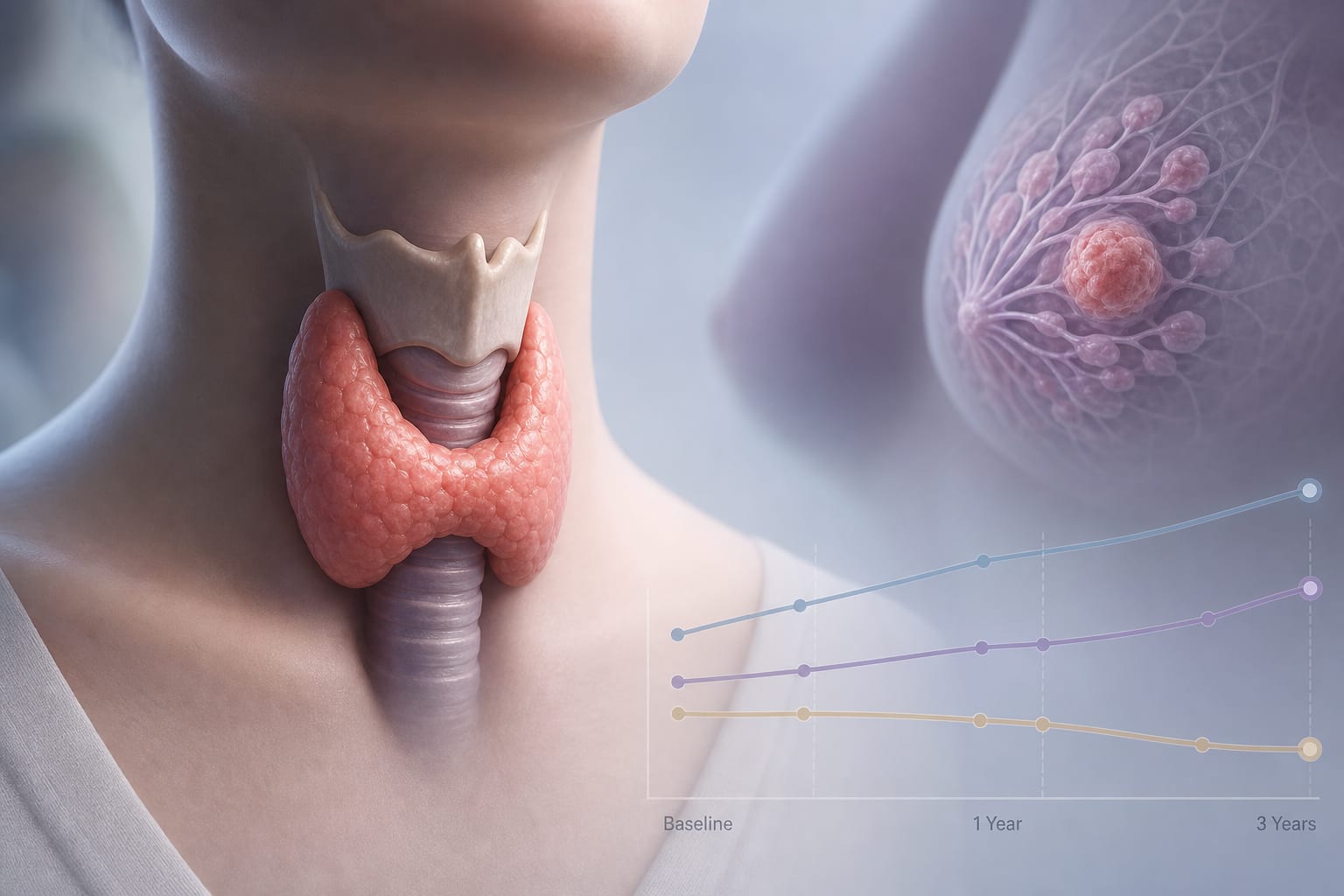
The Role of Gut Microbiota and Its Metabolites in Thyroid Disorders: Mechanisms and Functions
-
By
-
Yu, Xianqiang
-
April 27, 2026
Clinical Report: The Role of Gut Microbiota and Its Metabolites in Thyroid Disorders
Overview
This report reviews the significant role of gut microbiota and its metabolites in regulating thyroid health and disease. It highlights the mechanisms through which these microbial components influence thyroid disorders and discusses potential microbiota-targeted interventions.
Background
The gut microbiota is increasingly recognized as a critical regulator of human physiology, impacting various systems beyond digestion. Understanding the gut-thyroid axis is essential as it may provide insights into the pathogenesis of thyroid disorders, including autoimmune diseases and thyroid dysfunction. This knowledge could lead to novel therapeutic strategies in managing thyroid conditions.
Data Highlights
No specific numerical data or trial data presented in the article.
Key Findings
- The gut microbiota influences thyroid hormone metabolism and systemic immunity.
- Short-chain fatty acids, secondary bile acids, and lipopolysaccharides from gut microbiota play significant roles in thyroid health.
- Microbial metabolites contribute to the maintenance of intestinal barrier integrity and nutrient absorption.
- Microbiota-targeted interventions, such as probiotics and dietary modifications, may serve as adjunctive strategies in thyroid disease management.
- Current guidelines do not endorse microbiome testing or therapies for thyroid disorders despite emerging evidence.
Clinical Implications
Healthcare professionals should consider the potential impact of gut microbiota on thyroid health when managing patients with thyroid disorders. While microbiota-targeted therapies are not yet standard practice, they may offer promising adjunctive options in the future.
Conclusion
The interplay between gut microbiota and thyroid health presents a promising area for further research and potential clinical application. Understanding these mechanisms may lead to innovative approaches in the management of thyroid disorders.
Related Resources & Content
- Endocrine Reviews, 2023 -- Postbiotic Impact on Host Metabolism and Immunity Provides Therapeutic Potential in Metabolic Disease
- Frontiers in Endocrinology, 2026 -- Gut microbiota orchestrates bone homeostasis: a multi-pathway network from intestine to skeleton
- Frontiers in Immunology, 2026 -- The role of gut microbiota in osteoporosis: underlying mechanisms, clinical associations, and emerging biomaterials
- American Thyroid Association, 2025 -- New ATA Management Guidelines for Adult Patients with Differentiated Thyroid Cancer
- Thyroid Research, 2025 -- Effects of probiotics and synbiotics oral supplementation on thyroid function in adults: a grade-assessed systematic review and meta-analysis
- Frontiers in Endocrinology — Editorial: Impact of dietary factors on human gut microbiota and gastrointestinal endocrinology
- New ATA Management Guidelines for Adult Patients with Differentiated Thyroid Cancer | American Thyroid Association
- Effects of probiotics and synbiotics oral supplementation on thyroid function in adults: a grade-assessed systematic review and meta-analysis | Thyroid Research | Springer Nature Link
- Probiotic Supplementation Enhances the Effects of a Nutritional Intervention on Quality of Life in Women with Hashimoto’s Thyroiditis—A Double-Blind Randomised Study
- Dietary fibre intervention in Hashimoto's thyroiditis patients and its impact on the gut microbiota - ScienceDirect
- Effects of Probiotics on Thyroid Function and Fatigue in Hypothyroid Patients: A Randomized Placebo Controlled Trial
- Modulation of gut microbiota in Graves’ orbitopathy: Prevotella dominance and atorvastatin’s impact | Microbiome | Springer Nature Link
This content is an AI-generated, fully rewritten summary based on a published scholarly article. It does not reproduce the original text and is not a substitute for the original publication. Readers are encouraged to consult the source for full context, data, and methodology.