Global trends and emerging frontiers of large language models in cancer research - Report - MDSpire

Global trends and emerging frontiers of large language models in cancer research

  • By

  • Dianzhe Tian

  • Zhixuan Xie

  • Zixuan Hu

  • Zuyi Yang

  • Hu Tian

  • Youxin Chen

  • Haitao Zhao

  • Shunda Du

  • Fengdan Wang

  • Lei Zhang

  • Yiyao Xu

  • Xin Lu

  • June 3, 2026

  • 0 min

Share

Clinical Report: Worldwide Developments and New Horizons of LLMs in Oncology

Overview

This report highlights the significant role of large language models (LLMs) in advancing oncology research, particularly in clinical decision-making, patient management, and medical education. The bibliometric analysis reveals emerging trends and challenges in the integration of LLMs into cancer research, emphasizing the need for systematic evaluation and guidance.

Background

Cancer remains a leading global health challenge, with millions of new cases and deaths reported annually. The complexity of cancer data and the need for innovative tools to enhance diagnosis and treatment underscore the importance of integrating advanced technologies like LLMs. These models have the potential to revolutionize cancer care by improving data processing and patient management.

Data Highlights

No specific numerical data was provided in the source material.

Key Findings

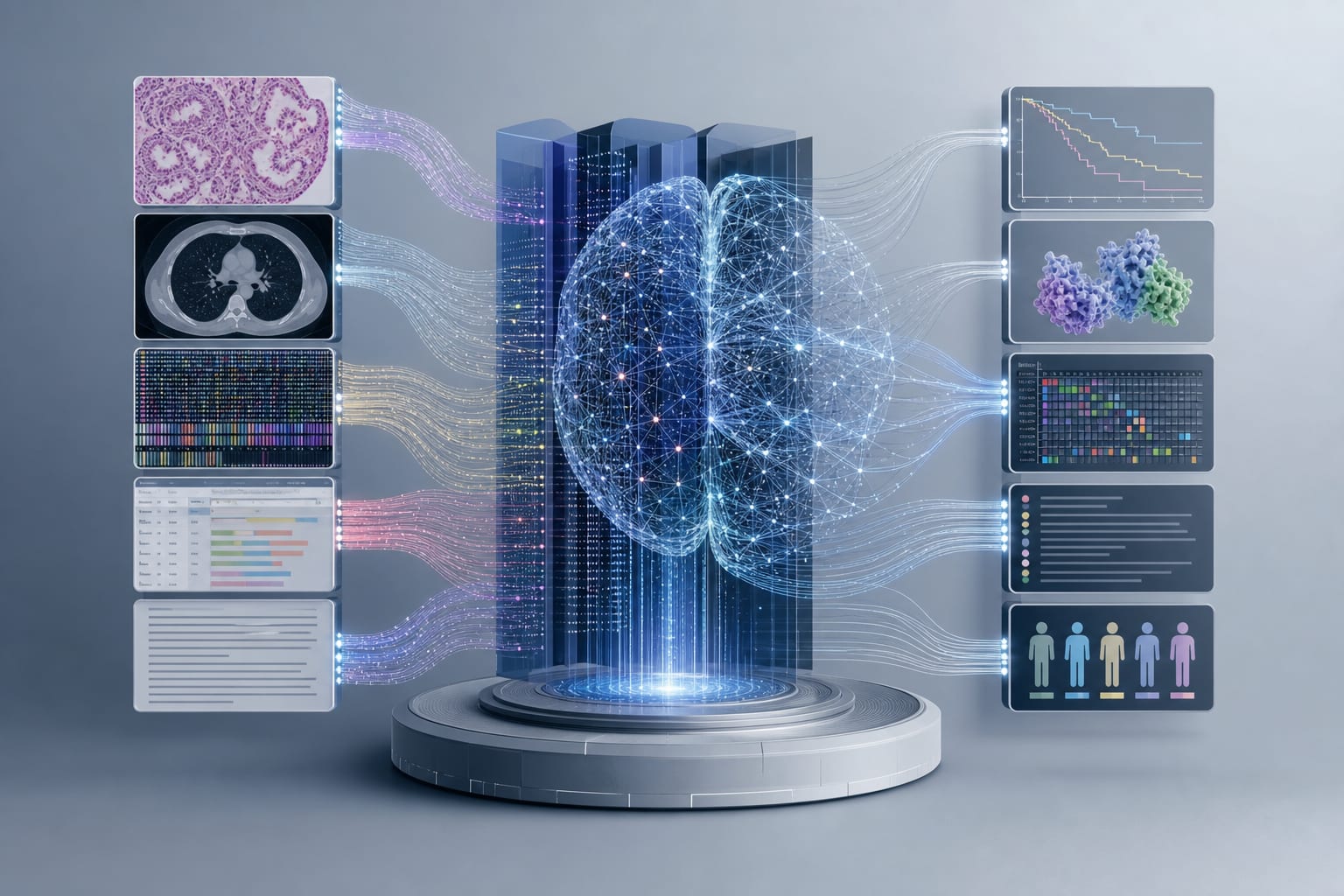
  • LLMs can integrate multimodal data to support cancer diagnosis and prognostic prediction.
  • They assist in comprehensive patient management by optimizing pre-clinical examination processes and providing postoperative care recommendations.
  • LLMs contribute to medical education by generating visualized teaching content for training resident physicians.
  • Bibliometric analysis reveals trends in LLM research, identifying high-impact topics and emerging frontiers.
  • Clinical trials involving LLMs are ongoing, indicating a growing interest in their application in oncology.

Clinical Implications

Healthcare professionals should consider the integration of LLMs into clinical workflows to enhance decision-making and patient care. Continuous evaluation and adaptation of these technologies will be essential to ensure their effectiveness and safety in oncology practice.

Conclusion

The integration of LLMs into oncology research presents significant opportunities for improving cancer care. Ongoing research and systematic evaluations will be crucial in addressing challenges and maximizing the potential of these advanced technologies.
Related Resources & Content

  1. npj Digital Medicine, 2026 -- CancerLLM: a large language model in cancer domain
  2. The ASCO Post, 2025 -- LLM Trained on Somatic Mutations Shows Prognostic and Predictive Utility
  3. The ASCO Post, 2025 -- ESMO Publishes Guidance on Large Language Model Use for Oncology Practice
  4. The ASCO Post, 2026 -- Large Language Models May Generate Concise, Coherent Pathology Summaries, Reducing Physician Burden
  5. Joint WHO and IARC press release, 2026 -- Guidance on large multi-modal models
  6. WHO Guidance on AI in Health
  7. FDA Guidance on AI-Enabled Device Software
  8. NIST AI Risk Management Framework
  9. ASCO Advocacy for Regulated AI Integration
  10. Joint WHO and IARC press release
  11. Plenary Highlights Across Tumor Types Reflect Advances in Research, Improvements in Care, and Changes in Practice - The ASCO Post
  12. Overall Survival with Amivantamab–Lazertinib in EGFR-Mutated Advanced NSCLC | New England Journal of Medicine
  13. Overall Survival with Neoadjuvant Nivolumab plus Chemotherapy in Lung Cancer | New England Journal of Medicine
  14. Roche data at ESMO 2025 showcase advances in science and cancer care across multiple tumour types
  15. Lilly's Verzenio® (abemaciclib) prolonged survival in HR+, HER2-, high-risk early breast cancer with two years of treatment | Nasdaq
  16. Large language model integrations in cancer decision-making: a systematic review and meta-analysis | npj Digital Medicine
  17. Quality of Large Language Model Responses to Radiation Oncology Patient Care Questions | Oncology | JAMA Network Open | JAMA Network
  18. Matching patients to clinical trials with large language models | Nature Communications

Original Source(s)

Related Content