Clinical outcome prediction of Contour Neurovascular System treatment based on pre-treatment geometric and hemodynamic characteristics - Report - MDSpire
Clinical Report: Predicting Clinical Outcomes of Contour Neurovascular System Therapy
Overview
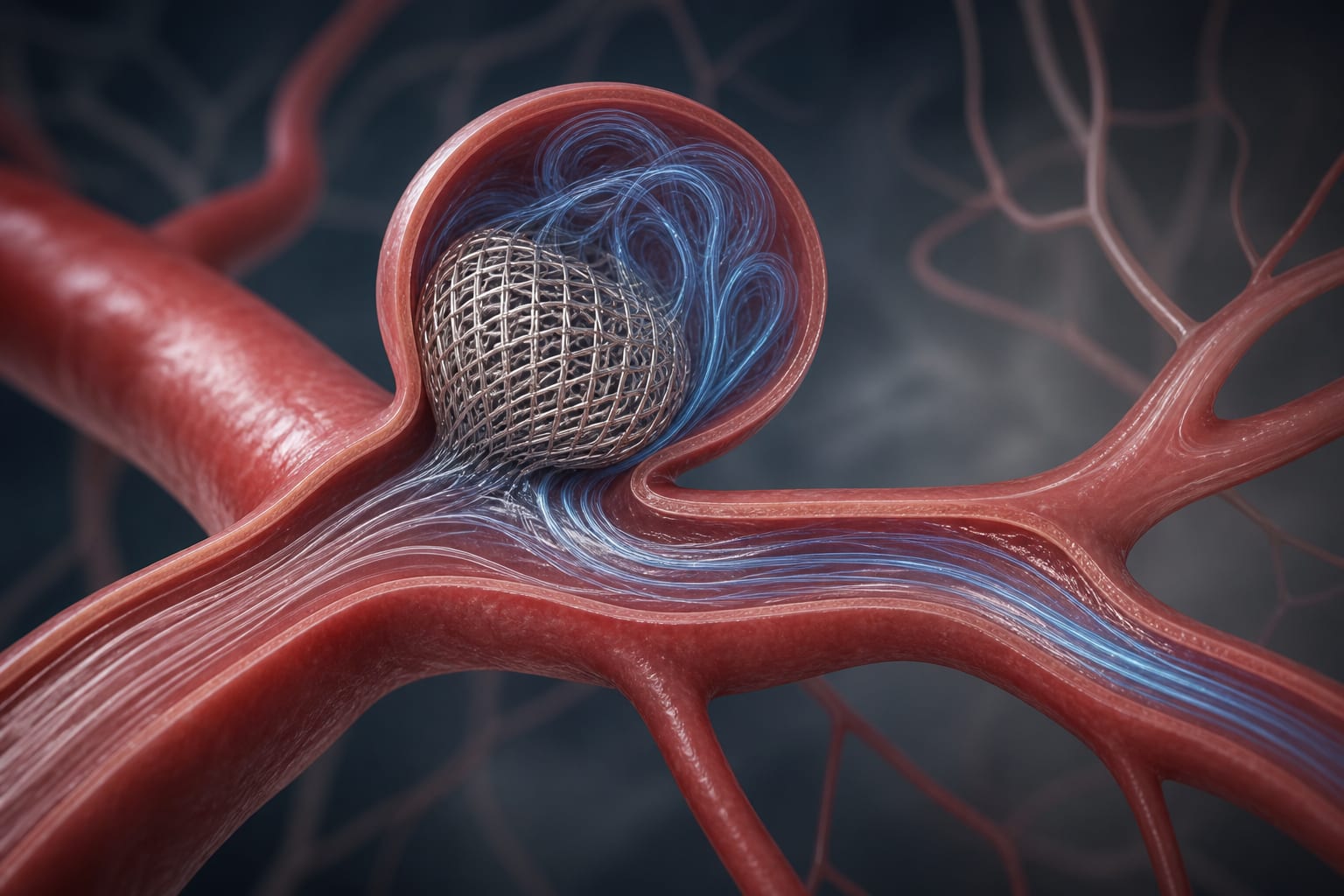
This study investigates the predictive value of pre-treatment geometric and hemodynamic factors on clinical outcomes in patients treated with the Contour Neurovascular System (CNS) for intracranial aneurysms.
Background
Intracranial aneurysms pose significant risks, including rupture that can lead to severe morbidity or mortality. The management of wide-necked bifurcation aneurysms is particularly challenging, necessitating innovative treatment options like the Contour Neurovascular System.
Data Highlights
No numerical data was provided in the source material.
Key Findings
The cohort included 39 intracranial aneurysms treated with CNS, with a follow-up duration median of 574 days.
Clinical outcomes were classified as positive or negative based on imaging follow-up, with 20 positive and 19 negative outcomes.
Negative outcomes were most commonly observed 3–12 months post-treatment, particularly at 6 months.
Device deformation was categorized into four groups, with no deformation observed in 13 cases.
Significant associations were noted between aneurysm morphology, hemodynamic flow reduction, and treatment outcomes.
Clinical Implications
Monitoring for device deformation and its potential impact on clinical outcomes is essential for managing intracranial aneurysms effectively.
Conclusion
Further research is needed to explore the predictive value of pre-treatment factors in clinical outcomes for CNS therapy.
An ancillary analysis found less than 2-percentage-point differences in 10-year recurrence across margin thresholds, with no statistically significant adjusted association.
Patients with lower nonischemic resting full-cycle ratio values had more repeat revascularizations despite similar 2-year major cardiovascular event rates.