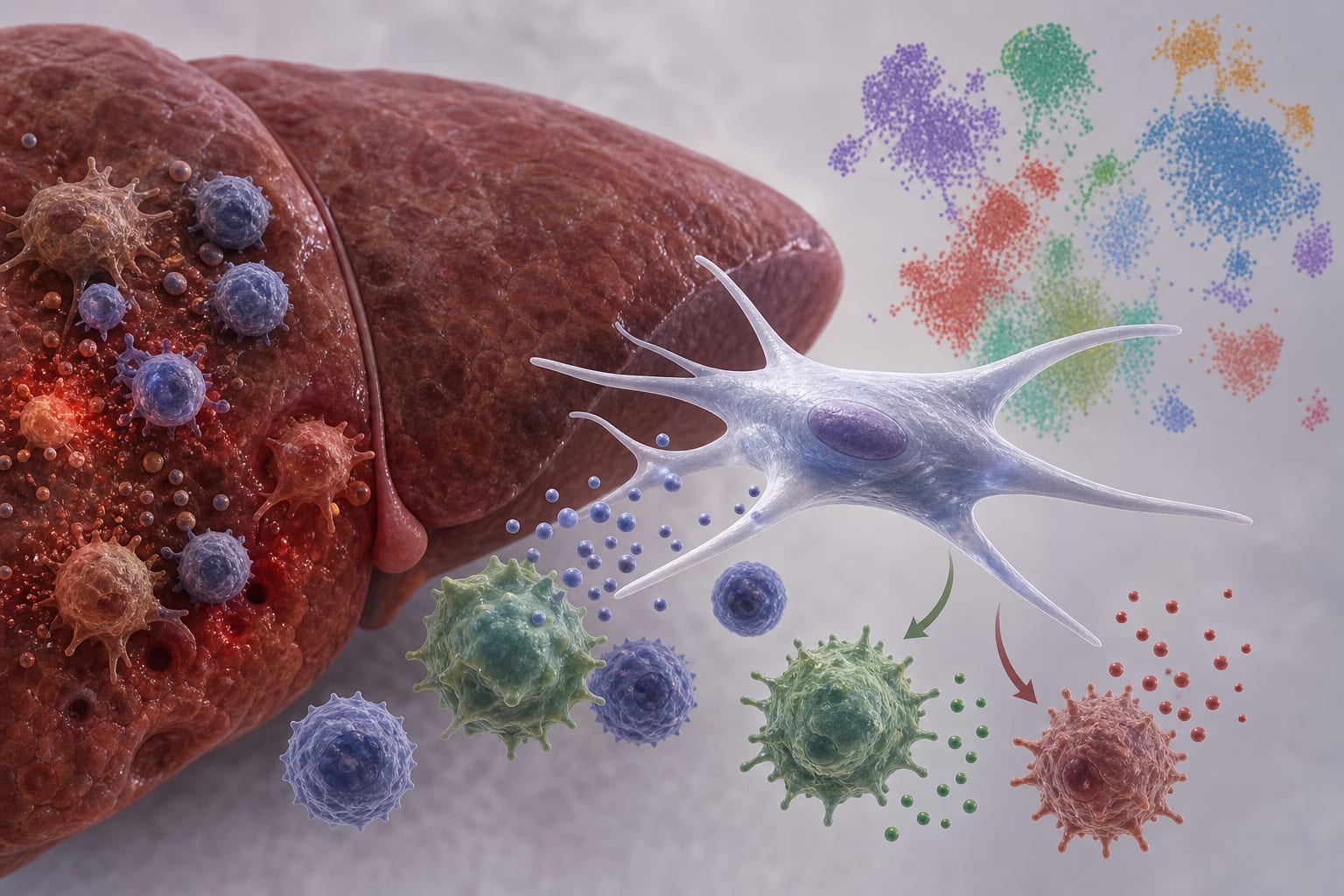
This study demonstrates that mesenchymal stem cells (MSCs) significantly reduce Concanavalin A (ConA)-induced acute hepatitis in mice through immune modulation and complement system regulation. The findings highlight MSCs' role in reshaping the hepatic immune microenvironment, particularly influencing monocyte-derived macrophages.
Background
ConA-induced hepatitis is a widely used murine model for studying immune-mediated liver damage, reflecting characteristics of human autoimmune hepatitis. Current treatments for immune-mediated hepatitis often involve immunosuppressive therapies, which can have significant side effects. Therefore, exploring MSCs as a therapeutic option is crucial for developing safer and more effective treatments.
Data Highlights
Single-cell RNA sequencing revealed that MSC treatment led to a reduction in myeloid-derived suppressor cells (MDSCs), regulatory T cells (Tregs), and NK cells, while enhancing monocyte-derived macrophages (MoMFs). The study also identified distinct transcriptional pathways associated with MoMF states post-MSC treatment.
Key Findings
MSC administration significantly mitigated acute liver injury induced by ConA.
MSC treatment altered the composition of immune cell populations in the liver, particularly reducing MDSCs and Tregs.
Enhanced MoMFs were observed following MSC treatment, indicating a shift in macrophage states.
Cell–cell communication analysis highlighted complement-related signaling as a key interaction in the hepatic immune microenvironment.
Multiplex immunohistochemistry showed increased CD206 expression and decreased CD86 in MSC-treated livers compared to ConA-only treated livers.
Clinical Implications
The findings suggest that MSCs could serve as a novel therapeutic approach for managing immune-mediated liver injuries by selectively modulating immune responses. This strategy may reduce the reliance on traditional immunosuppressive therapies, potentially minimizing associated side effects.
Conclusion
MSCs demonstrate a promising capacity to improve immune-mediated liver damage through targeted immune modulation, particularly by restructuring macrophage populations and enhancing complement signaling pathways.