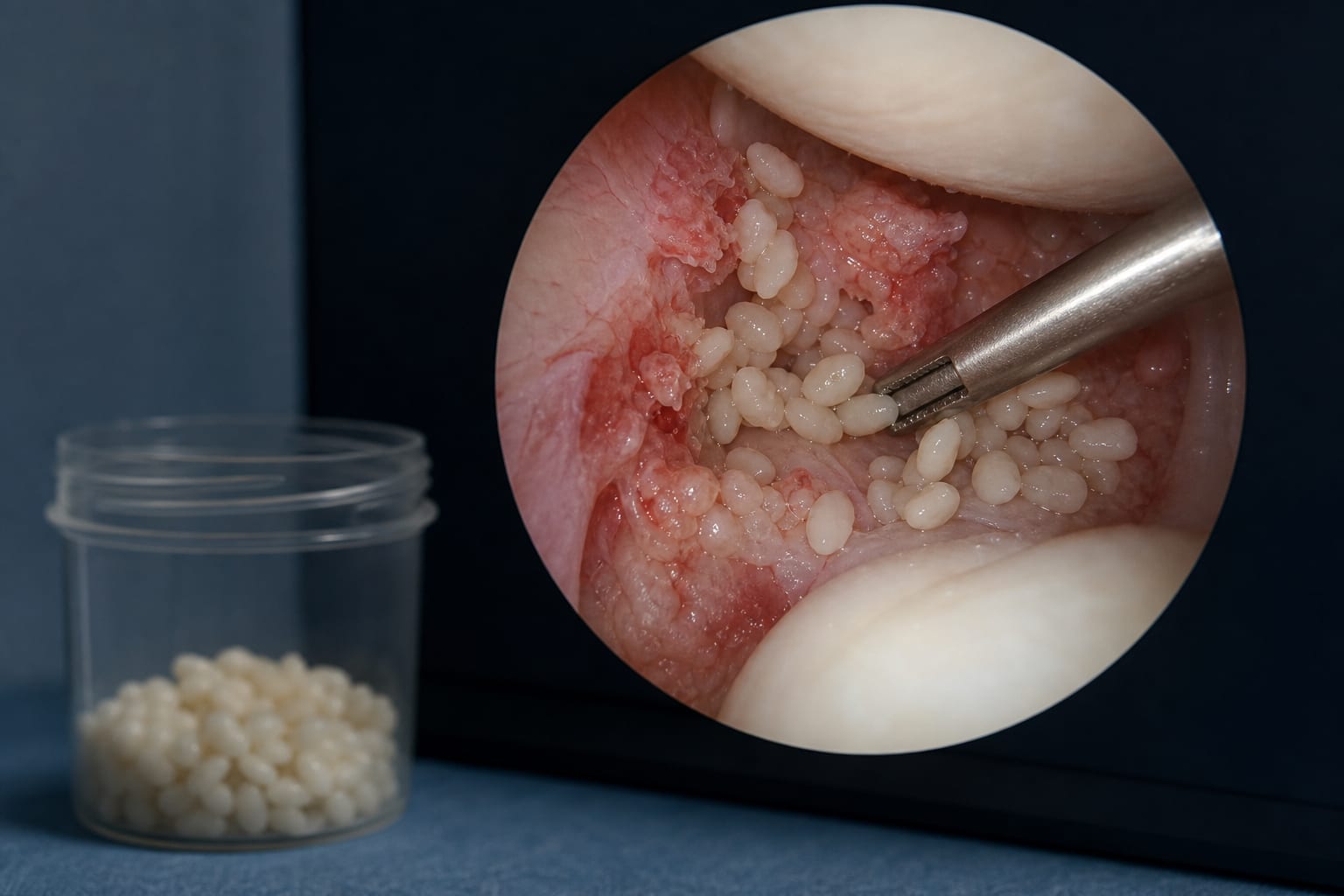
Clinical Report: Early-Onset Rice Body Synovitis in Pediatric Patients
Overview
Expand on the significance of the association with JIA and detail the multidisciplinary management approach.
Background
Rice body-like synovitis is a rare form of arthritis characterized by rice-like bodies in the joint synovium, often linked to autoimmune disorders in pediatric patients. Its low incidence and nonspecific presentation complicate diagnosis and treatment, particularly in children under three years old. Understanding its clinical features and management is crucial for improving outcomes in this vulnerable population.
Data Highlights
Patient
Age (months)
Affected Knee
Symptoms Duration (months)
CRP Elevated
ESR Elevated
ANA Positive
1
22
Left
1.5
No
No
No
2
22
Right
2.0
Yes
Yes
Yes
3
22
Right
1.0
No
No
No
4
22
Bilateral
2.5
Yes
Yes
No
Key Findings
Four pediatric patients with rice body-like synovitis were analyzed, with an average age of 22.5 months.
All patients presented with knee swelling and limping, with some experiencing mild limitation of passive flexion.
Histopathological examination revealed findings consistent with juvenile idiopathic arthritis (JIA).
All cases underwent arthroscopic debridement, with satisfactory outcomes after multidisciplinary follow-up.
Postoperative treatment included ibuprofen and methotrexate, with regular monitoring of inflammatory markers.
Clinical Implications
Early recognition and appropriate management of rice body-like synovitis in young children are essential to prevent long-term joint damage. A multidisciplinary approach involving rheumatology and orthopedics is recommended for optimal treatment outcomes. Clinicians should consider JIA as a significant differential diagnosis in cases of rice body-like synovitis.
Conclusion
This case series underscores the importance of early diagnosis and intervention in pediatric rice body-like synovitis, particularly its association with juvenile idiopathic arthritis. Continued research and clinical awareness are vital for improving management strategies in this rare condition.