Clinical Report: Remote Monitoring of Home Oxygen Therapy in Neonates via Teleassistance
Overview
This study evaluates an IoT-based teleassistance system for monitoring home oxygen therapy in preterm neonates.
Background
Preterm infants often require home oxygen therapy due to immature lungs or chronic conditions. Effective monitoring is crucial to prevent complications such as retinopathy of prematurity and cardiovascular instability. Current follow-up methods lack standardized protocols.
Data Highlights
No numerical data or trial results were provided in the source material.
Key Findings
The study involves a historically controlled cohort of 32 neonates requiring home oxygen therapy.
Participants were selected based on specific clinical criteria, including stable oxygen demands and physiological stability.
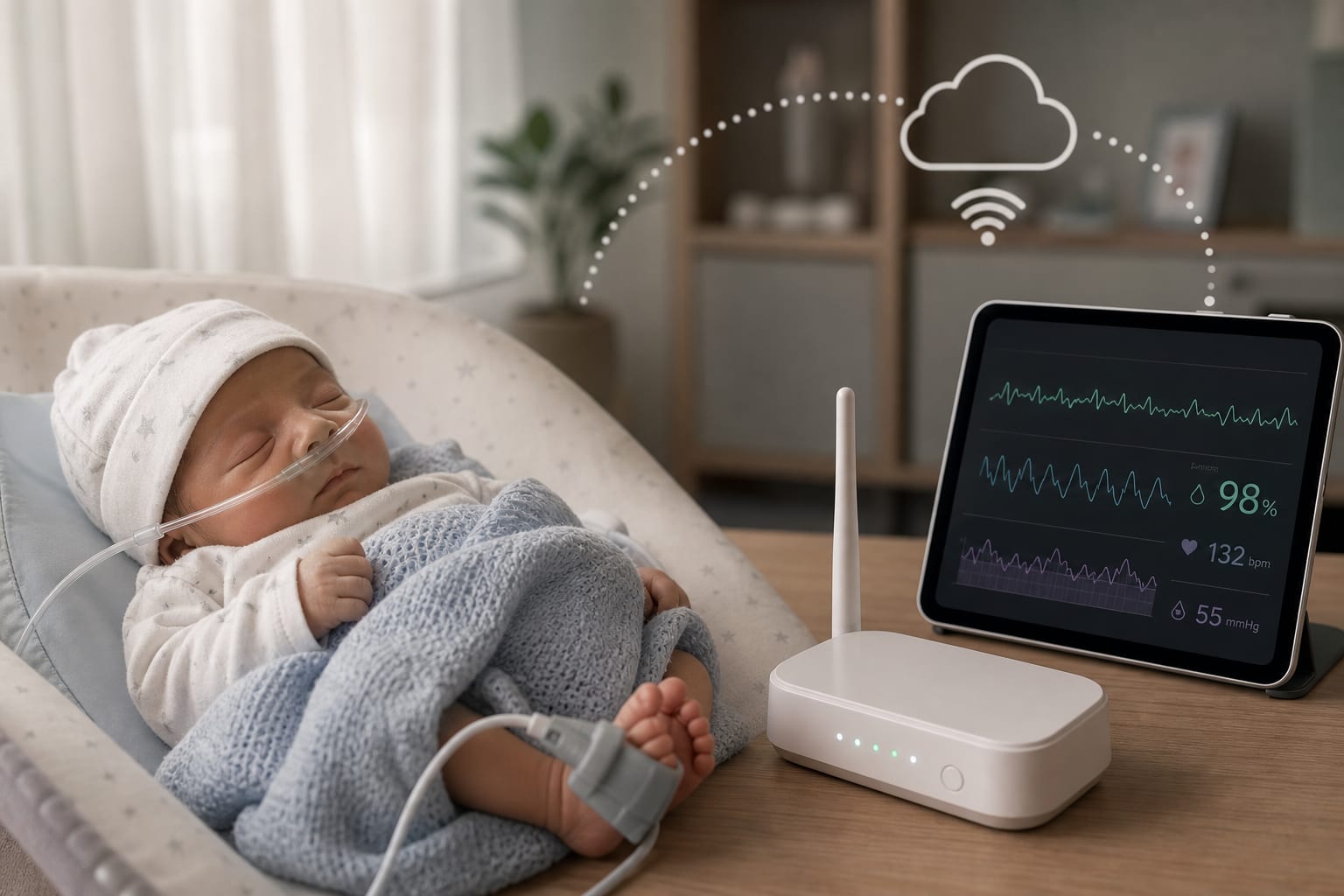
The teleassistance system integrates a MAX30102 PPG sensor for real-time monitoring of SpO2, heart rate, and blood pressure.
Signal processing algorithms are designed to accommodate neonatal motion disturbances.
The system utilizes 4G/LTE and Wi-Fi for reliable data transmission.
Clinical Implications
The implementation of an IoT-driven teleassistance system may facilitate monitoring of preterm infants receiving home oxygen therapy.
Conclusion
The study presents a teleassistance system for neonatal home oxygen therapy, addressing the need for effective monitoring in this population.
by Santiago Murillo-Rendón, Isabel C. Echeverri-Ocampo, Carolina Márquez-Narváez, Fernando Arango-Gómez, Belarmino Segura Giraldo, Camilo Salgado Jiménez, Oscar Julián López-Uribe