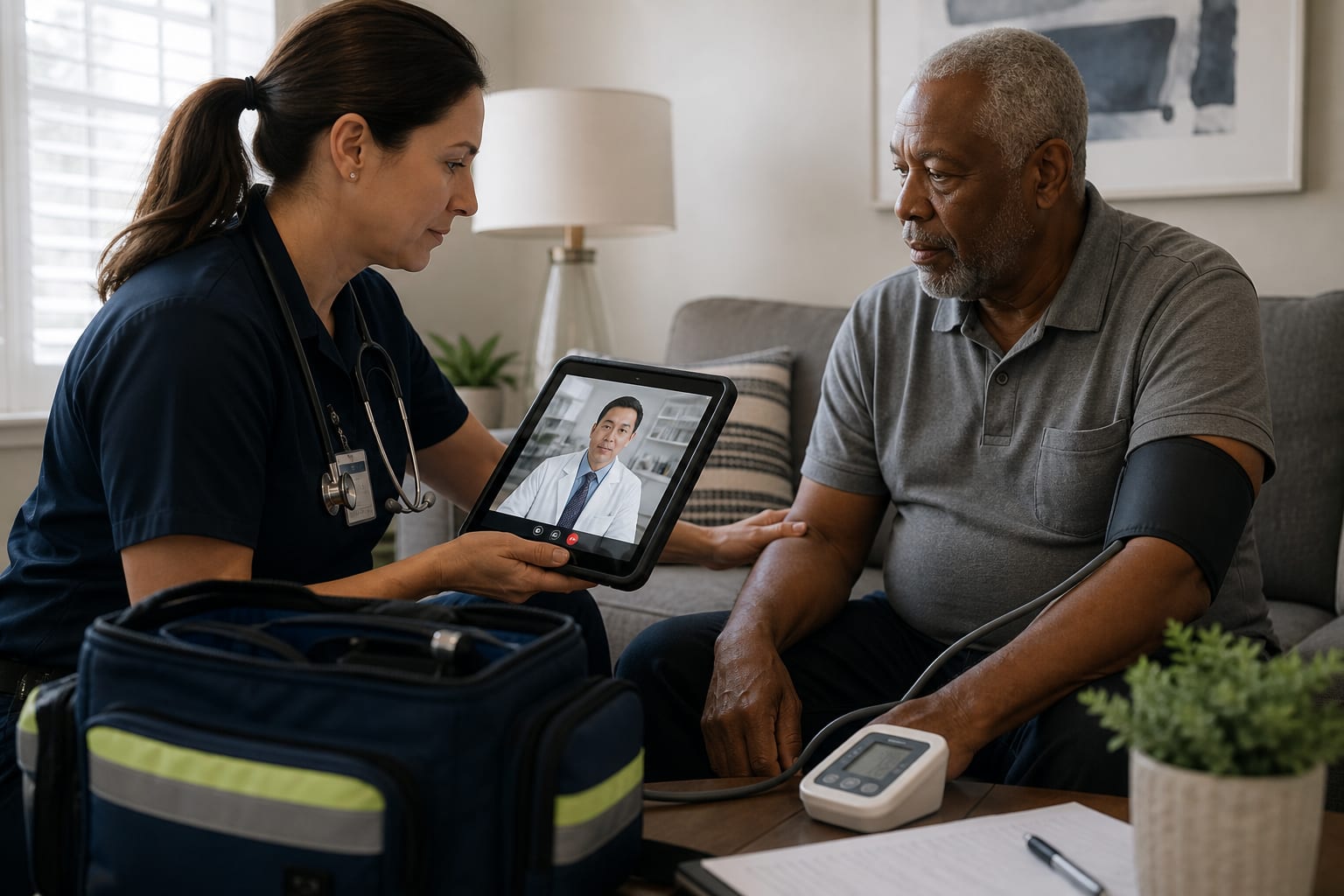
Clinical Report: Home-Based Hospital Care for Heart Failure
Overview
This study evaluates the safety of an acute hospital care at home (AHCAH) program for heart failure patients. It finds no significant differences in readmission rates or mortality between home care and traditional hospital care.
Background
Heart failure (HF) poses a significant burden on healthcare systems, with projections indicating over 11 million individuals affected in the U.S. by 2050. The implementation of AHCAH programs may provide an alternative to traditional hospitalization. Understanding the effectiveness and safety of these programs is crucial as healthcare systems seek to optimize care delivery for HF patients.
Data Highlights
No significant differences in 30-day or 60-day all-cause readmission, escalation of care, or mortality were found between patients treated at home and those receiving traditional hospital care.
Key Findings
AHCAH can be delivered safely for selected patients with heart failure.
No significant differences in days alive at home and out of the hospital at 60 days were observed.
Patient selection for AHCAH was determined on a case-by-case basis by clinicians.
AHCAH may reduce skilled nursing facility use despite similar preadmission mobility assessments.
Financial incentives in integrated health systems differ from those in fee-for-service models, impacting patient selection and care delivery.
Clinical Implications
Clinicians should consider individual patient circumstances when determining eligibility for home-based care.
Conclusion
AHCAH programs require further evaluation to understand their safety and effectiveness in selected patient populations.