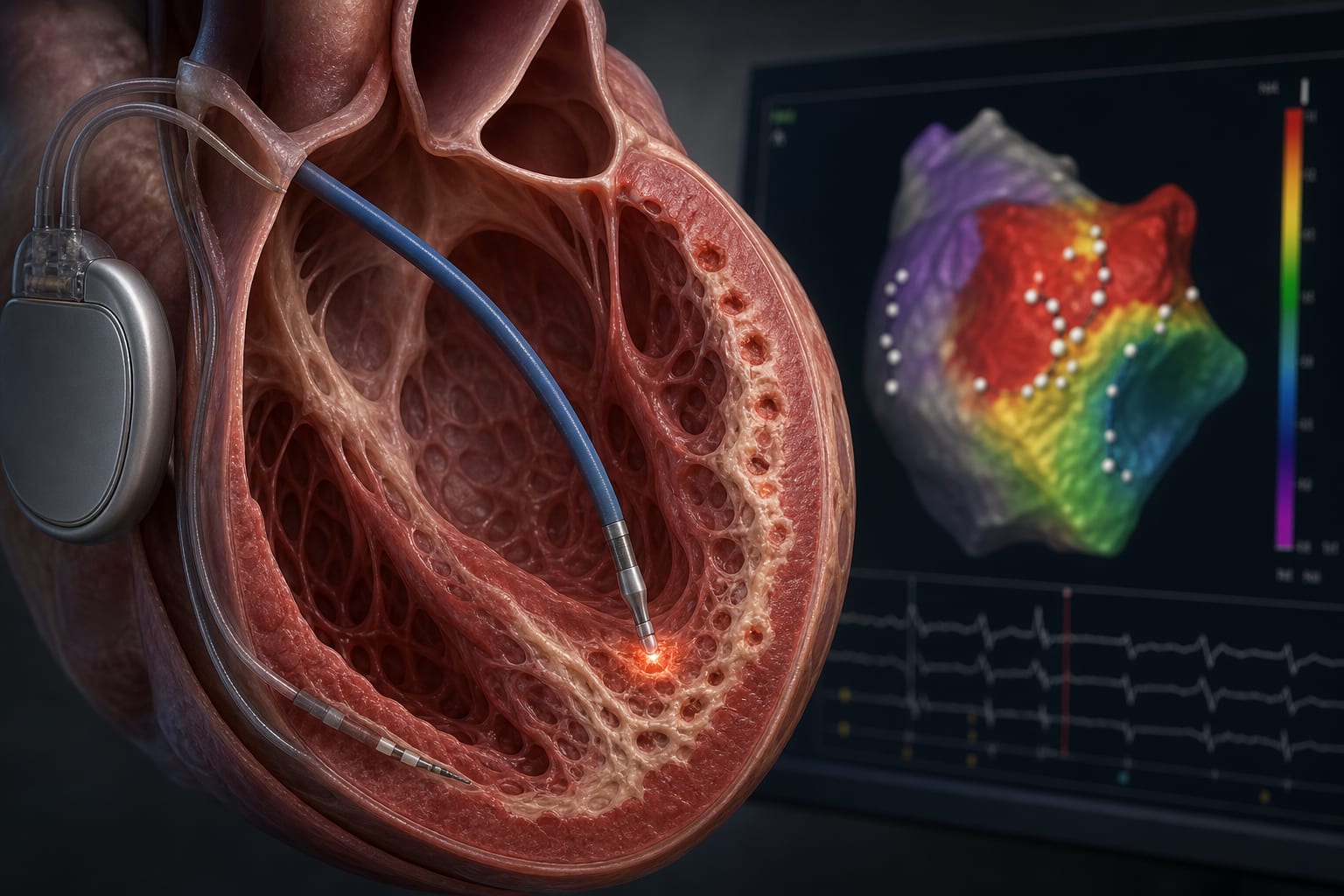
Clinical Report: Deep Learning for Identifying Paroxysmal Supraventricular Tachycardia
Overview
This study presents a deep learning model that integrates surface and transesophageal ECG data to classify paroxysmal supraventricular tachycardia (PSVT) types, specifically targeting slow-fast atrioventricular nodal re-entrant tachycardia (S-F AVNRT) and orthodromic atrioventricular reentrant tachycardia (O-AVRT).
Background
Paroxysmal supraventricular tachycardia (PSVT) is a common cardiac arrhythmia. Accurate identification and classification of PSVT types are crucial for effective management and treatment, including catheter ablation. Current diagnostic methods often rely on manual analysis of ECG data.
Data Highlights
No numerical data or trial data were provided in the source material.
Key Findings
The study developed a deep learning model to classify PSVT types using both surface and esophageal ECG data.
Inclusion criteria for ECG data included successful induction of PSVT and specific ECG features during episodes.
Exclusion criteria eliminated ECGs with wide QRS complexes or atrial arrhythmias.
Data were collected from multiple hospitals in Guangxi Zhuang Autonomous Region, China, from June 2014 to November 2022.
Clinical Implications
The integration of deep learning with ECG data may improve the identification of arrhythmia types.
Conclusion
The development of a deep learning model for PSVT classification represents a step forward in arrhythmia diagnostics.