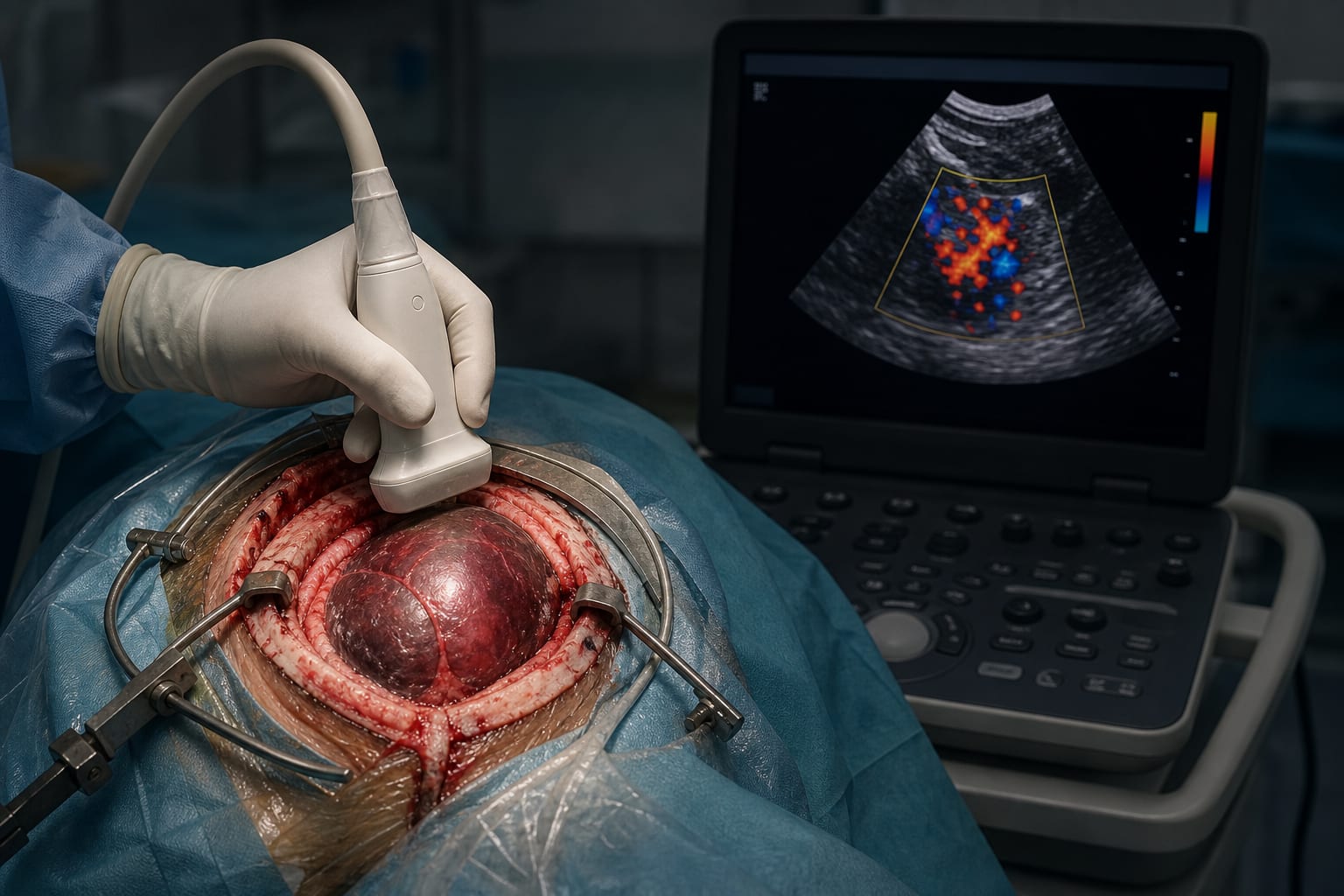
Clinical Report: Stereotactic Intracranial Biopsy Outcomes Over 15 Years
Overview
This study reviews the outcomes of non-diagnostic stereotactic intracranial biopsies over a 15-year period, highlighting the challenges in obtaining adequate tissue samples. It emphasizes the importance of understanding the clinical trajectory of patients following non-diagnostic biopsies to improve management protocols.
Background
Stereotactic biopsy is a minimally invasive technique crucial for diagnosing intracranial lesions, particularly in functionally critical brain areas. Despite its advantages, the occurrence of non-diagnostic biopsies poses significant challenges in clinical decision-making and patient management. Understanding the outcomes and implications of these non-diagnostic cases is essential for enhancing diagnostic protocols and patient care.
Data Highlights
No numerical data available in the source material.
Key Findings
Non-diagnostic biopsies were defined as those failing to provide lesion-specific pathology.
Re-biopsy conversion rates for non-diagnostic cases are reported to be above 75%.
True negative (TN) and false negative (FN) statuses were established to differentiate biopsy outcomes.
Technical challenges in targeting lesions were assessed using a depth-to-diameter ratio.
Post-biopsy clinical outcomes and follow-up strategies varied significantly among patients.
Clinical Implications
Clinicians should be aware of the high rates of non-diagnostic biopsies and the potential for successful re-biopsy. Understanding the characteristics of lesions and procedural challenges can guide better management strategies and improve patient outcomes.
Conclusion
This study underscores the need for improved transparency and guidance in managing non-diagnostic stereotactic biopsies, which can significantly impact patient care and treatment pathways.
by Vratko Himic, Sebastian Vargas-George, Maxon V. Knott, Vaidya Govindarajan, Seth S. Tigchelaar, Tyler M. Cardinal, Adham M. Khalafallah, Victor M. Lu, Hatun Mine Sahin, Arnold Lang, Zachary C. Gersey, Daniel M. Aaronson, Ricardo J. Komotar, Ashish H. Shah, Michael E. Ivan