Oculomotor markers of functional impairment in traumatic brain injury using simple and predictive visual tracking - Report - MDSpire

Oculomotor markers of functional impairment in traumatic brain injury using simple and predictive visual tracking

  • By

  • Shimrit Shani

  • Oren Kadosh

  • Yaron Sacher

  • Keren Cismariu-Potash

  • Yoram S. Bonneh

  • July 10, 2026

Share

Clinical Report: Oculomotor Indicators of Functional Limitations in TBI

Overview

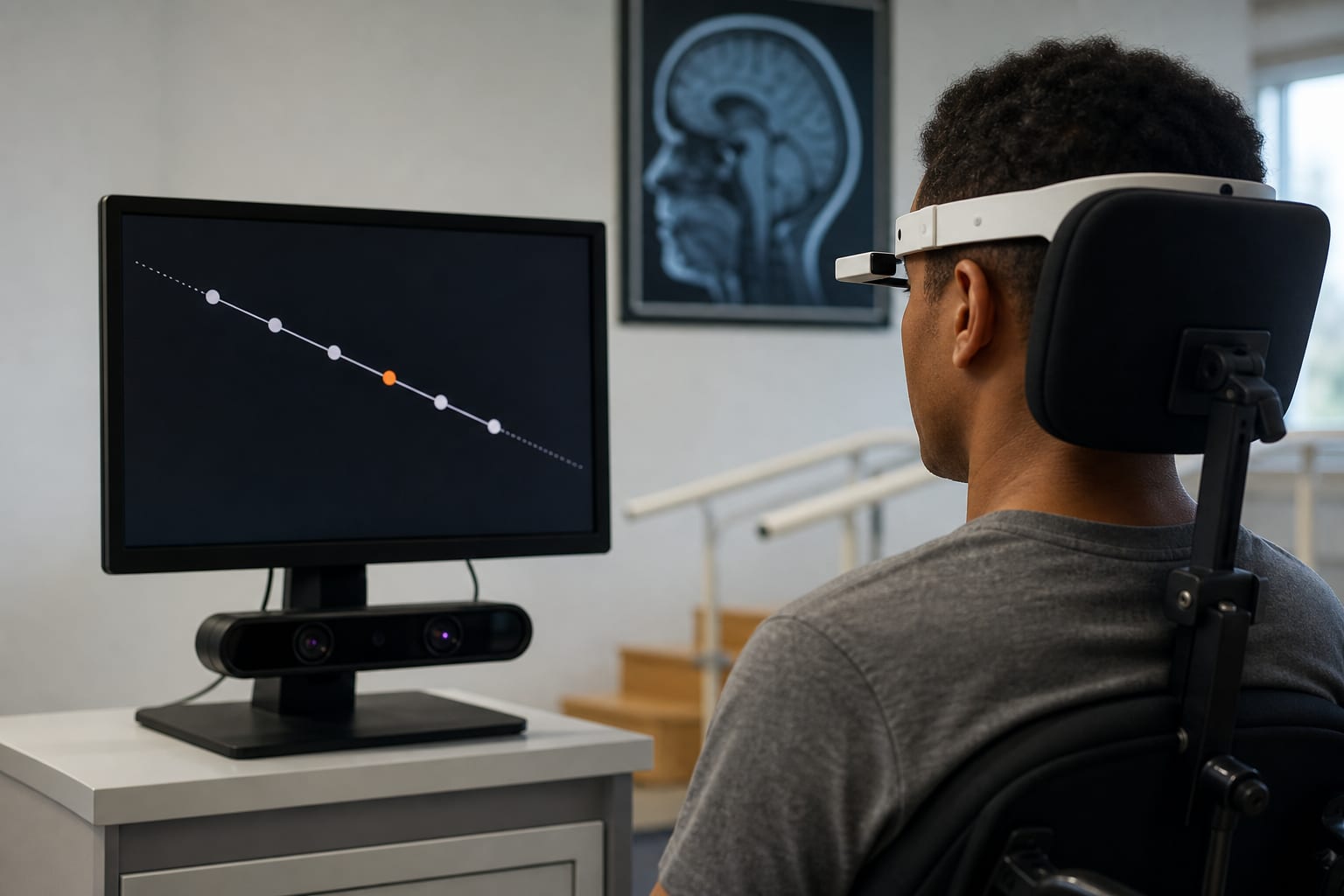
This study identifies significant oculomotor deficits in TBI patients compared to controls, correlating these deficits with functional status during rehabilitation.

Background

Traumatic Brain Injury (TBI) is a leading cause of disability worldwide, often resulting in visual and oculomotor impairments that significantly affect daily functioning. Understanding these deficits is crucial for developing effective rehabilitation strategies. Oculomotor function serves as a sensitive marker of neurological impairment.

Data Highlights

Oculomotor IndicesAUCCorrelation with Functional Status (R)
Saccadic pursuit0.71-0.840.39-0.77
Tracking deviation under occlusion0.71-0.840.39-0.77
Initial tracking speed0.71-0.840.39-0.77
Initial catch-up saccade latency0.71-0.840.39-0.77
Pupil response0.71-0.840.39-0.77
Vergence instability0.71-0.840.39-0.77

Key Findings

  • TBI patients showed widespread oculomotor deficits compared to age-matched controls.
  • Oculomotor measures correlated significantly with functional status as indexed by the Functional Independence Measure.
  • No association was found between oculomotor deficits and initial injury severity as measured by the Glasgow Coma Scale.
  • Multiple components of the oculomotor system were disrupted in TBI patients, including predictive tracking and pupil-linked arousal.

Clinical Implications

The findings suggest that oculomotor assessments can provide valuable insights into the functional status of TBI patients during rehabilitation. Clinicians may consider incorporating eye-tracking evaluations into routine assessments to monitor recovery and tailor rehabilitation strategies.

Conclusion

The study highlights the potential of oculomotor measures as indicators of current brain function in TBI patients.

Related Resources & Content

  1. Frontiers in Neurology, 2026 -- Assessing the prognostic value of early oculomotor abnormalities in Huntington’s disease
  2. Brain, 2024 -- Enhancing Recovery from Hemianopia: The Role of Interareal Cross-Frequency Brain Stimulation
  3. The Ophthalmologist, 2026 -- Blink and You’re Powered
  4. DOD Clinical Recommendation, 2026 -- Assessment and Management of Dizziness and Visual Disturbances Following Concussion/Mild Traumatic Brain Injury
  5. Efficacy of Restitutive Interventions for Oculomotor Deficits in Adults with Concussion/Mild Traumatic Brain Injury: A Systematic Review and Meta-analysis, 2025
  6. Optometric Management — BUSINESS: TECHNOLOGY
  7. DOD Clinical Recommendation | January 2026
  8. Efficacy of Restitutive Interventions for Oculomotor Deficits in Adults with Concussion/Mild Traumatic Brain Injury: A Systematic Review and Meta-analysis - ScienceDirect
  9. Investigating the Utility of the BrainEye Smartphone Eye Tracking Application and Platform in Concussion Management | Sports Medicine - Open | Springer Nature Link

Original Source(s)

Related Content