Clinical Report: Distinct T Cell Profile in Smoldering Multiple Myeloma
Overview
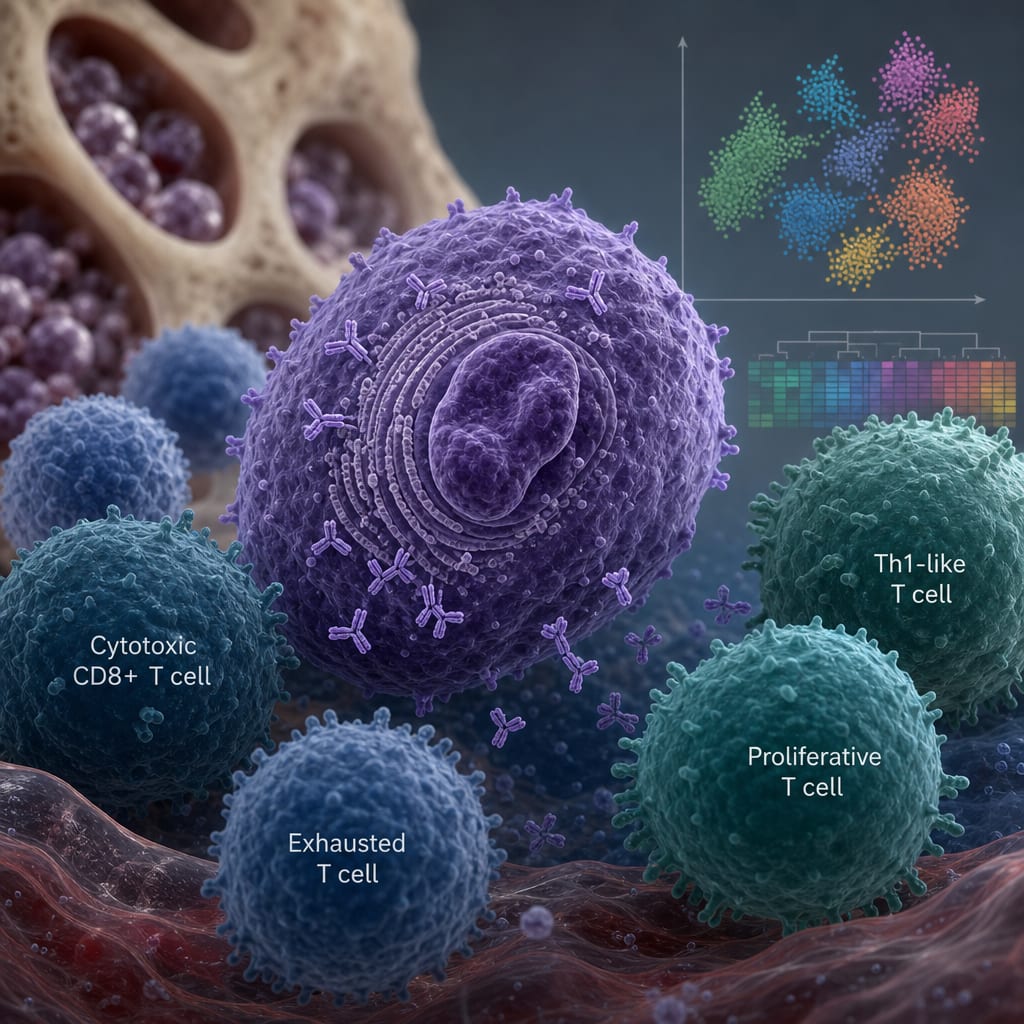
This study identifies specific T cell signatures that predict early progression from smoldering multiple myeloma (SMM) to active multiple myeloma (MM). The findings suggest that immune profiling could enhance risk stratification and inform treatment decisions for patients with SMM.
Background
Smoldering multiple myeloma (SMM) is a precursor to active multiple myeloma (MM) and is characterized by a higher plasma cell burden without end-organ damage. Accurate risk assessment is crucial as many patients may never progress to MM, yet those at high risk may benefit from early intervention. Current prognostic models primarily focus on tumor burden, highlighting the need for additional immune-based assessments.
Data Highlights
Patient Cohort
Progression Status
Median Time to Progression (years)
Clinical Follow-Up (years)
18 SMM Patients
9 Early Progression
2.1 (0.85–3.3)
8.6 (5.1–12.8)
Key Findings
Identified 25 unique T cell signatures predictive of early progression in SMM patients.
All early progression patients had advanced imaging at diagnosis, with most exhibiting myeloma-defining events.
Mayo 2/20/20 risk scores were calculated for both early progression and non-progression cohorts.
None of the non-progression patients progressed to MM as of the data cutoff.
Utilized advanced AI tools for comprehensive immune profiling of peripheral blood samples.
Clinical Implications
The identification of distinct T cell profiles may allow for better risk stratification in SMM patients, potentially guiding early therapeutic interventions. Clinicians should consider integrating immune profiling into routine assessments to optimize management strategies for high-risk patients.
Conclusion
This study underscores the importance of immune profiling in predicting progression from SMM to MM, suggesting a shift towards more personalized treatment approaches based on T cell signatures.
by Ross S. Firestone, Anish K. Simhal, Theresia Akhlaghi, Jung Hun Oh, Devin McAvoy, Kylee H. Maclachlan, Juan-Jose Garces, Sham Mailankody, Hani Hassoun, Urvi A. Shah, Neha Korde, Carlyn R. Tan, Sridevi Rajeeve, Hamza Hashmi, Alexander M. Lesokhin, Kinga Hosszu, Francesco Maura, Joseph O. Deasy, Saad Z. Usmani, Malin Hultcrantz