Independent risk factors for clinically significant acute poisoning in children presenting to the emergency department: a 4-year cohort study of 2,345 cases - Report - MDSpire
Advertisement
Independent risk factors for clinically significant acute poisoning in children presenting to the emergency department: a 4-year cohort study of 2,345 cases
Clinical Report: Identifying Independent Risk Factors for Significant Acute Poisoning
Overview
This study analyzed 2,345 pediatric cases of acute poisoning to identify independent risk factors for clinically significant outcomes. Key findings included a shift in poisoning sources and specific risk factors such as age, intentional self-harm, and exposure to psychotropic drugs.
Background
Acute poisoning is a significant public health issue affecting children, leading to morbidity and mortality. Understanding the epidemiological trends and risk factors is crucial for improving triage and treatment in emergency departments. Recent shifts in poisoning sources necessitate updated clinical approaches to manage these cases effectively.
Data Highlights
Independent Risk Factors for Clinically Significant Acute Poisoning
Risk Factor
Adjusted Odds Ratio (aOR)
Age >12 years
2.34
Intentional self-harm
3.12
Pre-hospital delay >6 h
2.78
Multiple-agent exposure
2.15
Exposure to agricultural herbicides
5.45
Exposure to psychotropic drugs
3.86
Key Findings
Clinically significant poisoning occurred in 18.0% of cases (422 patients).
The poisoning spectrum shifted from agricultural chemicals to psychotropic drugs (18.5%–31.2%).
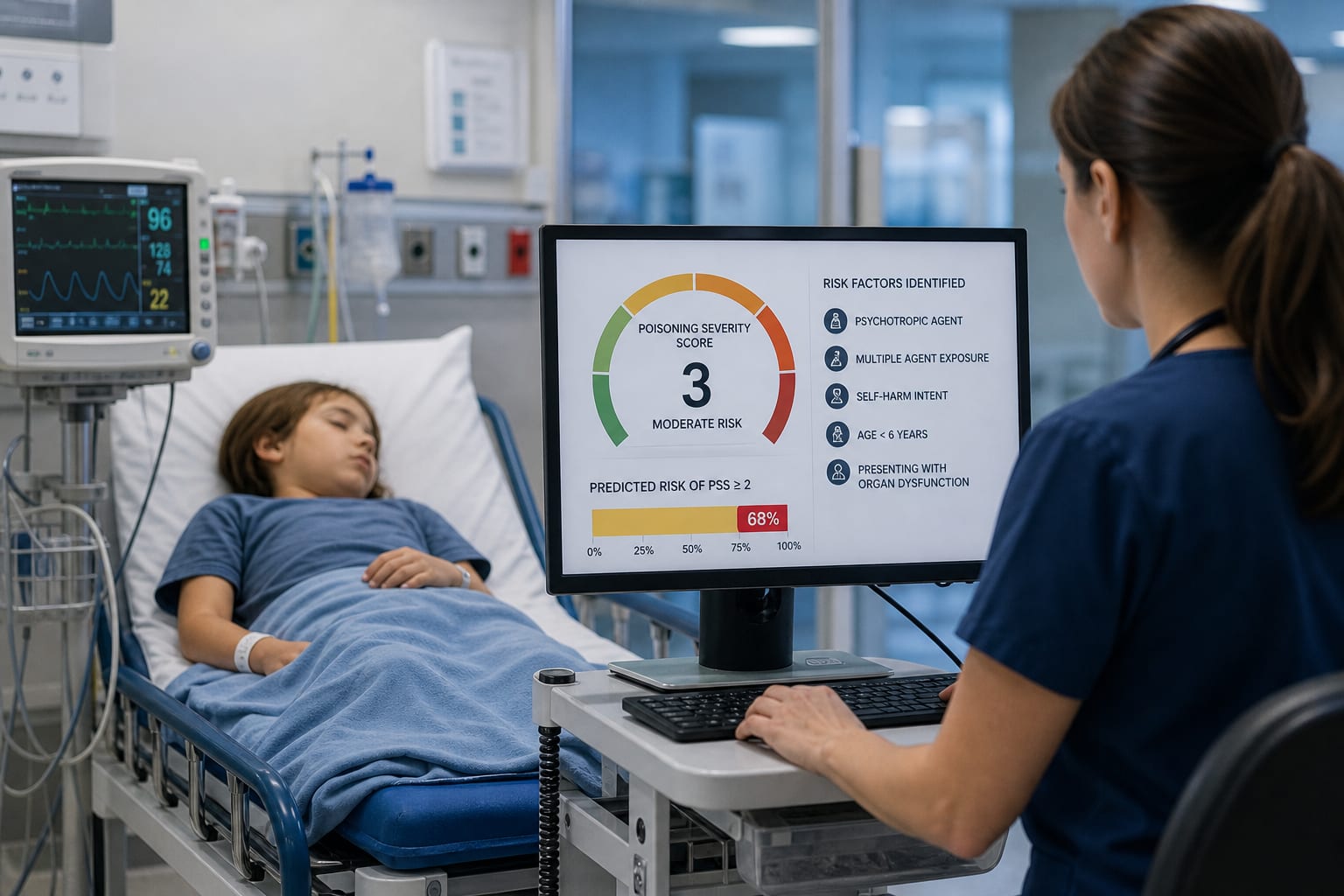
Independent risk factors for significant poisoning included age >12 years, intentional self-harm, and pre-hospital delays.
Acute organ dysfunctions were significantly associated with clinically significant poisoning cases.
Mortality was observed exclusively in the clinically significant poisoning group (1.2%).
Clinical Implications
Identifying these risk factors can aid in early triage and intervention for pediatric patients presenting with acute poisoning. Emergency departments should implement protocols to recognize these indicators to improve patient outcomes.
Conclusion
The study identifies independent risk factors for clinically significant pediatric poisoning, including age >12 years, intentional self-harm, pre-hospital delays, multiple-agent exposure, and exposure to agricultural herbicides or psychotropic drugs.