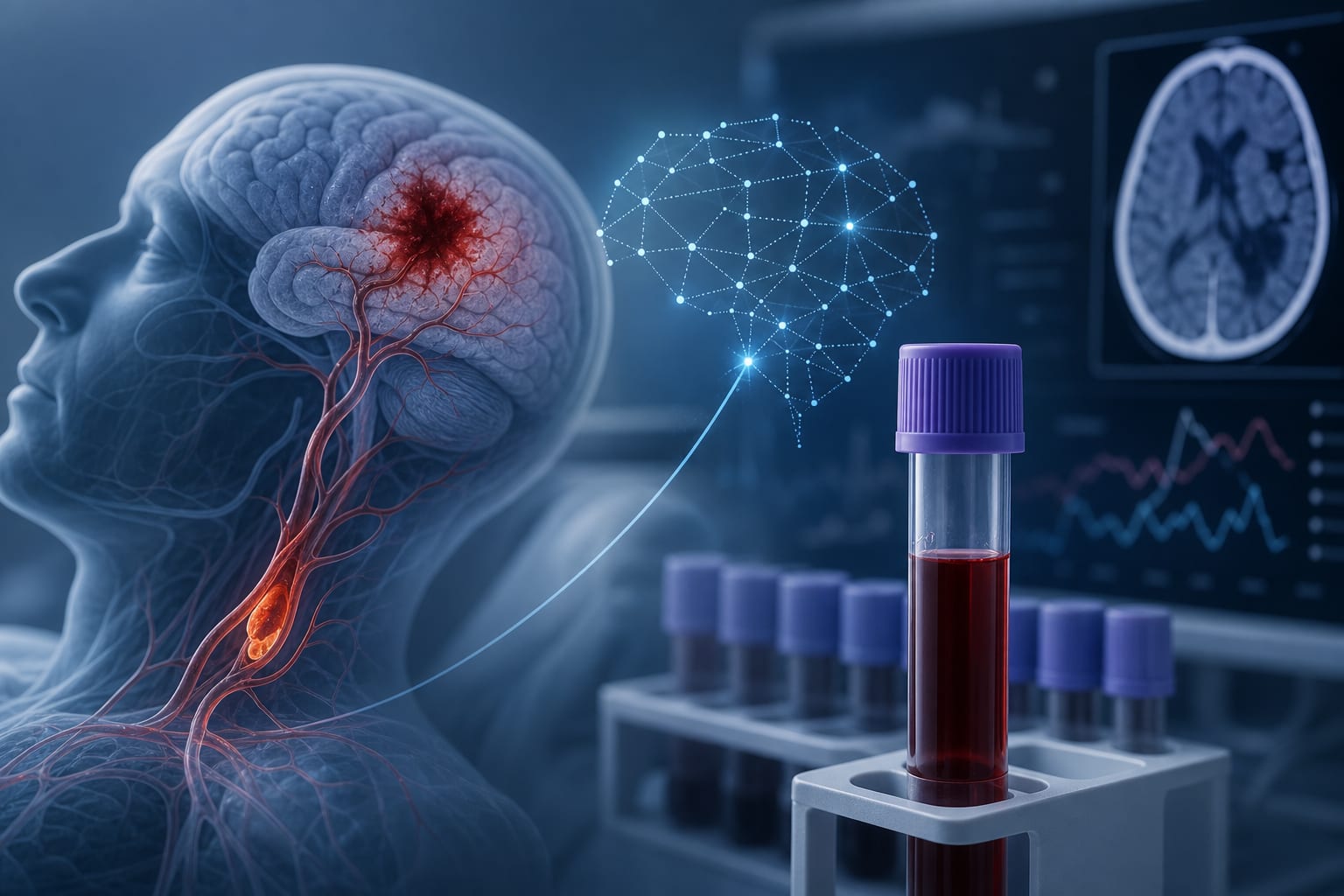
Clinical Report: Forecasting Sepsis in Adults with Severe Cerebrovascular Disorders
Overview
This study evaluates the diagnostic performance of blood biomarkers for early sepsis diagnosis in ICU patients with acute moderate to severe stroke. A prediction model was developed, achieving an area under the curve (AUC) of 0.816.
Background
Sepsis is a leading cause of mortality in neurological intensive care unit (NICU) patients, particularly those with severe cerebrovascular disorders. Early identification of sepsis is crucial, as infections can significantly impact recovery and survival rates. The study aims to identify effective biomarkers that can aid in the timely diagnosis of sepsis in this vulnerable population.
Data Highlights
The prevalence of sepsis in acute moderate-to-severe stroke patients was found to be 12.1%. The prediction model identified four significant variables: Hyperlipidaemia (P < 0.001), IL-10 (P < 0.001), NIHSS (P = 0.015), and Blood creatinine (P < 0.001). The model's AUC was 0.816 (95% CI: 0.721 ~ 0.911).
Key Findings
The prevalence of sepsis in the studied population was 12.1%.
Patients with sepsis had lower GCS scores and higher NIHSS scores compared to those without sepsis.
Four variables were identified as significant predictors of sepsis: Hyperlipidaemia, IL-10, NIHSS, and Blood creatinine.
The prediction model demonstrated good calibration and discrimination with an AUC of 0.816.
Clinical Implications
The identification of specific blood biomarkers can aid in the early diagnosis of sepsis in patients with severe cerebrovascular disorders.
Conclusion
The study developed a prediction model for sepsis in acute moderate-to-severe stroke patients, highlighting the importance of specific biomarkers in early diagnosis.