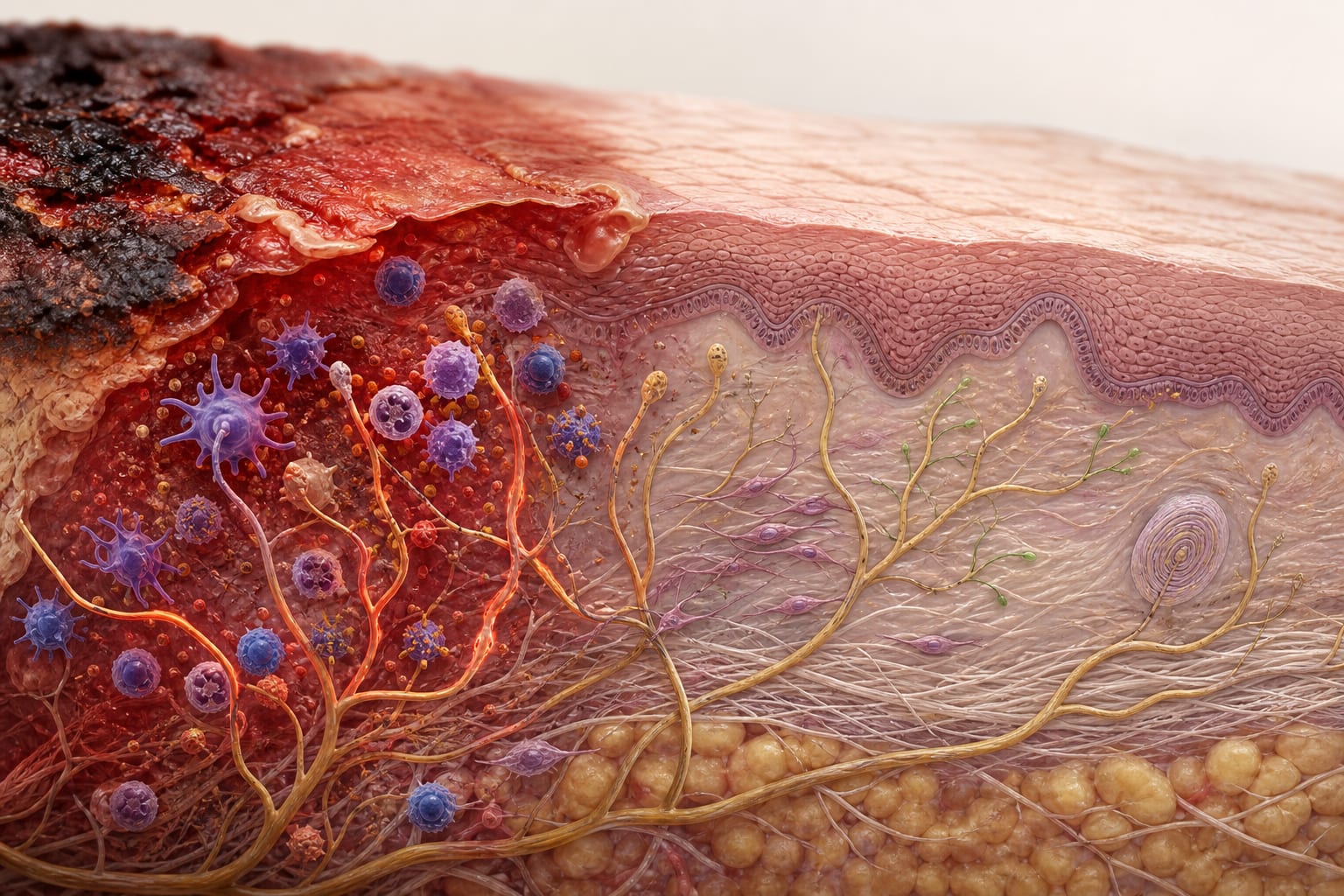
Clinical Report: Regulation of Macrophage Plasticity in Wound Healing
Background
Macrophages are crucial for inflammation, tissue repair, and fibrosis, adapting their phenotype and function based on the tissue microenvironment. Understanding their metabolic changes during wound healing is essential.
Data Highlights
No numerical data or trial data provided in the source material.
Key Findings
Macrophages transition from a pro-inflammatory to an anti-inflammatory phenotype during wound healing.
Early in injury, macrophages rely on glycolysis and the pentose phosphate pathway.
As healing progresses, there is a shift towards oxidative phosphorylation and the tricarboxylic acid cycle.
Sustained activation of anti-inflammatory macrophages may contribute to fibrosis.
Macrophage plasticity is essential for tissue repair, angiogenesis, and extracellular matrix remodeling.
Clinical Implications
Understanding the metabolic reprogramming of macrophages may provide insights into inflammatory injuries and fibrosis.
Conclusion
Macrophages play a pivotal role in wound healing through their metabolic adaptations.