Peri-transplant use of immune checkpoint inhibitors in hepatocellular carcinoma: a transplant oncology perspective on safety, timing, post-transplant management, and future directions - Report - MDSpire
Advertisement
Peri-transplant use of immune checkpoint inhibitors in hepatocellular carcinoma: a transplant oncology perspective on safety, timing, post-transplant management, and future directions
Clinical Report: Utilization of Immune Checkpoint Inhibitors Around Liver Transplantation
Overview
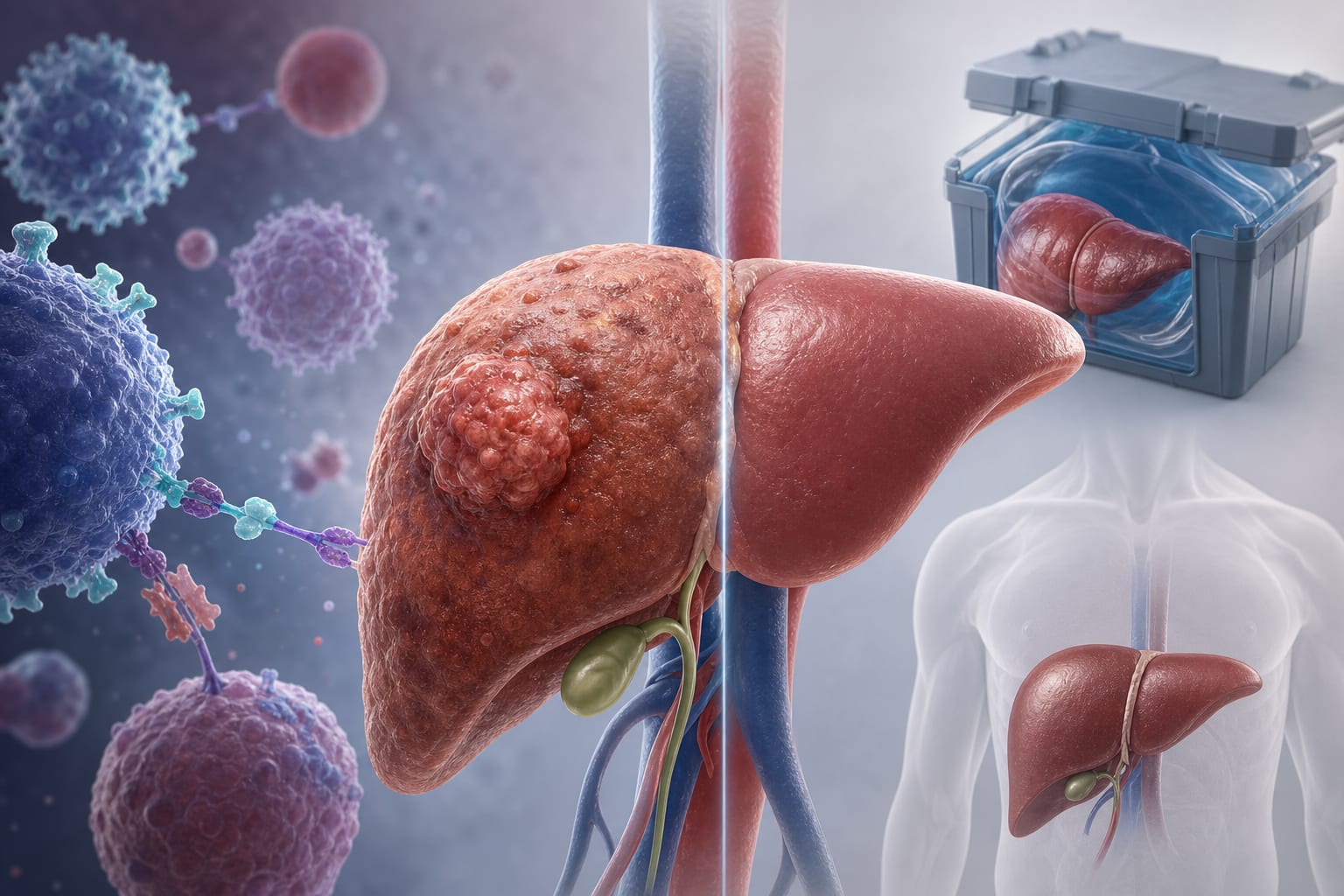
This report examines the use of immune checkpoint inhibitors (ICPIs) in the context of liver transplantation for hepatocellular carcinoma (HCC), highlighting the associated risks of acute graft rejection and the importance of timing and individualized patient management. Emerging biomarkers and surveillance strategies are discussed as potential tools for risk stratification.
Background
The integration of ICPIs into treatment protocols for HCC has revolutionized systemic therapy, particularly in downstaging tumors to meet liver transplantation criteria. However, the peri-transplant application of ICPIs poses significant challenges, notably the heightened risk of acute graft rejection. Understanding the balance between effective tumor control and maintaining graft tolerance is crucial for optimizing patient outcomes.
Data Highlights
Retrospective data indicate rejection rates of approximately 18%–26% pre-LT and 28%–37% post-LT, with fatal outcomes in a subset of cases. Optimal washout periods (≥50–90 days, ideally ~3 months) and intensified immunosuppression can mitigate risks.
Rejection rates are approximately 18%–26% before transplantation and 28%–37% after.
Longer washout periods (≥94 days) are associated with lower rejection probabilities.
Living donor liver transplantation offers scheduling advantages for optimal timing.
Emerging biomarkers like graft PD-L1 and ctDNA may aid in risk stratification.
Clinical Implications
Clinicians must carefully consider the timing of ICPIs in relation to liver transplantation to minimize rejection risks. Individualized decision-making, informed by emerging biomarkers and patient-specific factors, is essential for optimizing outcomes in HCC patients undergoing transplantation.
Conclusion
The safe incorporation of ICPIs into liver transplantation protocols for HCC requires a nuanced understanding of the risks and benefits, emphasizing the need for personalized treatment strategies.