Serum CitH3 and TSLP as predictive biomarkers for impaired wound healing after bascom cleft lift surgery in pilonidal sinus disease: a nomogram-based risk model - Report - MDSpire
Advertisement
Serum CitH3 and TSLP as predictive biomarkers for impaired wound healing after bascom cleft lift surgery in pilonidal sinus disease: a nomogram-based risk model
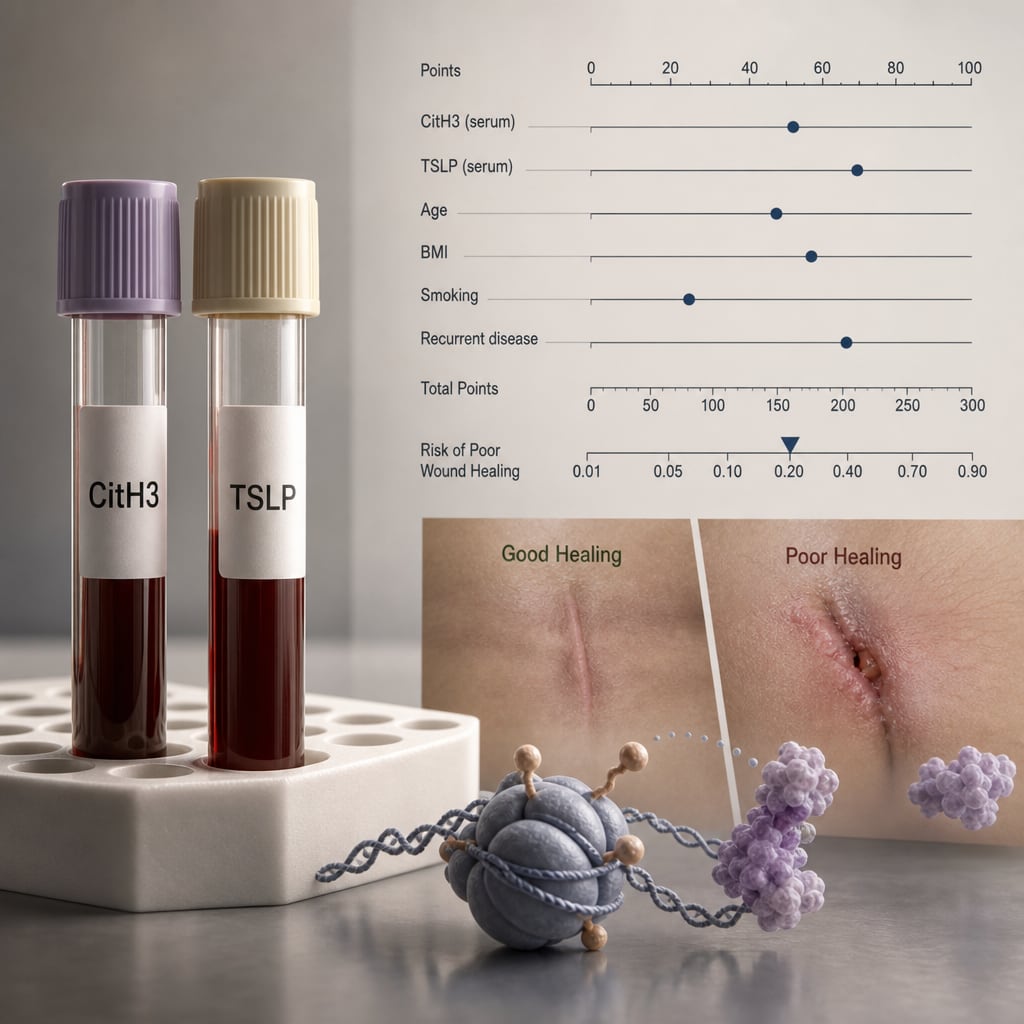
Predictive Role of Serum Citrullinated Histone H3 and TSLP in Wound Healing
Overview
This study investigates the prognostic value of serum citrullinated histone H3 (CitH3) and thymic stromal lymphopoietin (TSLP) in postoperative wound healing after Bascom cleft lift surgery for pilonidal sinus disease. A nomogram-based risk assessment model was developed, demonstrating strong predictive capabilities for wound healing outcomes.
Background
Pilonidal sinus disease is a common condition affecting primarily young, overweight males, leading to significant morbidity. Effective postoperative wound healing is crucial for patient recovery and reducing recurrence rates. Identifying biomarkers that predict healing outcomes can enhance clinical decision-making and patient management.
Data Highlights
Parameter
Good Healing (n=155)
Poor Healing (n=26)
BMI
Lower
Higher
FBG
Lower
Higher
CRP
Lower
Higher
CitH3
Lower
Higher
TSLP
Lower
Higher
ALB
Higher
Lower
Key Findings
Wound healing dysfunction occurred in 14.36% of patients.
Higher levels of BMI, FBG, CRP, CitH3, and TSLP were associated with poor healing outcomes.
Serum CitH3 and TSLP levels were positively correlated in the poor-healing cohort (r = 0.562).
The nomogram showed AUCs of 0.958 in the training cohort and 0.970 in the validation cohort.
Increased ALB levels were identified as a protective factor against poor healing.
Clinical Implications
Clinicians should consider preoperative serum levels of CitH3 and TSLP as potential indicators of wound healing outcomes in patients undergoing Bascom cleft lift surgery. The developed nomogram may serve as a useful tool for personalized risk assessment and management strategies.
Conclusion
Elevated serum CitH3 and TSLP levels are significantly linked to compromised wound healing following surgery for pilonidal sinus disease. The nomogram developed in this study holds promise for enhancing clinical decision-making, pending further validation.