Clinical Report: Collagen's Role in Dry Eye Therapy
Overview
Collagen plays a critical role in maintaining corneal epithelial integrity and homeostasis, which is disrupted in dry eye disease. Fragmentation of collagen leads to increased inflammation and epithelial instability, exacerbating dry eye symptoms.
Background
Understanding the role of collagen in the cornea is essential for addressing dry eye disease, a condition that affects a significant portion of the population and can lead to visual impairment. The structural integrity provided by collagen is vital for epithelial cell function and tear film stability, making it a key target for therapeutic interventions.
Data Highlights
No numerical data available in the source material.
Key Findings
Collagen provides structural support and directs epithelial adhesion and migration in the cornea.
In dry eye disease, increased epithelial proliferation occurs as a compensatory response to cell loss.
Desiccating stress destabilizes the tear film and increases inflammatory mediators like MMP-9 and IL-6.
Fragmented collagen acts as a pro-inflammatory ligand, promoting inflammation and disrupting epithelial barrier function.
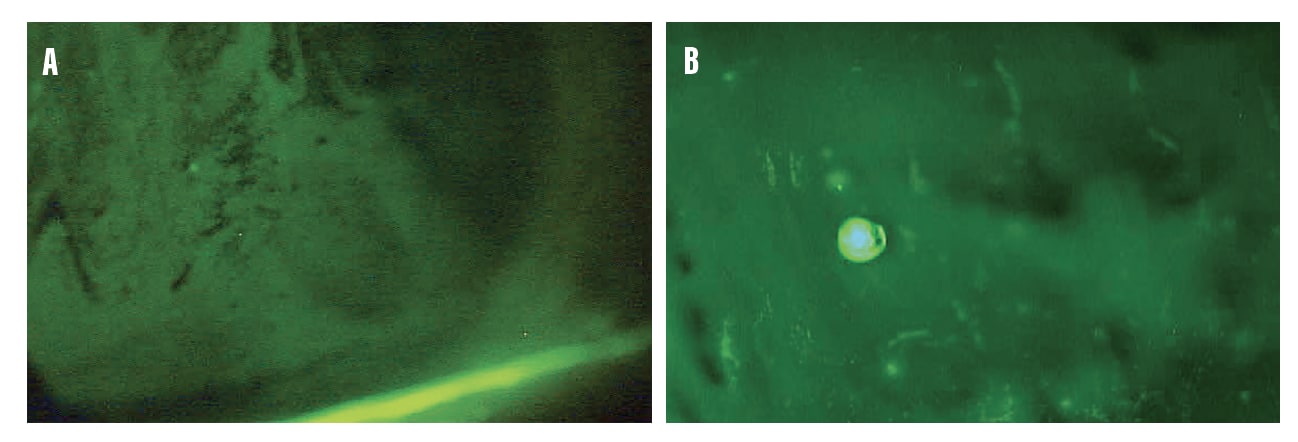
Superficial punctate keratitis (SPK) leads to visual disturbances due to micro-irregularities in the epithelial surface.
Clinical Implications
Clinicians should consider the role of collagen in maintaining corneal health when treating dry eye disease. Targeting collagen integrity may provide new avenues for therapy, particularly in patients with refractory symptoms.
Conclusion
Collagen's structural and signaling roles are crucial in the pathophysiology of dry eye disease, highlighting the need for further research into collagen-targeted therapies.
Dr. Theriot discusses the differences between natural tear film and artificial tears—and why the change in moniker to "lubricating drops" is appropriate.