Clinical Report: Histopathological Indicators of Immunotherapy Response in aCRC
Overview
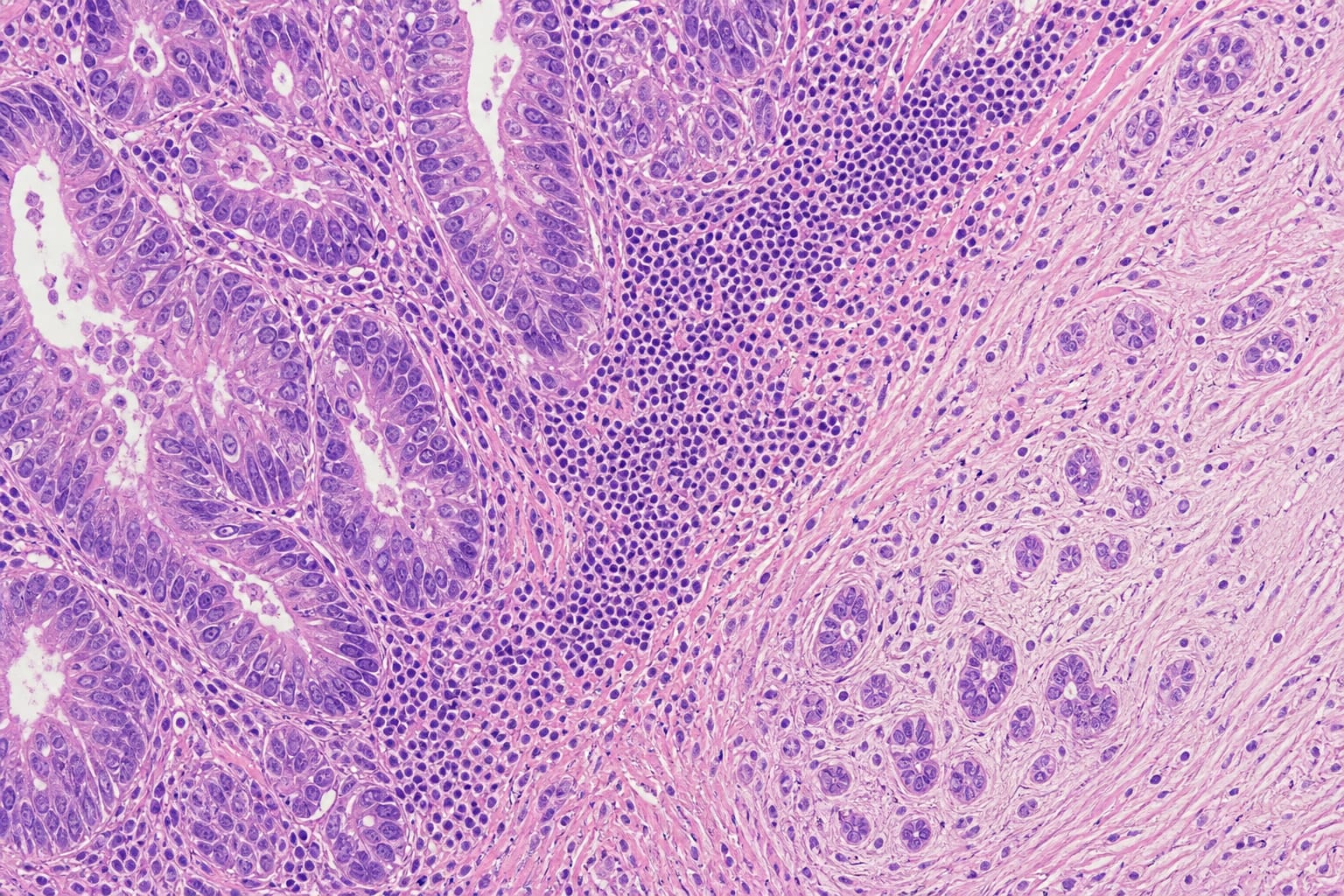
This study evaluates the prognostic value of histopathological features in advanced colorectal cancer (aCRC) treated with immune checkpoint inhibitors (ICIs). Key findings indicate that standardized stromal tumor-infiltrating lymphocytes (sTILs), tumor-stroma ratio (TSR), and tumor budding (TB) are significant predictors of treatment outcomes.
Background
Advanced colorectal cancer (aCRC) is a leading cause of cancer-related mortality, with immune checkpoint inhibitors (ICIs) providing a new treatment avenue, particularly for patients with deficient mismatch repair (dMMR). However, a significant proportion of aCRC patients have proficient mismatch repair (pMMR) tumors, which often show variable responses to ICIs. Identifying accessible biomarkers for better patient stratification is crucial.
Data Highlights
Feature
Outcome
P-Value
High sTILs (≥20%)
ORR 47.2%
P<0.001
Low TSR (≥50%)
Median PFS 10.8 months
P<0.001
High sTILs + Low TSR
ORR 38.5%
-
High-grade tumor budding
HR 2.03 for PFS
P<0.001
Key Findings
High sTILs (≥20%) correlate with a significantly higher objective response rate (ORR) compared to low sTILs (47.2% vs. 15.2%, P<0.001).
Patients with low stromal content (TSR ≥50%) have longer median progression-free survival (PFS) than those with high stromal content (10.8 vs. 5.2 months; HR 0.48, P<0.001).
In the pMMR subgroup, high sTILs and low TSR identify an immune-active phenotype with an ORR of 38.5%.
High sTILs and high-grade tumor budding are independent prognostic factors for PFS.
TSR showed prognostic value only in univariate analysis.
Clinical Implications
The assessment of histopathological features on routine H&E-stained slides can provide valuable prognostic information for patients with aCRC undergoing ICI treatment.
Conclusion
Standardized histopathological assessments offer clinically relevant biomarkers in immunotherapy for advanced colorectal cancer.