Conexiant’s news site is now MDSpire News. Learn more
Advertisement
Evaluation of Computationally Identified Small Molecules Targeting the YAP–TEAD Interaction in Mesothelioma Cell Models with Altered Hippo Pathway Activity
Evaluation of Computationally Identified Small Molecules Targeting the YAP–TEAD Interaction
Overview
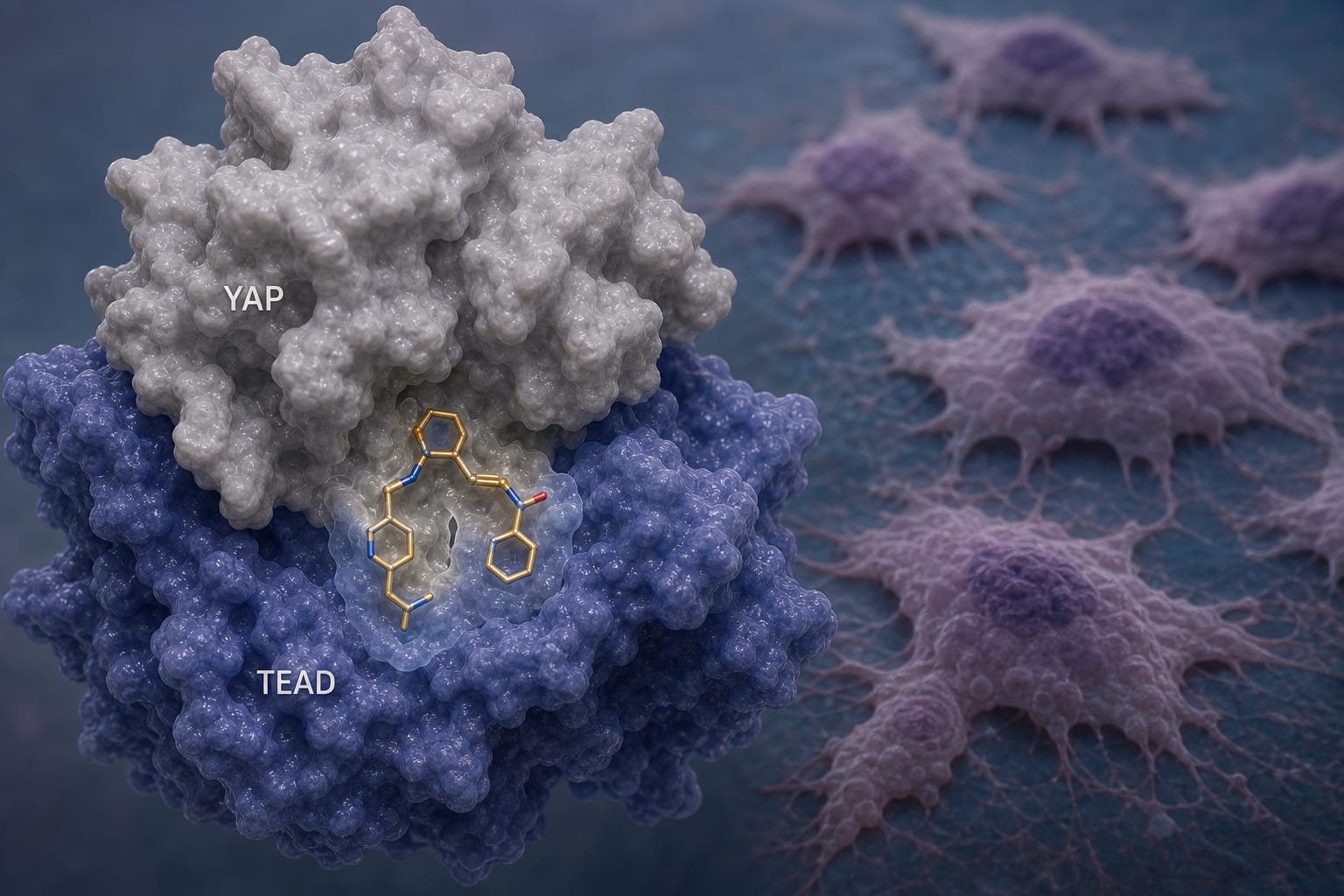
This study assessed the cellular activity of computationally nominated small molecules targeting the YAP–TEAD interaction in mesothelioma cell models. The findings revealed that none of the tested compounds demonstrated measurable antiproliferative activity.
Background
The Hippo–YAP/TAZ–TEAD signaling pathway plays a critical role in various malignancies, including malignant pleural mesothelioma, where its dysregulation is common. Targeting this pathway has emerged as a potential therapeutic strategy, yet the effectiveness of computationally identified compounds remains uncertain.
Data Highlights
No computationally nominated compounds showed measurable antiproliferative activity in tested mesothelioma cell lines.
Key Findings
K-975 exhibited dose-dependent antiproliferative effects in MSTO-211H and NCI-H2052 cell lines.
Cisplatin decreased viability across all tested cell lines.
NCI-H226 was less sensitive to K-975 compared to other lines.
None of the computationally nominated compounds demonstrated measurable antiproliferative activity.
Clinical Implications
This study provides transparency regarding negative results.
Conclusion
The findings indicate a limited concordance between computational predictions and actual cellular activity in targeting the YAP–TEAD interaction.