Effects of the active parts of Yangxin Tongmai Formula on myocardial injury and spatial metabolic remodeling in rats with myocardial ischemia-reperfusion injury - Report - MDSpire
Advertisement
Impact of Yangxin Tongmai Formula's Active Components on Myocardial Damage and Spatial Metabolic Changes in Rats Experiencing Ischemia-Reperfusion Injury
Impact of Yangxin Tongmai Formula's Active Components on Myocardial Damage
Overview
The study investigates the protective effects of the active components of Yangxin Tongmai Formula (apr-YTF) against myocardial ischemia-reperfusion injury (MIRI) in rats.
Background
Myocardial ischemia-reperfusion injury (MIRI) is a significant complication following revascularization procedures for acute myocardial infarction, impacting patient prognosis. Current pharmacological interventions for MIRI are limited, necessitating exploration of alternative therapies. Traditional Chinese medicine, particularly formulations like Yangxin Tongmai, may offer novel cardioprotective strategies.
Data Highlights
Parameter
Control
Model
Vehicle
apr-YTF
Left Ventricular Ejection Fraction (LVEF)
--
--
--
Significantly improved
Left Ventricular Fractional Shortening (LVFS)
--
--
--
Significantly improved
Serum CK Levels
--
--
--
Reduced
Infarct Size
--
--
--
Decreased
Metabolites Identified
--
--
--
1,282
Key Findings
apr-YTF improved left ventricular ejection fraction (LVEF) and left ventricular fractional shortening (LVFS).
Reduction in serum myocardial enzyme levels (CK, CK-MB, LDH, LDH1) was observed.
Infarct size decreased following apr-YTF treatment.
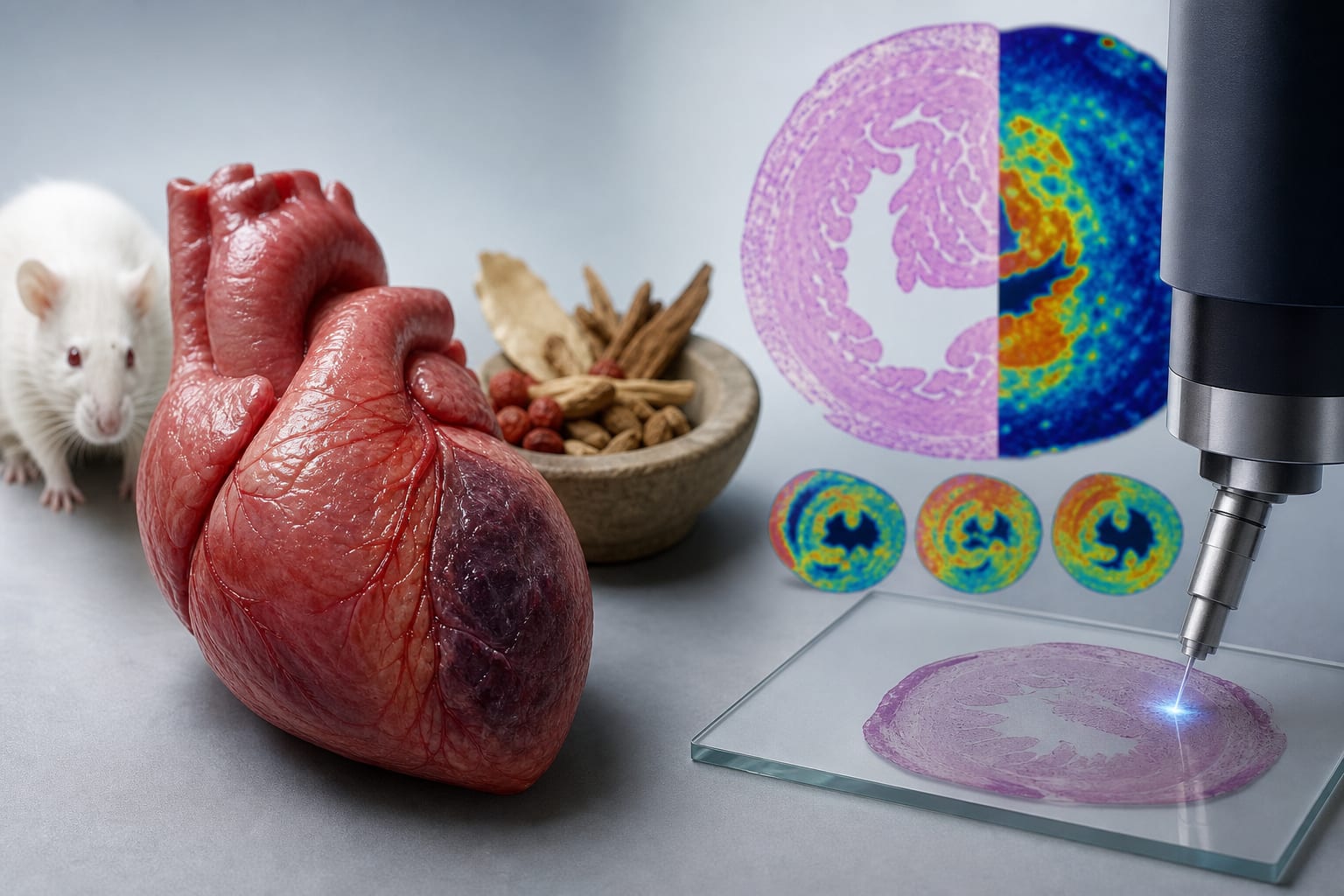
MALDI-MSI identified 1,282 metabolites, with 702 associated with MIRI.
17 differential metabolic features showed recovery trends post-apr-YTF intervention.
Clinical Implications
The findings suggest that apr-YTF may serve as a potential adjunctive therapy for myocardial ischemia-reperfusion injury. Further studies are warranted to explore its clinical applicability and mechanisms of action.
Conclusion
The active components of Yangxin Tongmai Formula demonstrate protective effects against myocardial injury.
A review of cardiogenic shock studies suggests serial lactate measurements provide more prognostic information than isolated values and may better reflect treatment response.