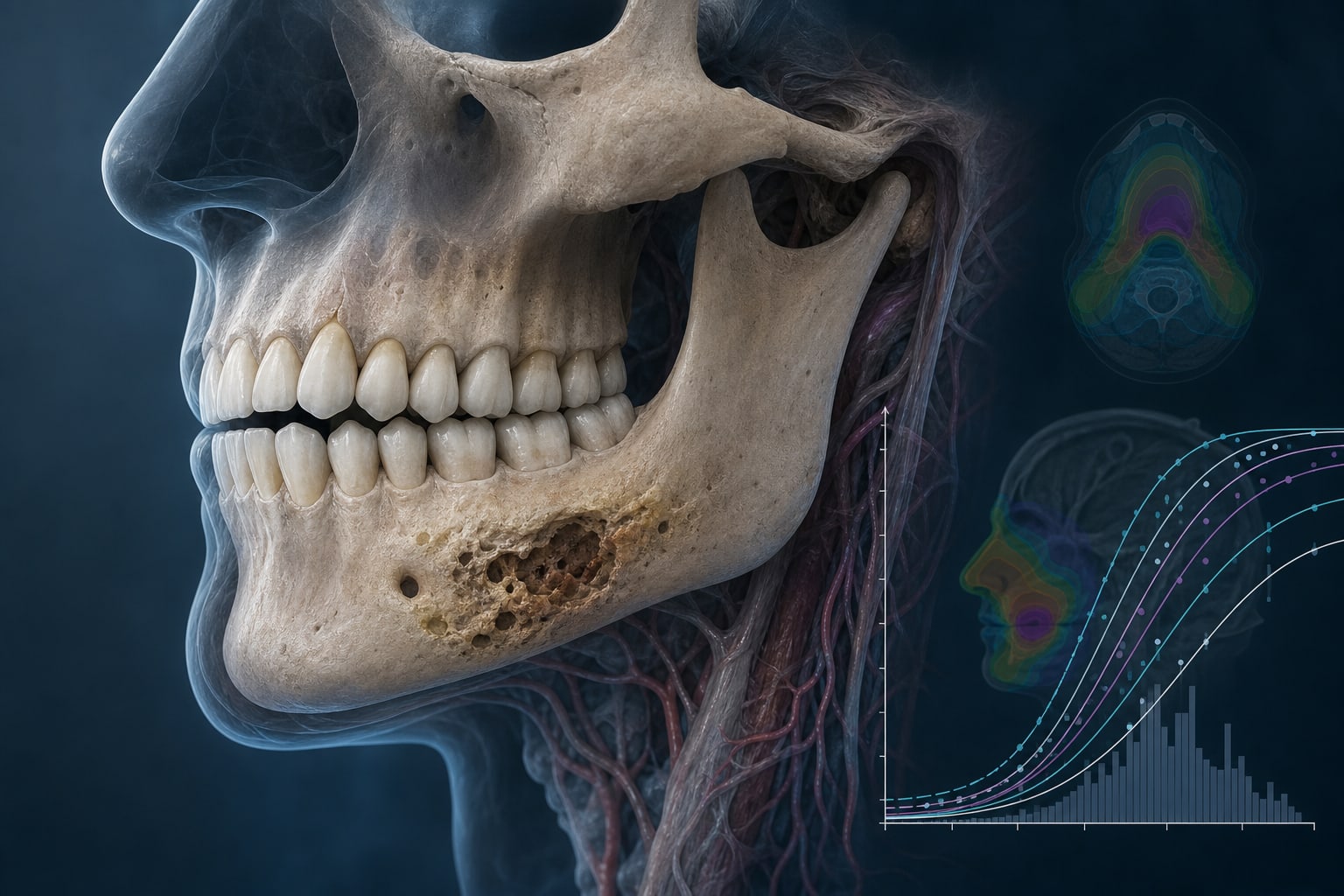
Clinical Report: Evaluating Dual-Energy and Perfusion CT in HNC Outcomes
Overview
Expand on the significance of DECT and PCT compared to existing imaging methods.
Background
Head and neck cancer (HNC) is a significant global health concern, often associated with HPV infection, particularly in oropharyngeal squamous cell carcinoma (OPSCC). Despite the biological differences in tumor response to treatment based on HPV status, current treatment approaches remain largely uniform. This highlights the urgent need for reliable imaging biomarkers that can predict treatment outcomes and facilitate personalized therapy.
Data Highlights
Parameter
CR (n=26)
NCR
p-value
Blood Flow (BF) at 3 weeks
Higher
Lower
<0.01
Blood Volume (BV) at 3 weeks
Higher
Lower
<0.01
Mean Transit Time (MTT) at 3 months
Longer
Shorter
<0.03
Contrast Media Attenuation (CMA) at 3 months
Lower
Higher
<0.03
Key Findings
Patients with complete response (CR) exhibited significantly higher blood flow (BF) and blood volume (BV) at 3 weeks post-chemoradiotherapy compared to non-responders (NCR).
CR patients had a longer mean transit time (MTT) at 3 months than NCR patients.
Lower contrast media attenuation (CMA) was observed in CR patients at 3 months.
In the HPV-positive subgroup, CR patients consistently showed higher BF and BV than NCR patients.
Delta analysis indicated significant differences in ΔCMA between HPV-negative patients.
Clinical Implications
The findings suggest that DECT and PCT could serve as valuable imaging biomarkers for predicting treatment response in HNC, particularly in the early stages of therapy. Clinicians may consider integrating these imaging modalities into routine practice to enhance individualized treatment planning.
Conclusion
This study highlights the potential of DECT and PCT as predictive tools for treatment outcomes in head and neck cancer, warranting further investigation in larger, prospective studies.