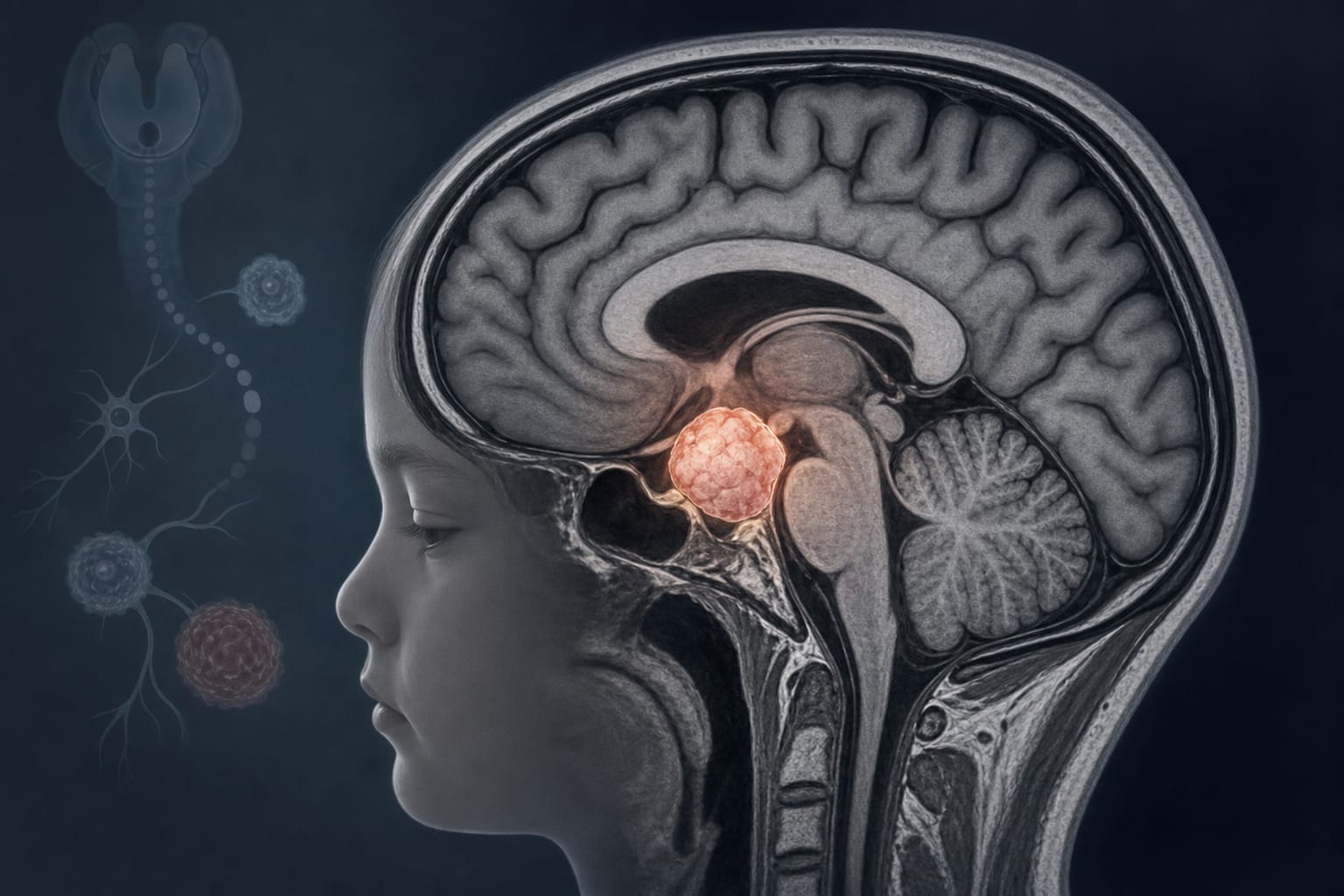
Genetic Factors Influencing Neurocognitive Outcomes in Pediatric Brain Tumor Survivors
Overview
This study investigated the association between somatic genetic variants in DNA repair genes and neurocognitive outcomes in pediatric brain tumor survivors. Analysis of 46 children treated with surgery, chemotherapy, and radiation revealed specific single nucleotide polymorphisms (SNPs) correlated with IQ scores, highlighting potential genetic markers for predicting long-term cognitive effects.
Background
Brain tumors are the second most common pediatric cancer, with improving survival rates leading to increased focus on long-term neurocognitive deficits. Treatment modalities such as radiation and chemotherapy, along with clinical factors like age at diagnosis and tumor location, contribute to cognitive outcomes. Genetic abnormalities and DNA repair capacity may influence both cancer development and response to therapy. Identifying genetic markers could enhance risk stratification and enable early cognitive interventions.
Data Highlights
Characteristic
Low IQ (≤90)
High IQ (>90)
p-value
Number of patients
26 (56%)
20 (43%)
Median time from treatment to IQ test (years, IQR)
46 pediatric brain tumor survivors were genotyped for 614 SNPs after quality control filtering.
IQ scores were dichotomized at 90, with 56% of patients scoring ≤90 and 43% >90.
Low and high IQ groups were comparable in age at treatment, sex distribution, and time from treatment to IQ testing.
Tumor location differed significantly between IQ groups, with posterior fossa tumors more common in the low IQ group.
Linear regression models identified SNPs in DNA repair genes associated with most recent IQ and changes in IQ over time, considering radiation type.
Top 10 SNPs with strongest associations were reported, suggesting genetic variants may influence neurocognitive outcomes post-treatment.
Clinical Implications
Genotyping pediatric brain tumor survivors for DNA repair gene variants may help identify patients at higher risk for neurocognitive deficits. This could inform personalized treatment planning and prompt early cognitive interventions. Awareness of tumor location and radiation modality alongside genetic risk factors can optimize long-term neurocognitive care.
Conclusion
The study supports a link between genetic variants in DNA repair pathways and neurocognitive outcomes in pediatric brain tumor survivors. Incorporating genetic profiling may enhance prediction and management of cognitive late effects.
References
American Cancer Society 2023 -- Pediatric Brain Tumor Incidence
by Sydney T. Grob, Kristen R. Miller, Bridget Sanford, Andrew M. Donson, Kenneth Jones, Andrea M. Griesinger, Vladimir Amani, Nicholas K. Foreman, Arthur Liu, Michael Handler, Todd C. Hankinson, Sarah Milgrom, Jean M. Mulcahy Levy