Testosterone and Androgen Receptor Pathway Modulation in Sepsis: Immunometabolic Mechanisms and Therapeutic Implications — A Scoping Review - Report - MDSpire

Testosterone and Androgen Receptor Pathway Modulation in Sepsis: Immunometabolic Mechanisms and Therapeutic Implications — A Scoping Review

  • By

  • Szczupak, Mateusz

  • Kobak, Jacek

  • Kreczko, Mateusz

  • Wierzchowska, Jolanta

  • Krupa-Nurcek, Sabina

  • April 21, 2026

  • 0 min

Share

Clinical Report: Modulation of Testosterone and Androgen Receptor Pathways in Sepsis

Overview

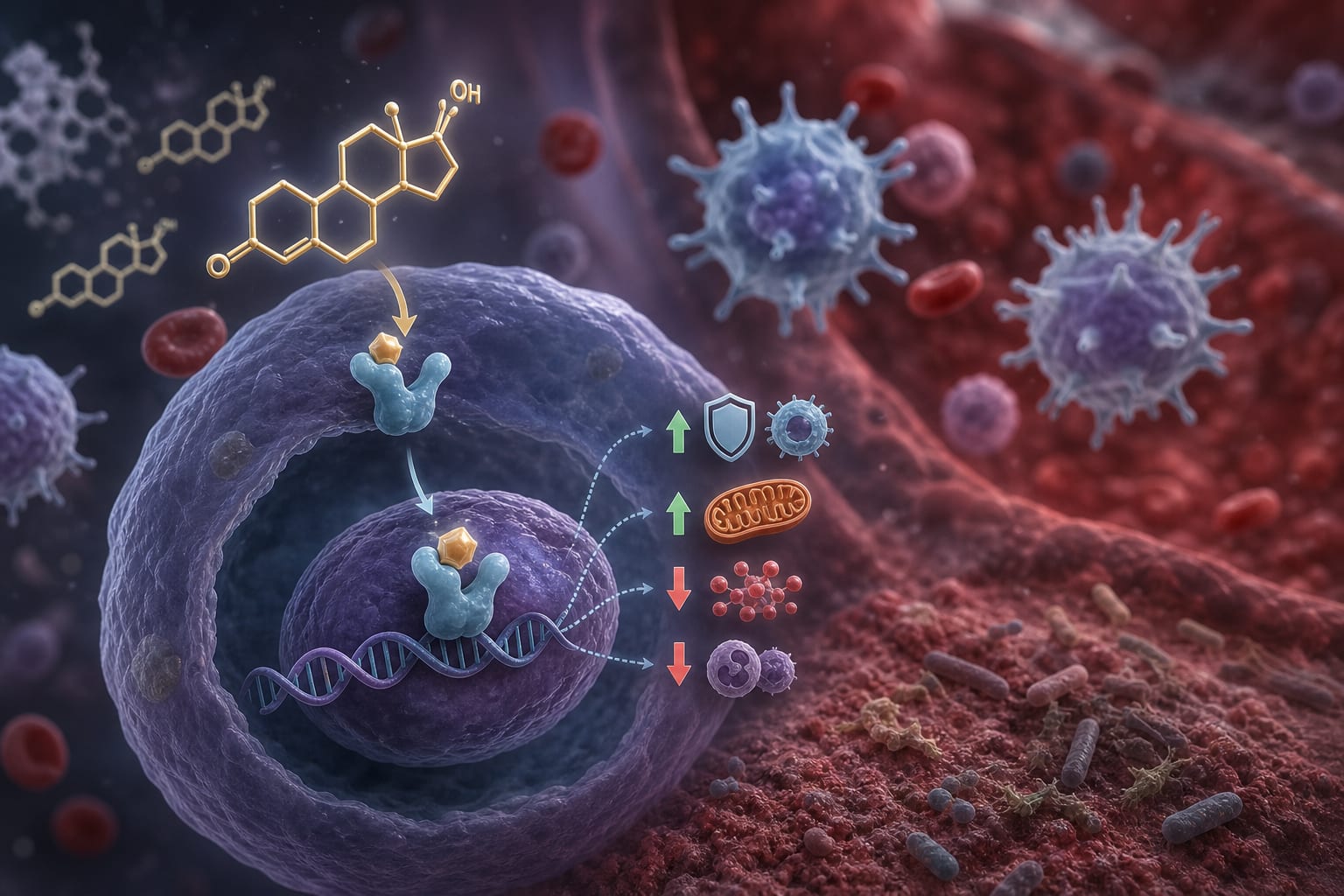
This comprehensive review explores the role of testosterone and androgen receptor pathways in sepsis, highlighting their potential impact on immunometabolic responses. The findings suggest that lower testosterone levels correlate with increased disease severity and mortality in sepsis patients, although routine androgen therapy is not currently supported by evidence.

Background

Incorporate detailed statistics on sepsis mortality rates and its global impact.

Data Highlights

Thirteen studies were included in the review, indicating a consistent association between lower testosterone levels and higher disease severity in sepsis patients.

Key Findings

  • Lower testosterone levels are observed in patients with higher SOFA and APACHE II scores.
  • Testosterone deficiency is linked to increased mortality in sepsis patients.
  • Androgen receptor pathways influence cytokine production and immune cell metabolism.
  • Clinical studies on testosterone supplementation showed changes in metabolic parameters but no significant survival benefit.
  • Current evidence does not support routine androgen therapy in sepsis management.

Clinical Implications

Highlight the importance of cautious interpretation of testosterone levels in clinical settings.

Conclusion

The modulation of testosterone and androgen receptor pathways presents a complex interplay in sepsis, with implications for disease severity and mortality. Future studies are essential to clarify the role of hormonal interventions in sepsis management.

Related Resources & Content

  1. Critical Care (Springer), 2026 -- Causal effects of serum testosterone on septic shock mortality: a Mendelian randomization study
  2. Critical Care (Springer), 2025 -- Rethinking post-sepsis syndrome: linking cellular dysfunction to the clinical picture
  3. Intensive Care Medicine, 2026 -- Endotype trajectories: better understanding for better sepsis management
  4. Surviving Sepsis Campaign: International Guidelines for Management of Sepsis and Septic Shock 2026 | SCCM
  5. Intensive Care Medicine — The Role of Noradrenaline in Inducing Immunosuppression During Sepsis: Implications for Clinical Outcomes
  6. Surviving Sepsis Campaign: International Guidelines for Management of Sepsis and Septic Shock 2026 | SCCM
  7. Causal effects of serum testosterone on septic shock mortality: a Mendelian randomization study | Critical Care | Springer Nature Link
  8. High-density lipoprotein: a biomarker and therapeutic target in sepsis | Critical Care | Springer Nature Link

Original Source(s)

Related Content