Clinical Report: Exploring Left Ventricular Longitudinal Function and Hyperkinetic Characteristics
Background
Assessing LV function is crucial in critically ill patients, particularly in the ICU setting where timely and accurate evaluations can influence management decisions. Traditional reliance on LVEF has been challenged by emerging evidence suggesting that other parameters, such as global longitudinal strain (GLS), may better predict outcomes.
Data Highlights
No numerical data available in the provided source.
Key Findings
LVEF measured by Simpson’s method does not correlate with mortality in critically ill patients.
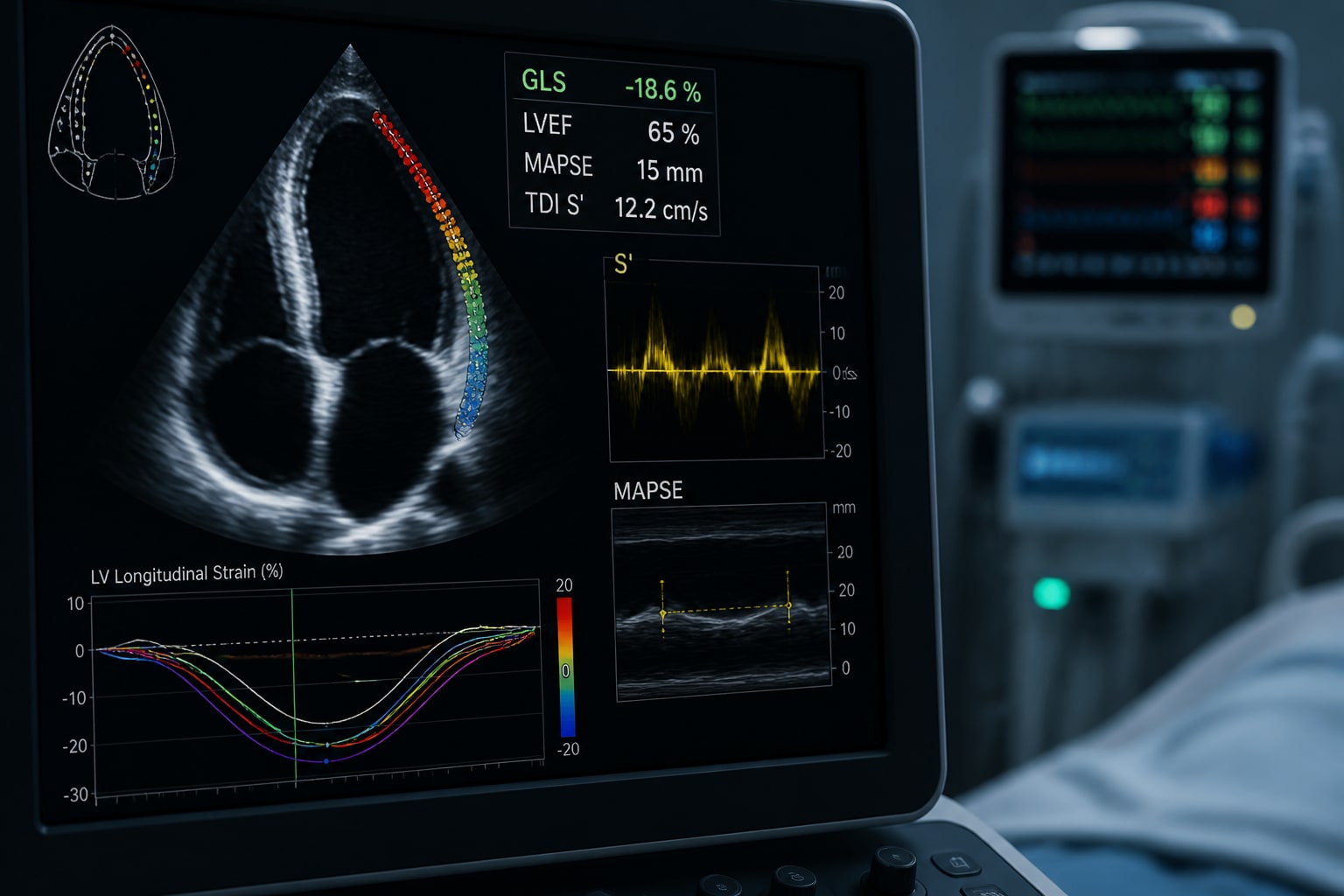
Global longitudinal strain (GLS) may offer superior prognostic information compared to LVEF.
A hyperdynamic LV state (LVEF ≥ 70%) is associated with increased in-hospital mortality.
Early dynamic left intraventricular obstruction has a reported incidence of 22% in septic shock patients.
Longitudinal markers such as MAPSE and TDI-S’ may aid in diagnosing LV hyperdynamic profiles.
A U-shaped relationship exists between LVEF and mortality in critical illness.
Clinical Implications
Consideration of longitudinal markers like GLS, MAPSE, and TDI-S’ in routine assessments of LV function in critically ill patients is suggested.
Conclusion
The findings from this study underscore the need for a shift towards evaluating LV longitudinal function in critically ill patients, as it may enhance prognostic accuracy and guide clinical decision-making.
In a target-trial emulation of more than 600,000 veterans, GLP-1 RA initiators saw fewer new substance use disorders—and patients with existing SUDs had fewer overdoses, hospitalizations, and deaths.