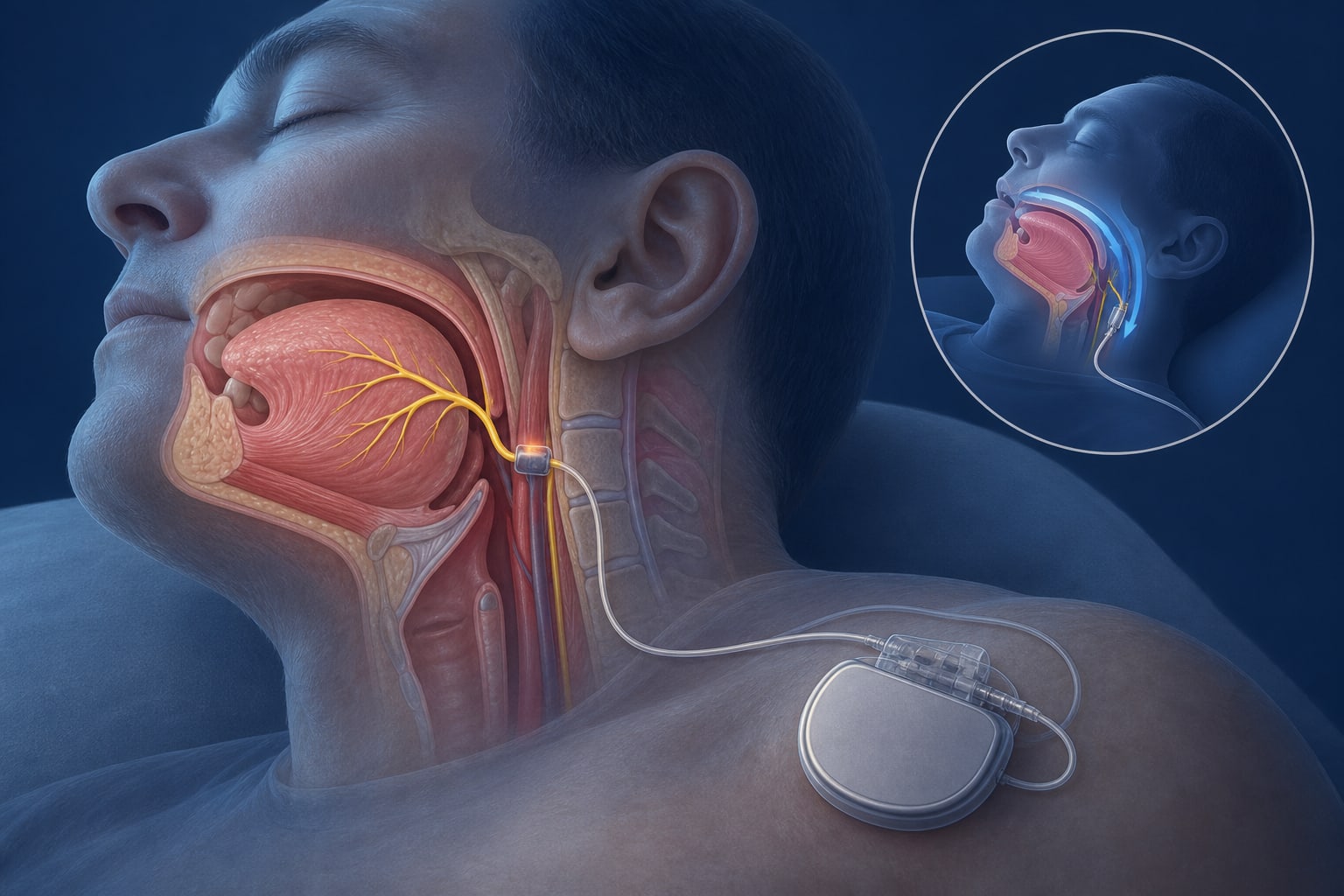
Stimulation of the Hypoglossal Nerve for Obstructive Sleep Apnea Treatment
-
By
-
Armita Norouzi
-
Megan L. Durr
-
September 1, 2026
Clinical Scorecard: Stimulation of the Hypoglossal Nerve for Obstructive Sleep Apnea Treatment
At a Glance
| Category | Detail |
|---|
| Condition | Obstructive Sleep Apnea (OSA) |
| Key Mechanisms | Hypoglossal nerve stimulation (HNS) assists in moving the tongue forward to maintain an open airway during sleep. |
| Target Population | Adults and select older children who cannot tolerate continuous positive airway pressure (CPAP). |
| Care Setting | Sleep medicine and otolaryngology clinics. |
Key Highlights
- HNS treats moderate to severe OSA via a surgically implanted device.
- The device stimulates the hypoglossal nerve to prevent airway obstruction.
- Two primary approaches: unilateral and bilateral stimulation.
- Outcomes vary; not all patients experience improvement in OSA.
- Risks include pain, bleeding, swelling, and temporary tongue discomfort.
Guideline-Based Recommendations
Diagnosis
- Assessment of airway anatomy and polysomnography findings is essential.
Management
- HNS may be considered for patients who cannot tolerate CPAP.
Monitoring & Follow-up
- Regular follow-up to assess device effectiveness and comfort.
Risks
- Possible risks include surgical site complications and nerve injury.
Patient & Prescribing Data
Adults and select older children with moderate to severe OSA.
HNS may reduce sleep-related breathing problems and improve daytime alertness.
Clinical Best Practices
- Consult with a sleep-medicine physician or ENT for patient selection.
- Consider individual patient factors such as weight and general health.
Related Resources & Content