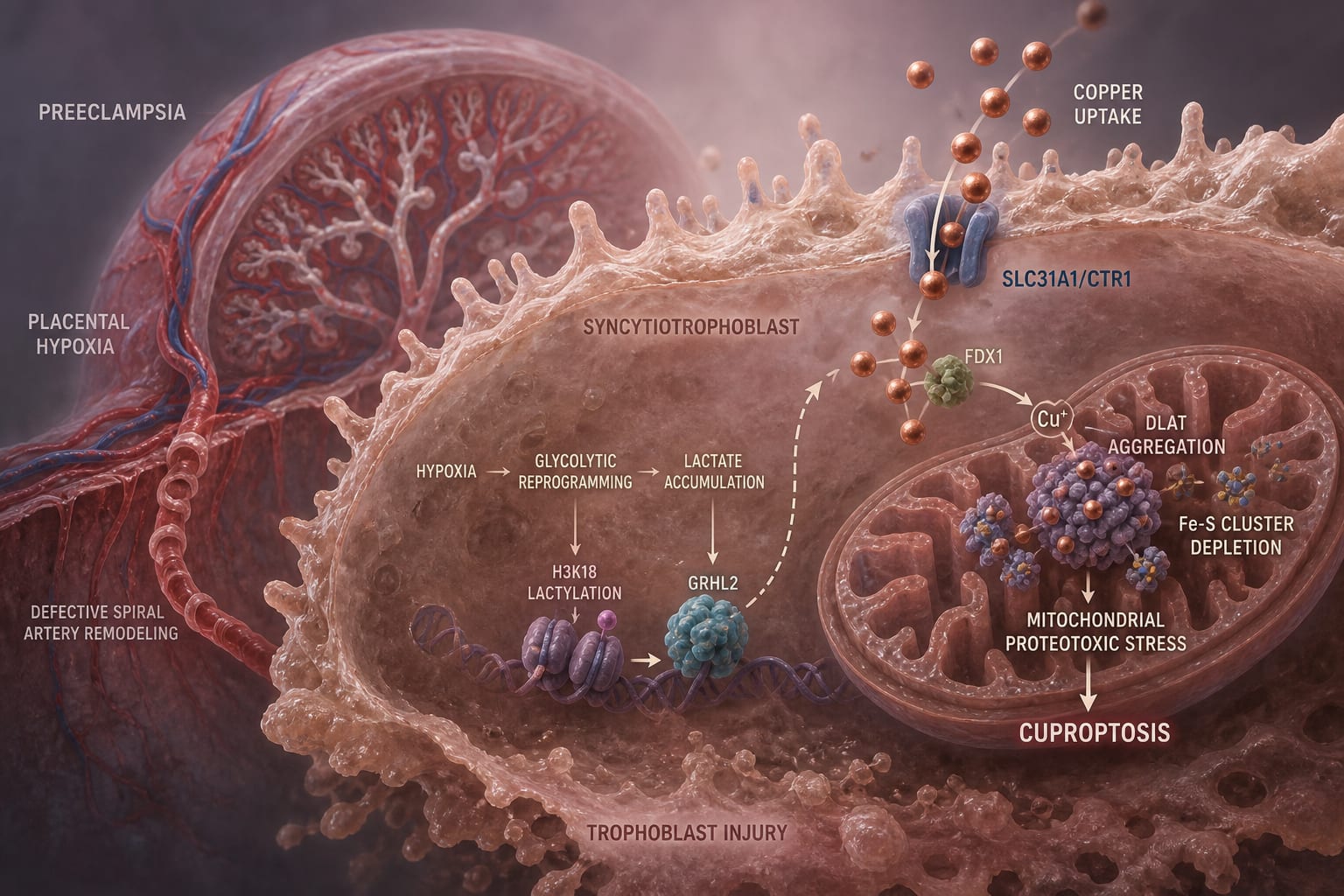
Cuproptosis: An Emerging Mechanism Connecting Metabolic Stress in the Placenta to Trophoblast Damage in Preeclampsia
By
Ling Liu
Baoxiang Xing
Yan Zhang
September 9, 2026
Clinical Scorecard: Cuproptosis: An Emerging Mechanism Connecting Metabolic Stress in the Placenta to Trophoblast Damage in Preeclampsia
At a Glance
Category Detail
Condition Preeclampsia Key Mechanisms Cuproptosis linked to trophoblast injury via copper-dependent processes and metabolic stress. Target Population Pregnant women, particularly those in the third trimester. Care Setting Obstetric care and maternal-fetal medicine.
Key Highlights
Preeclampsia complicates 2-8% of pregnancies, leading to significant maternal and perinatal morbidity. Cuproptosis is a newly recognized regulated cell-death process linked to copper metabolism. Higher serum copper concentrations have been observed in women with preeclampsia. Lactate accumulation in placentas activates pathways leading to trophoblast cuproptosis. Copper transport dysregulation may be a key factor in placental dysfunction in preeclampsia. Guideline-Based Recommendations
Diagnosis
Monitor serum copper levels and thiol levels in pregnant women suspected of preeclampsia. Management
Investigate copper transport mechanisms and their role in trophoblast function. Monitoring & Follow-up
Assess placental health and maternal serum copper levels throughout pregnancy. Risks
Increased risk of maternal and perinatal morbidity associated with preeclampsia. Patient & Prescribing Data
Women in the third trimester of pregnancy.
Further research needed on copper handling and its implications for trophoblast health.
Clinical Best Practices
Consider the role of metabolic stress and copper dysregulation in managing preeclampsia. Utilize transcriptomic profiling to identify potential biomarkers for preeclampsia. Related Resources & Content