Hippocampal neuronal hypoexcitability contributes to PTSD-like phenotypes in the experimental autoimmune encephalomyelitis model - Scorecard - MDSpire

Hippocampal neuronal hypoexcitability contributes to PTSD-like phenotypes in the experimental autoimmune encephalomyelitis model

  • By

  • Xinghua Zhong

  • Han Zhang

  • Jieying Xie

  • Yang Gao

  • Honghao Wang

  • Yu Peng

  • Feng Yi

  • Jinyu Chen

  • May 20, 2026

  • 0 min

Share

Clinical Scorecard: Reduced excitability of hippocampal neurons plays a role in PTSD-like characteristics in a model of experimental autoimmune encephalomyelitis

At a Glance

CategoryDetail
ConditionMultiple Sclerosis with PTSD-like symptoms
Key MechanismsHippocampal hypoexcitability and neuroinflammation
Target PopulationPatients with Multiple Sclerosis exhibiting PTSD-like symptoms
Care SettingClinical and research settings focusing on neuropsychiatric symptoms

Key Highlights

  • EAE model shows impaired fear extinction and contextual fear generalization.
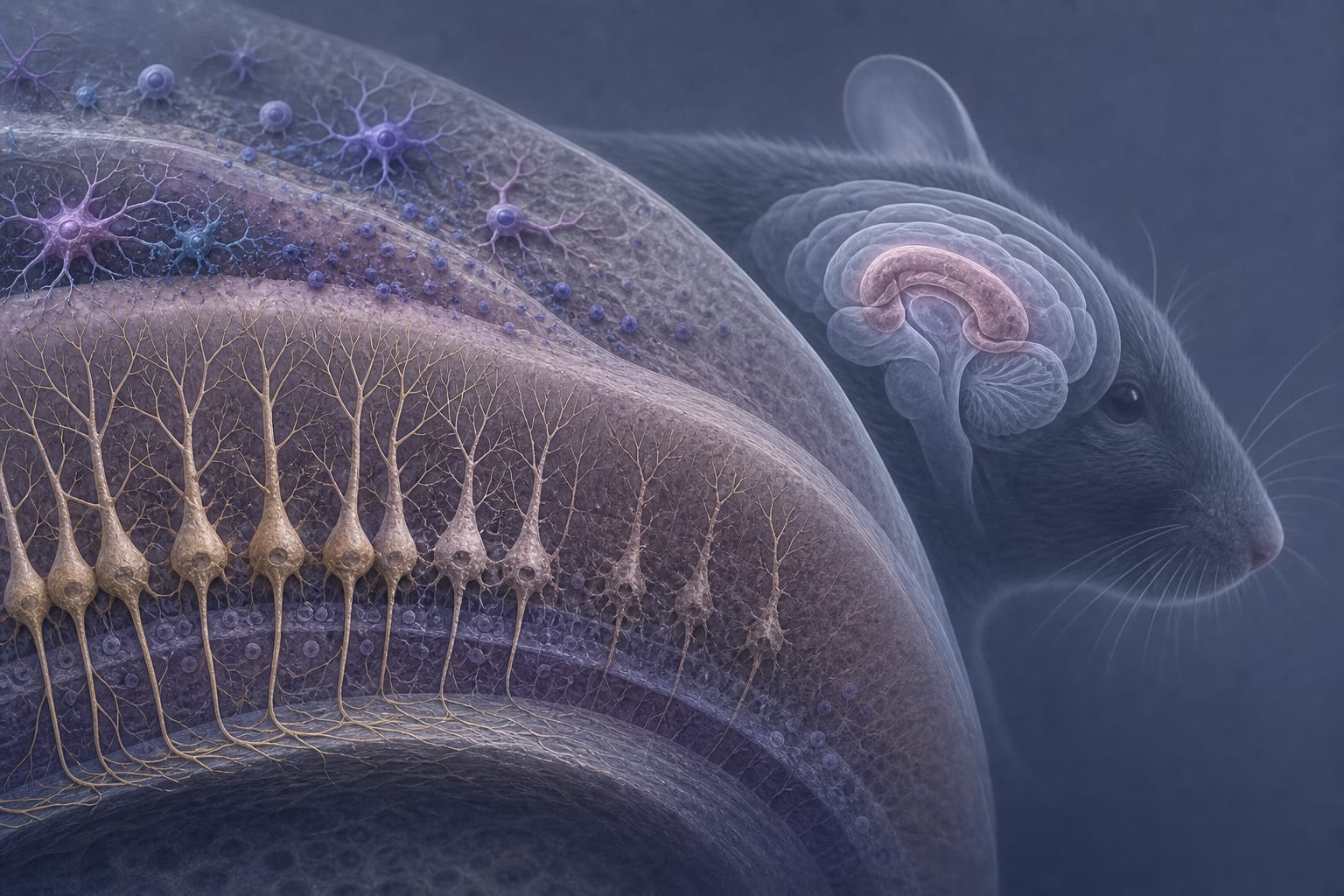
  • Dorsal CA1 pyramidal neurons exhibit somatic atrophy and reduced firing gain.
  • Chemogenetic reactivation of CA1 neurons improves extinction deficits.
  • Neuroimmune transcriptional shifts observed in CA1 excitatory neurons.
  • Link established between neuroinflammation and hippocampal dysfunction.

Guideline-Based Recommendations

Diagnosis

  • Assess PTSD-like symptoms in MS patients using standardized scales.

Management

  • Consider targeted psychological treatments such as EMDR for MS patients with PTSD-like symptoms.

Monitoring & Follow-up

  • Regularly evaluate cognitive and emotional functioning in MS patients.

Risks

  • Increased relapse rates and faster disability progression in MS patients with comorbid PTSD.

Patient & Prescribing Data

Patients with Multiple Sclerosis and PTSD-like symptoms.

Restoring hippocampal excitability may offer therapeutic benefits.

Clinical Best Practices

  • Integrate psychological support in the management of MS patients.
  • Monitor hippocampal function and neuroinflammation in MS patients.

Related Resources & Content

Original Source(s)

Related Content