Case Report: Integrated genomic and immunological assays identify non-coding CFB variants in pneumococcal meningoencephalitis - Scorecard - MDSpire

Case Report: Integrated genomic and immunological assays identify non-coding CFB variants in pneumococcal meningoencephalitis

  • By

  • J. Barbieur

  • E. D’haenens

  • T. Jarayseh

  • L. Hoste

  • J. Smet

  • S. Lambrecht

  • E. Schiettecatte

  • P. Schelstraete

  • M. De Bruyne

  • F. Haerynck

  • S. J. Tavernier

  • June 16, 2026

  • 0 min

Share

Clinical Scorecard: Case Study: Combined Genomic and Immunological Analyses Reveal Non-Coding Variants in CFB Associated with Pneumococcal Meningoencephalitis

At a Glance

CategoryDetail
ConditionComplement Factor B Deficiency
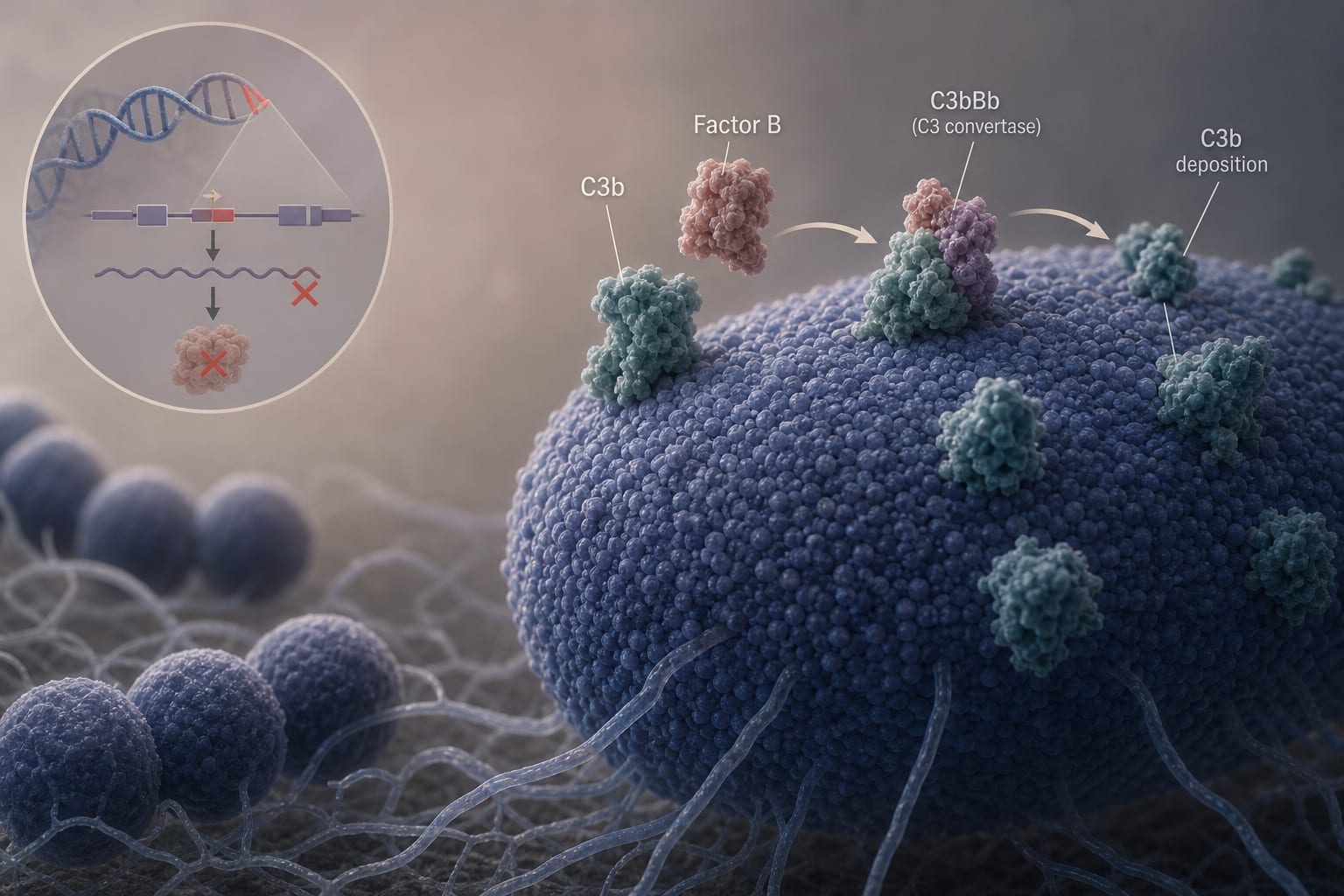
Key MechanismsInborn defects of the alternative pathway of the complement system leading to increased susceptibility to encapsulated bacterial infections.
Target PopulationPatients with biallelic pathogenic variants in the CFB gene.
Care SettingPediatric emergency and immunology outpatient clinic.

Key Highlights

  • Fourth reported case of autosomal recessive FB deficiency.
  • Patient presented with severe pneumococcal bacteremia and meningoencephalitis.
  • Identified two non-canonical splice-site CFB variants causing aberrant splicing.
  • Patient experienced long-term neurological sequelae despite treatment.
  • Ongoing management includes prophylactic antibiotics and optimized vaccination.

Guideline-Based Recommendations

Diagnosis

  • Comprehensive clinical, immunological, genetic, and functional analyses are essential.

Management

  • Prophylactic oral pheneticillin administration.
  • Optimized vaccination against encapsulated bacteria.

Monitoring & Follow-up

  • Regular reviews in a specialized immunology outpatient clinic.

Risks

  • Increased risk of invasive infections with encapsulated bacteria.

Patient & Prescribing Data

An 8-month-old boy with complement factor B deficiency.

Vaccination with conjugated and polysaccharide pneumococcal vaccines, annual influenza vaccination advised.

Clinical Best Practices

  • Integrate functional immunological assays with genomic analyses for diagnosis.
  • Provide emergency alert letters detailing complement deficiency.

Related Resources & Content

Original Source(s)

Related Content