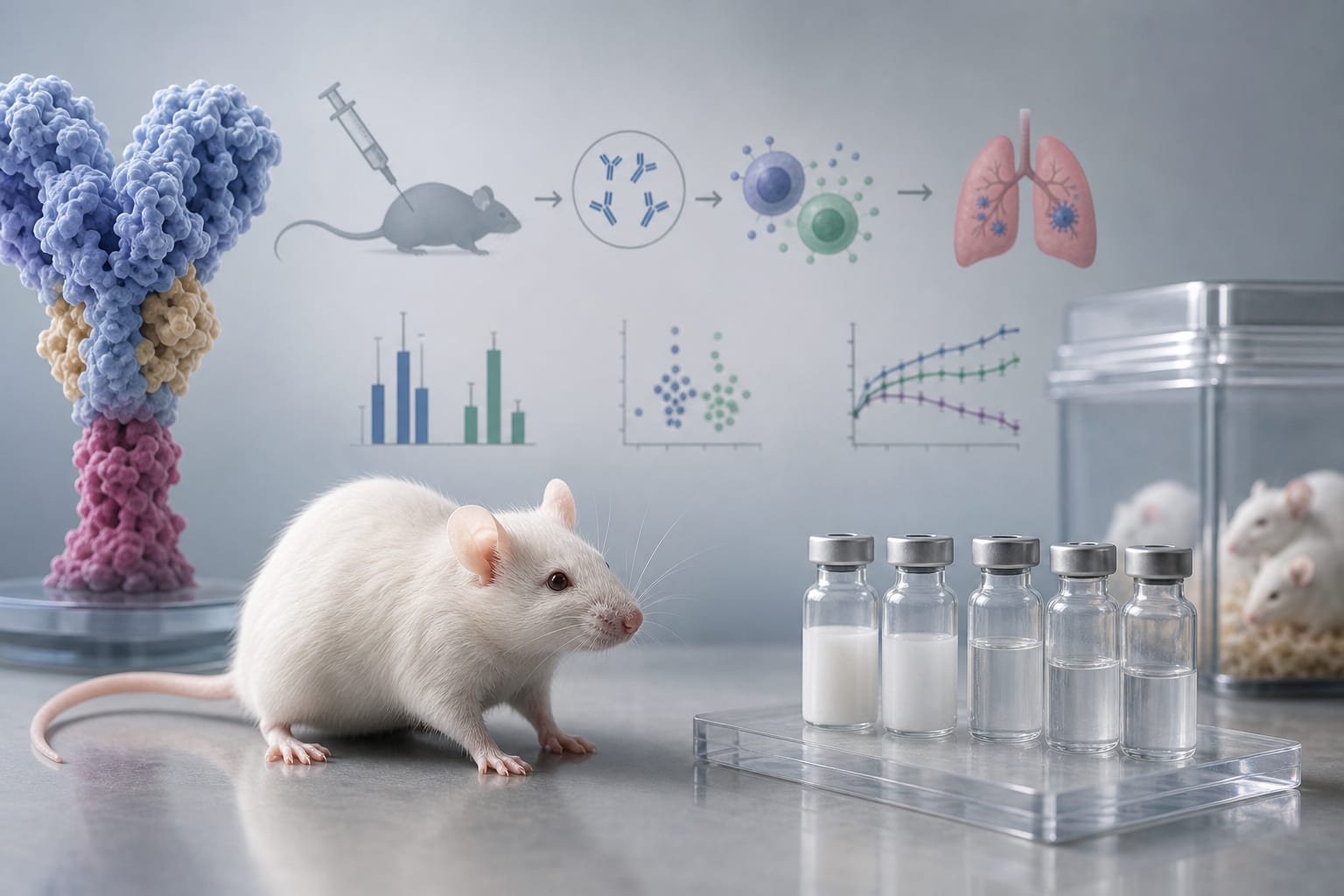
Comparison of the protective effect of human respiratory syncytial virus Pre-F protein combined with different adjuvants in BALB/c mice - Scorecard - MDSpire
Clinical Scorecard: Evaluation of the Protective Efficacy of Human Respiratory Syncytial Virus Pre-F Protein with Various Adjuvants in BALB/c Mouse Models
At a Glance
Category
Detail
Condition
Human Respiratory Syncytial Virus (HRSV)
Key Mechanisms
Neutralizing antibody response and immune response modulation via adjuvants.
Target Population
Infants, elderly individuals, and immunocompromised individuals.
Care Setting
Vaccine development and immunization strategies.
Key Highlights
Pre-F protein combined with AlOH+CpG or BFA03 adjuvant provided superior protection compared to AlOH alone.
Mice immunized with Pre-F+BFA03 had the highest neutralizing antibody titre and lowest lung viral load.
The Pre-F+AlOH+CpG group exhibited the least lung pathological damage.
Th2-biased immune response was induced by AlOH adjuvant, while BFA03 favored a Th1 response.
HRSV vaccines need to be tailored for different populations due to varying immune responses.
Guideline-Based Recommendations
Diagnosis
Management
Monitoring & Follow-up
Risks
Formalin-inactivated RSV vaccines can cause enhanced respiratory disease due to biased Th2 immune response.
Patient & Prescribing Data
Infants, pregnant women, elderly individuals.
Nonreplicating vaccines should be avoided in infants who have not been infected with HRSV.
Clinical Best Practices
Select appropriate adjuvants based on target population to enhance immune response.
Monitor for potential enhanced respiratory disease with certain vaccine formulations.