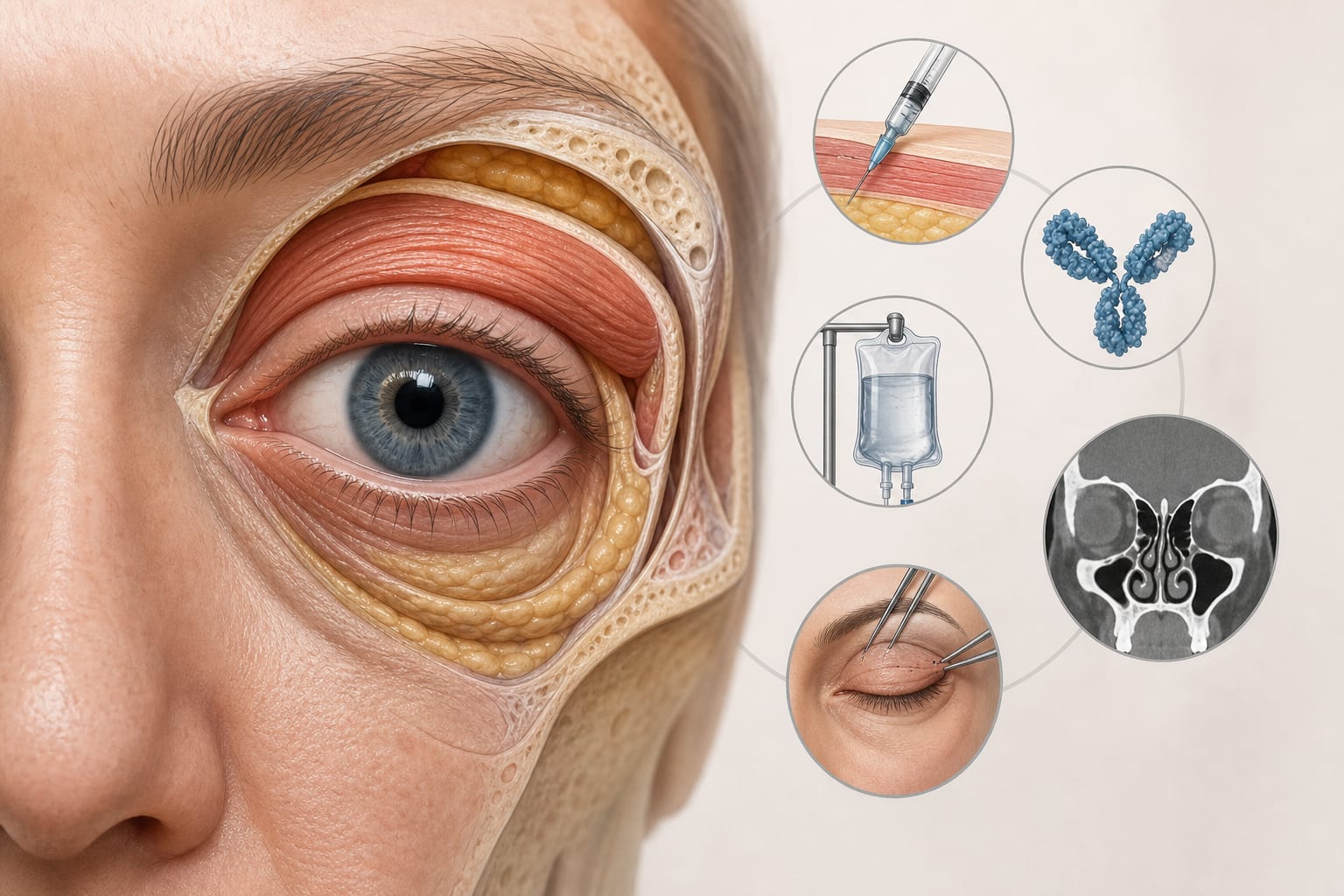
Diagnosis and treatment progress of upper eyelid abnormalities in thyroid-eye disease
-
By
-
Cheng Gai
-
Bing Wang
-
July 13, 2026
Clinical Scorecard: Advancements in the Diagnosis and Management of Upper Eyelid Abnormalities Associated with Thyroid Eye Disease
At a Glance
| Category | Detail |
|---|
| Condition | Thyroid Eye Disease (TED) |
| Key Mechanisms | Autoimmune inflammation affecting the eyelids, leading to retraction, lid lag, and swelling. |
| Target Population | Adults with Graves’ hyperthyroidism and associated orbital disorders. |
| Care Setting | Ophthalmology and endocrinology clinics. |
Key Highlights
- Upper eyelid abnormalities occur in 70%-90% of TED cases.
- Teprotumumab shows promise in reducing eyelid retraction with a better safety profile than glucocorticoids.
- Eyelid retraction can lead to significant visual impairment and quality of life issues.
Guideline-Based Recommendations
Diagnosis
- Upper eyelid retraction is a critical diagnostic indicator for TED.
Management
- Treatment options include supportive care, local injections, systemic drugs, and surgery.
Monitoring & Follow-up
- Assess disease severity and treatment efficacy through eyelid position and function.
Risks
- Severe eyelid retraction may lead to exposure keratitis and corneal complications.
Patient & Prescribing Data
Patients with upper eyelid abnormalities due to TED.
Individualized treatment plans are necessary due to variability in disease presentation.
Clinical Best Practices
- Consider multidisciplinary care for comprehensive management of TED.
- Utilize artificial intelligence for quantitative assessment of eyelid abnormalities.
Related Resources & Content