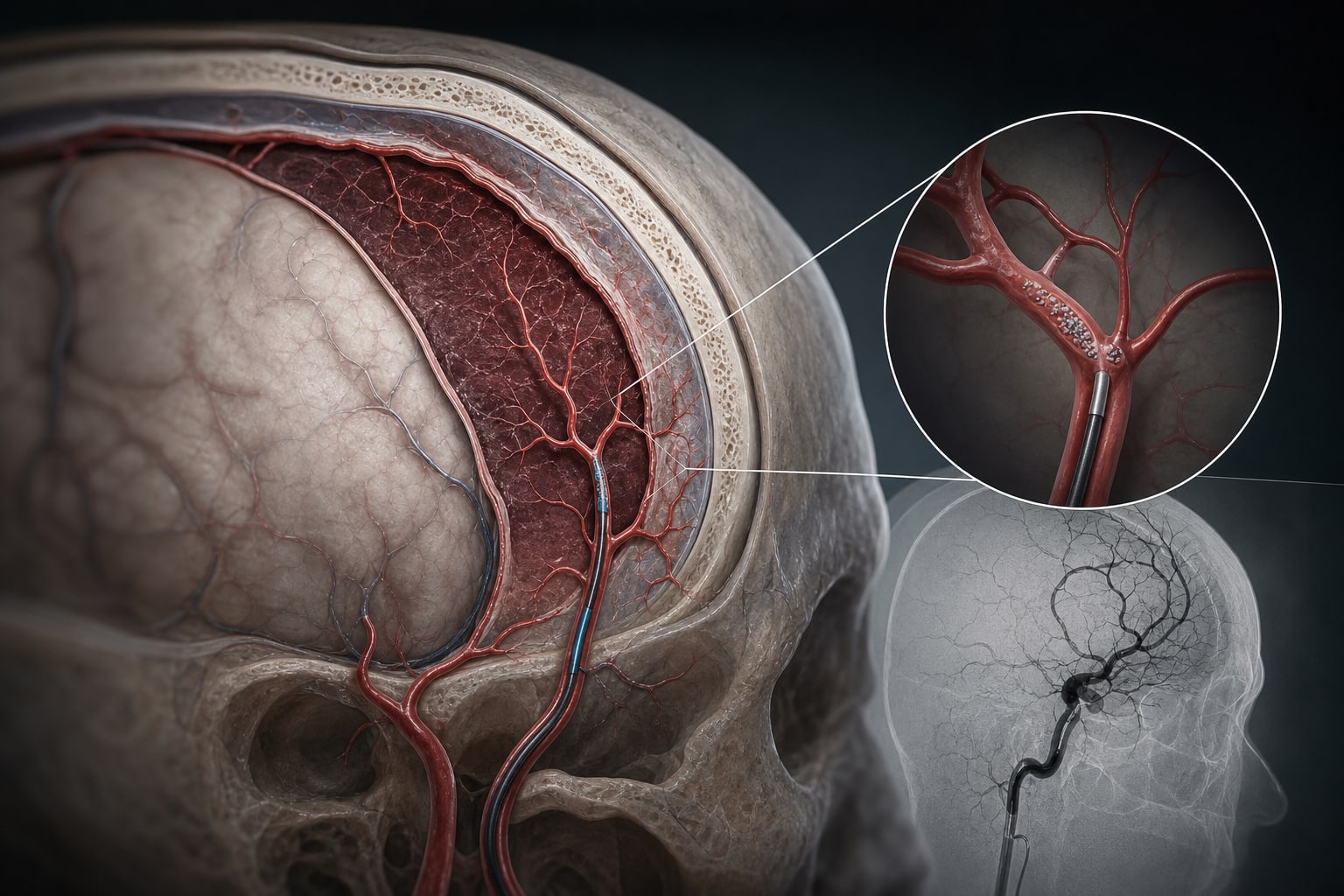
Clinical Scorecard: Embolization of the Middle Meningeal Artery for Chronic Subdural Hematoma: A New Approach?
At a Glance
Category
Detail
Condition
Chronic Subdural Hematoma (cSDH)
Key Mechanisms
MMA embolization may target the underlying pathophysiology of cSDH by occluding the middle meningeal artery to prevent recurrent bleeding, pending source attribution.
Target Population
Patients with symptomatic cSDH, particularly older adults.
Care Setting
Neurosurgical or interventional radiology settings.
Key Highlights
MMA embolization has shown lower recurrence rates compared to conventional management, pending source attribution.
Guideline-Based Recommendations
Diagnosis
Diagnosis of cSDH is typically confirmed through imaging studies such as CT or MRI, which reveal the presence of a subdural collection of blood.
Management
MMA embolization may be considered for recurrent cases or poor surgical candidates, pending source attribution.
Monitoring & Follow-up
Patients should be monitored with follow-up imaging to assess for recurrence of hematoma and evaluate the effectiveness of embolization.
Risks
Potential risks of MMA embolization include procedural complications such as hematoma formation, infection, and neurological deficits.
Patient & Prescribing Data
Patients with symptomatic chronic subdural hematoma, particularly older adults.
MMA embolization may serve as a primary therapy option or adjunct to surgical management.
Clinical Best Practices
Consideration of MMA embolization for patients with recurrent cSDH or those at high risk for recurrence should be directly sourced.
Related Resources & Content
Huang, Y., et al., Neurosurgery, 2022 -- Middle Meningeal Artery Embolization for Chronic Subdural Hematoma: A Systematic Review and Meta-Analysis
Frontiers in Neurology, 2026 -- Triple-modality management of complex septated chronic subdural hematoma: a preliminary technical note on feasibility and safety
Comparison of Middle Meningeal Artery Embolization and Surgical Reintervention in Managing Recurrent Chronic Subdural Hematomas: Treatment Outcomes and Volume Changes
Complementary Embolization of the Middle Meningeal Artery for Non-Acute Subdural Hematomas: A Meta-Analysis and Trial Sequential Analysis Evaluated by GRADE in Randomized Studies
Current state of the field and recommendations for middle meningeal artery embolization in chronic subdural hematoma: A Report of the SNIS Standards and Guidelines Committee, Endorsed by ANZSNR and ESMINT - PubMed
Embolization of the Middle Meningeal Artery for Chronic Subdural Hematoma - PubMed
Current state of the field and recommendations for middle meningeal artery embolization in chronic subdural hematoma: A Report of the SNIS Standards and Guidelines Committee, Endorsed by ANZSNR and ESMINT - PubMed
Embolization of the Middle Meningeal Artery for Chronic Subdural Hematoma - PubMed
Middle Meningeal Artery Embolization for Subdural Hematoma: Systematic Review and Meta-Analysis of Randomized Trials
by Yan Li, Johannes Haubold, Natalie van Landeghem, Cornelius Deuschl, Ramazan Jabbarli, Philipp Dammann, Ulrich Sure, Isabel Wanke, Luisa Strack, Michael Forsting
The nearly 15,000-square-foot facility will integrate multidisciplinary care, including neurology, neurosurgery, brain imaging, and physical medicine and rehabilitation.