Utilizing Motor Mapping Techniques for Resection of Diffuse Gliomas in the Peri-Rolandic Region
-
By
-
James S. Trippett
-
Antonio Dono
-
Syed S. Shams
-
Jaiprakash Gurav
-
Christopher M. Williams
-
Ankush Chandra
-
Yoshua Esquenazi
-
Nitin Tandon
-
July 13, 2026
Clinical Scorecard: Utilizing Motor Mapping Techniques for Resection of Diffuse Gliomas in the Peri-Rolandic Region
At a Glance
| Category | Detail |
|---|
| Condition | Diffuse Gliomas in the Peri-Rolandic Region |
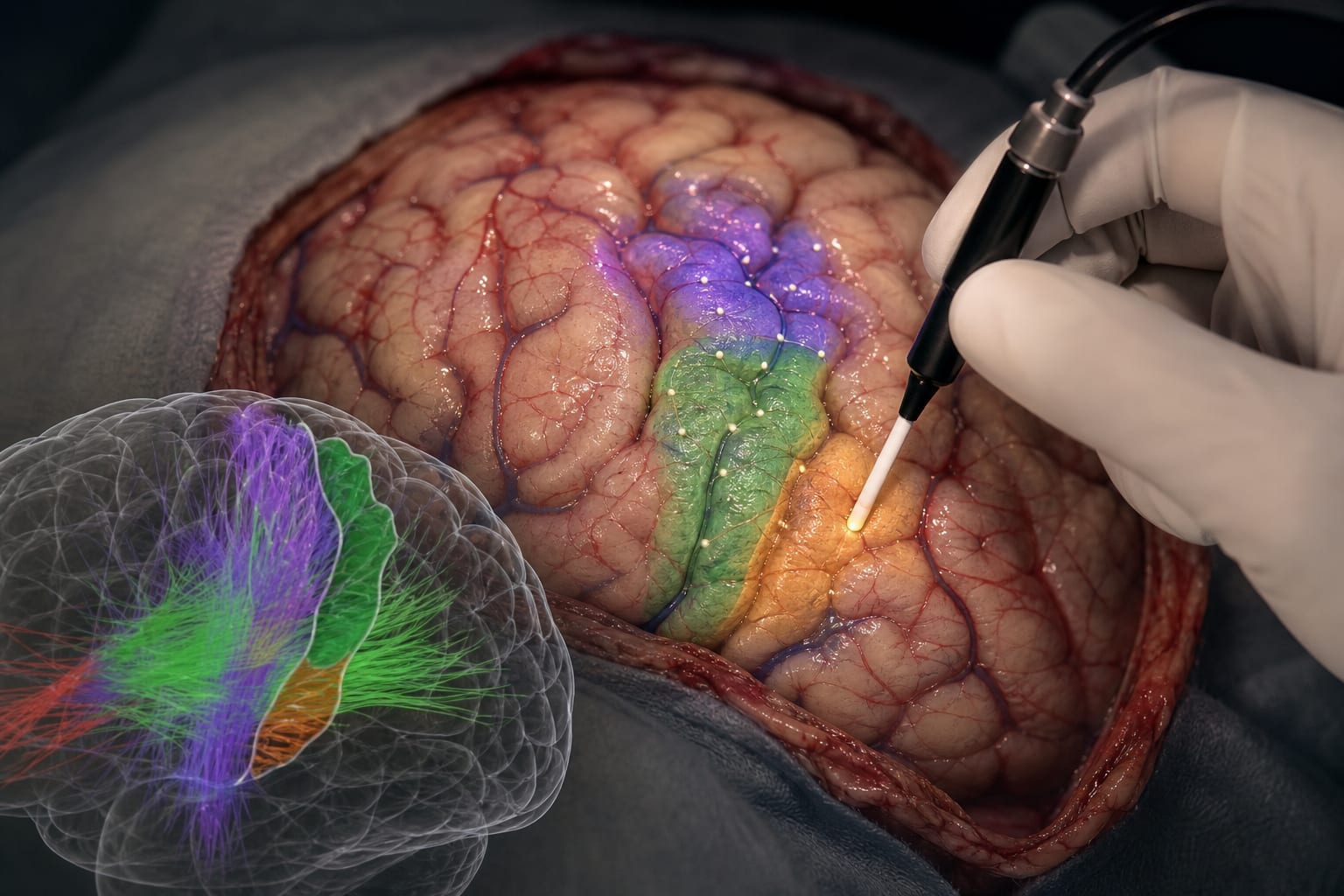
| Key Mechanisms | Intraoperative motor mapping techniques (awake and asleep) for functional preservation during surgical resection. |
| Target Population | Adult patients with histologically confirmed diffuse gliomas involving the peri-Rolandic area. |
| Care Setting | Neurosurgical operating room with intraoperative monitoring. |
Key Highlights
- Extent of resection (EOR) is associated with improved overall survival in diffuse glioma patients.
- Intraoperative motor mapping is the gold standard for functional preservation during glioma resection.
- Awake motor mapping allows real-time feedback from patients, enhancing precision in identifying eloquent cortex.
- Asleep motor mapping is performed under general anesthesia using neurophysiological monitoring.
- Permanent postoperative deficits are defined as new or worsening neurological deficits persisting for 3 months.
Guideline-Based Recommendations
Diagnosis
- Histological confirmation of diffuse glioma is required for surgical intervention.
Management
- Utilize intraoperative motor mapping techniques to guide safe and maximal resection.
Monitoring & Follow-up
- Assess functional status using the Karnofsky Performance Status (KPS) scale pre- and postoperatively.
Risks
- Postoperative neurological deficits can significantly impact quality of life.
Patient & Prescribing Data
Adult patients with peri-Rolandic diffuse gliomas undergoing resection.
Intraoperative mapping techniques are critical for balancing oncologic outcomes with functional preservation.
Clinical Best Practices
- Employ both awake and asleep motor mapping based on tumor location and patient suitability.
- Conduct thorough preoperative imaging to inform surgical planning.
Related Resources & Content