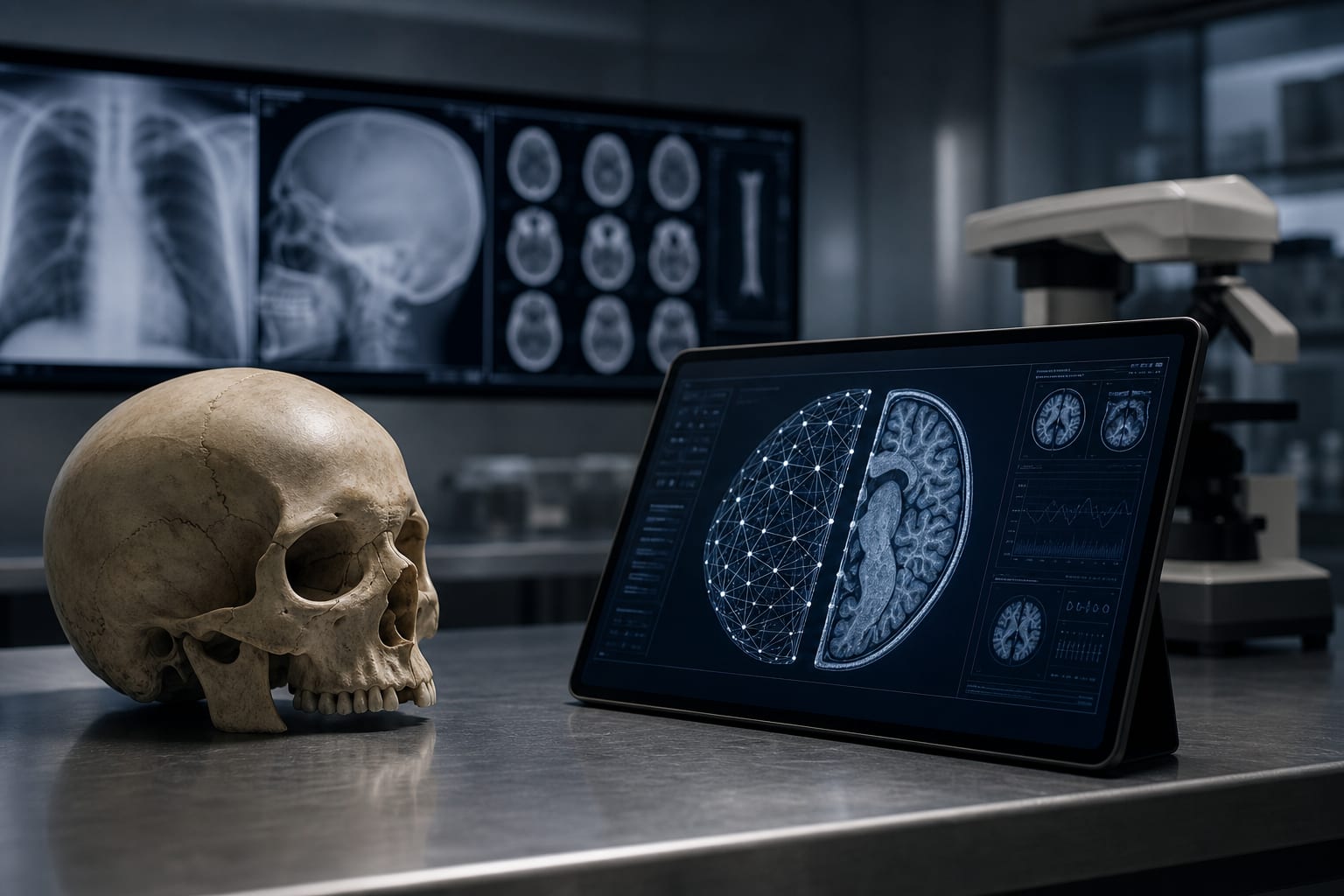
Editorial: Integrating AI in forensic medicine: advancements and ethical considerations
By
Gianpietro Volonnino
Michele Treglia
Raffaele La Russa
June 22, 2026
Clinical Scorecard: The Role of Artificial Intelligence in Forensic Medicine: Progress and Ethical Implications
At a Glance
Category Detail
Condition Forensic Medicine Key Mechanisms Application of artificial intelligence in analyzing gunshot wounds, determining cause of death, and assessing mental illness. Target Population Forensic experts and practitioners in forensic medicine. Care Setting Forensic medicine and legal investigations.
Key Highlights
AI aids in the analysis of gunshot wounds and post-mortem CT for cause of death. Deep learning models effectively identify diatoms for drowning diagnosis. AI can estimate dental age with high precision in forensic odontology. AI supports mental illness assessments in forensic psychiatry. AI is a decision-support tool, emphasizing the need for human oversight. Guideline-Based Recommendations
Diagnosis
Utilize AI for analyzing gunshot wounds and estimating shooting distance. Management
Incorporate AI tools in forensic practices while ensuring human oversight. Monitoring & Follow-up
Evaluate the effectiveness of AI applications in forensic analyses. Risks
Consider ethical and legal implications of AI in forensic decision-making. Patient & Prescribing Data
Not applicable; focuses on forensic applications.
AI enhances analytical capabilities but should not replace human expertise.
Clinical Best Practices
Integrate AI methodologies into daily forensic practice. Foster collaboration among forensic physicians, engineers, and legal experts. Ensure adequate training data for AI models to improve accuracy. Related Resources & Content