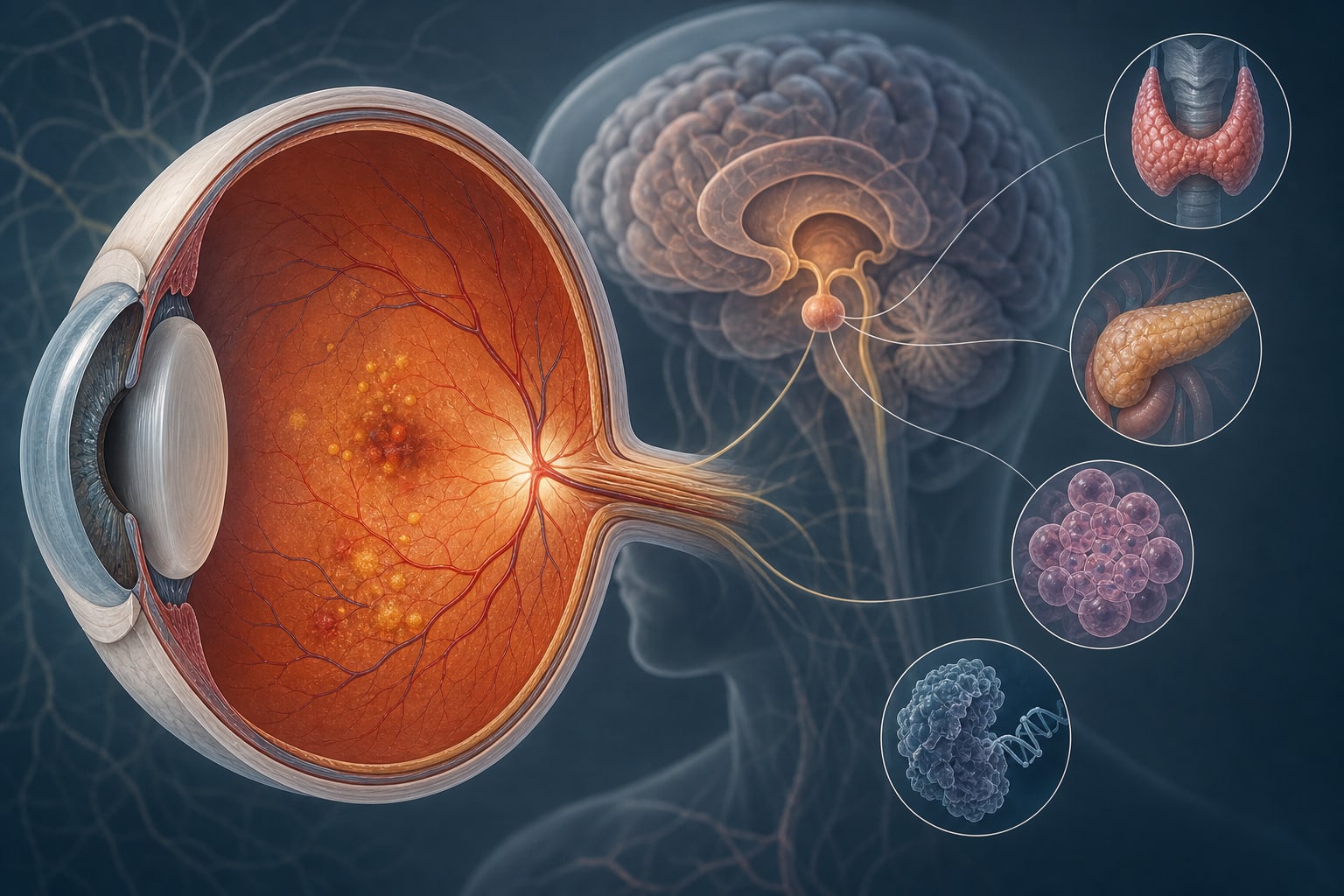
Editorial: The Interplay of Endocrine Dysfunction and Neuro-Ophthalmic Symptoms: Implications for Early Diagnosis and Treatment
By
Kumar, Dhiraj
Naqvi, Ahmad Abu Turab
Gupta, Rohan
Kumari, Smita
Waseem, Rashid
Hassan, Md. Imtaiyaz
May 31, 2026
Clinical Scorecard: The Interplay of Endocrine Dysfunction and Neuro-Ophthalmic Symptoms: Implications for Early Diagnosis and Treatment
At a Glance
Category Detail
Condition Endocrine dysfunction and neuro-ophthalmic symptoms Key Mechanisms Bidirectional relationship between endocrine and nervous systems; neuro-ophthalmic manifestations as indicators of systemic disturbances. Target Population Patients with systemic endocrinopathies such as diabetes mellitus and thyroid disorders. Care Setting Integrated patient care settings focusing on early diagnosis and treatment.
Key Highlights
Neuro-ophthalmic manifestations can serve as early indicators of underlying endocrinopathies. MicroRNAs play a critical role in retinal neurodegeneration and vascular permeability. Advanced imaging techniques improve diagnostic accuracy for thyroid-associated ophthalmopathy. Objective biomarkers can predict diabetic peripheral neuropathy before overt symptoms appear. Targeted biological therapies are emerging as alternatives to broad immunosuppression in endocrine disorders. Guideline-Based Recommendations
Diagnosis
Utilize advanced neuroimaging techniques for precise staging of thyroid-associated ophthalmopathy. Incorporate standardized Ocular Surface Disease Index evaluations in Graves' Orbitopathy. Management
Consider molecular targeting and precision medicine approaches in treating endocrine dysfunctions. Monitoring & Follow-up
Monitor biomarkers such as serum uric acid levels and extracellular to total body water ratio for predicting diabetic neuropathy. Risks
Elevated serum uric acid levels are an independent risk factor for diabetic peripheral neuropathy. Patient & Prescribing Data
Patients with diabetes mellitus and thyroid disorders experiencing neuro-ophthalmic symptoms.
MiRNA-based interventions may actively repair neural architecture and reverse endothelial damage.
Clinical Best Practices
Recognize neuro-ophthalmic symptoms as potential early signs of systemic endocrine dysfunction. Employ objective diagnostic metrics to enhance early detection and intervention. Related Resources & Content