Clinical Scorecard: Maternal Influenza During Pregnancy and Neuropsychiatric Outcomes in Children
At a Glance
Category
Detail
Condition
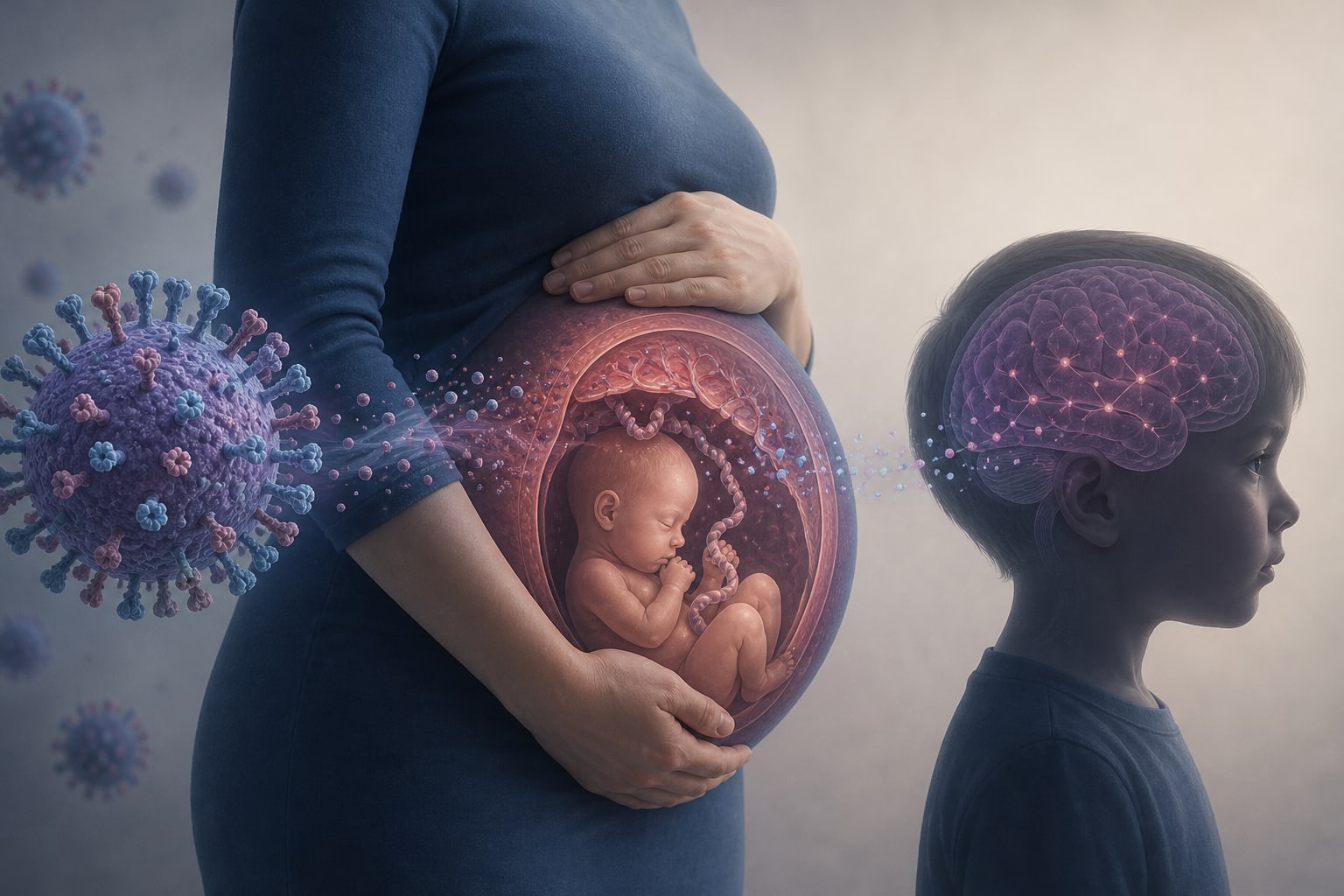
Association between influenza infection during pregnancy and neuropsychiatric disorders in offspring
Key Mechanisms
Maternal immune activation during gestation has been implicated in fetal brain-development changes; the article describes this as a biological rationale, not an established causal mechanism.
Target Population
Mother-child pairs with live births in South Korea and Japan from 2010 through 2017; the primary Korean analysis included offspring of mothers aged 20 years or older at delivery.
Care Setting
Population-based observational research using national health insurance and medical-claims databases in South Korea and Japan.
Key Highlights
The study assessed maternal influenza diagnosed during pregnancy and a range of postnatal neuropsychiatric outcomes in offspring.
The discovery cohort included 3,012,992 participants in South Korea; the Japanese replication cohort included 527,925 participants.
Influenza exposure was defined by the first recorded pregnancy diagnosis using ICD-10 codes J09 to J11.
Outcomes included severe neuropsychiatric disorders, obsessive-compulsive disorder, ADHD, autism spectrum disorder, and intellectual disability.
The article notes that prior studies reported variable results and that sibling-comparison and negative-control analyses have suggested possible familial confounding.
Guideline-Based Recommendations
Diagnosis
The study identified maternal influenza through a documented diagnosis during pregnancy using ICD-10 codes J09 to J11.
Management
Monitoring & Follow-up
The primary outcome was the offspring’s first postnatal diagnosis of a neuropsychiatric disorder, identified using relevant ICD-10 codes.
Risks
The article describes prior evidence associating gestational influenza with adverse offspring outcomes, including seizures and late pregnancy loss.
The article presents possible offspring neuropsychiatric risk as an association under investigation; it notes that prior findings varied and may be affected by residual familial confounding.
Patient & Prescribing Data
The Korean discovery cohort included women aged 13 to 58 years who delivered live births from 2010 through 2017 and their linked offspring; the primary analysis was limited to mothers aged 20 years or older. The Japanese replication cohort included mother-child pairs with live births from 2010 through 2017.
The provided article text reports an observational cohort study and does not provide treatment or prescribing recommendations.
Clinical Best Practices
Interpret the reported associations in light of the observational design and the article’s discussion of potential familial confounding.
Distinguish documented influenza diagnoses from absence of a recorded diagnosis, which defined the study control group.
Consider that influenza exposure ascertainment practices may differ between South Korea and Japan, as noted by the article.
by Jaehyun Kong, Seohyun Hong, Hyesu Jo, Jaeyu Park, Kyeongeun Kim, Dongjin Yeo, Hyunjee Kim, Tae Hyeon Kim, José Francisco López-Gil, Hanseul Cho, Hyeon Seok Hwang, Selin Woo, Dong Keon Yon