Locking plate fixation for proximal humerus fractures: are four proximal screws adequate? A clinical and radiological analysis of 105 consecutive cases - Scorecard - MDSpire
Clinical Scorecard: Evaluation of Four Proximal Screws in Locking Plate Fixation for Proximal Humerus Fractures: A Clinical and Radiological Study of 105 Cases
At a Glance
Category
Detail
Condition
Proximal Humerus Fractures
Key Mechanisms
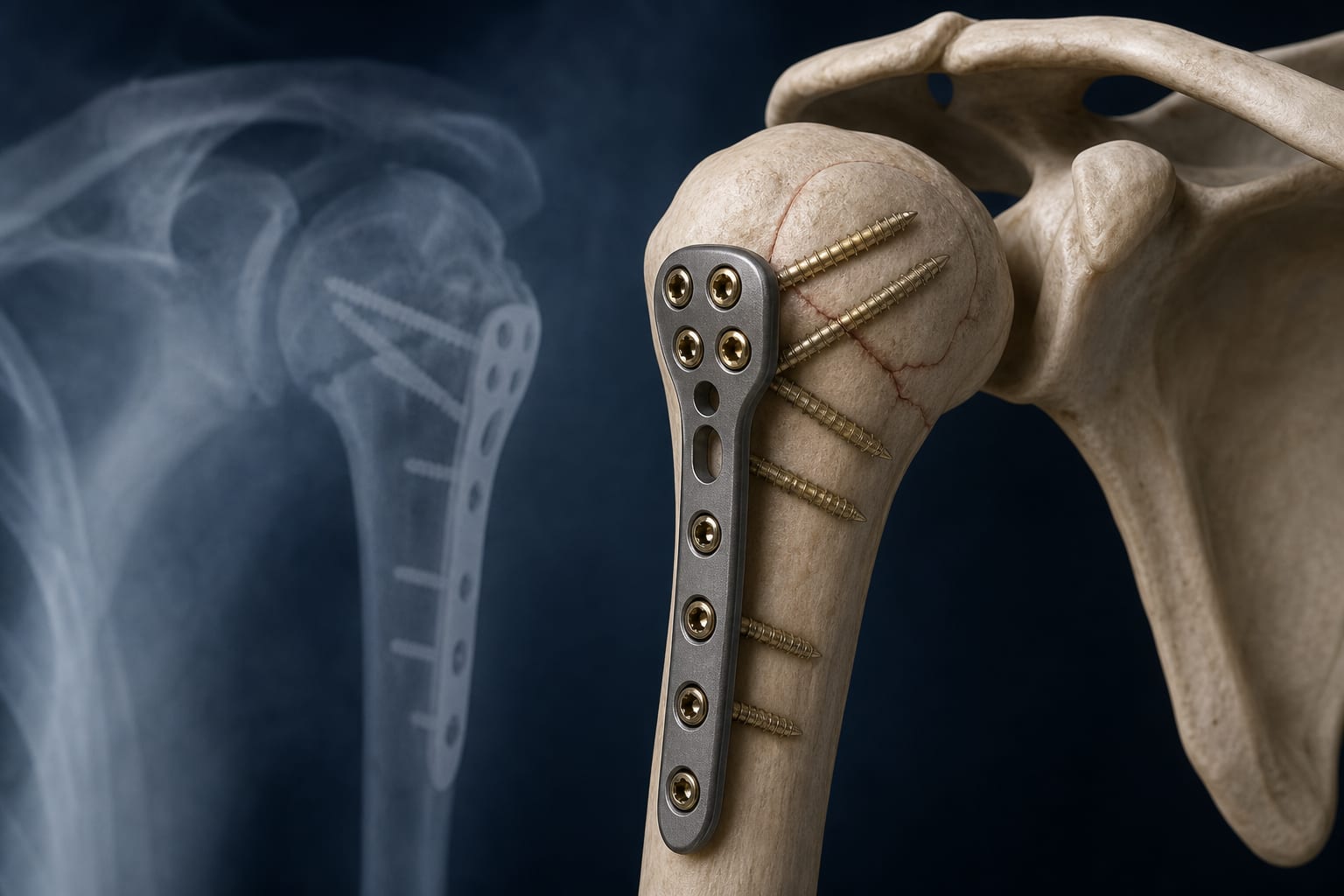
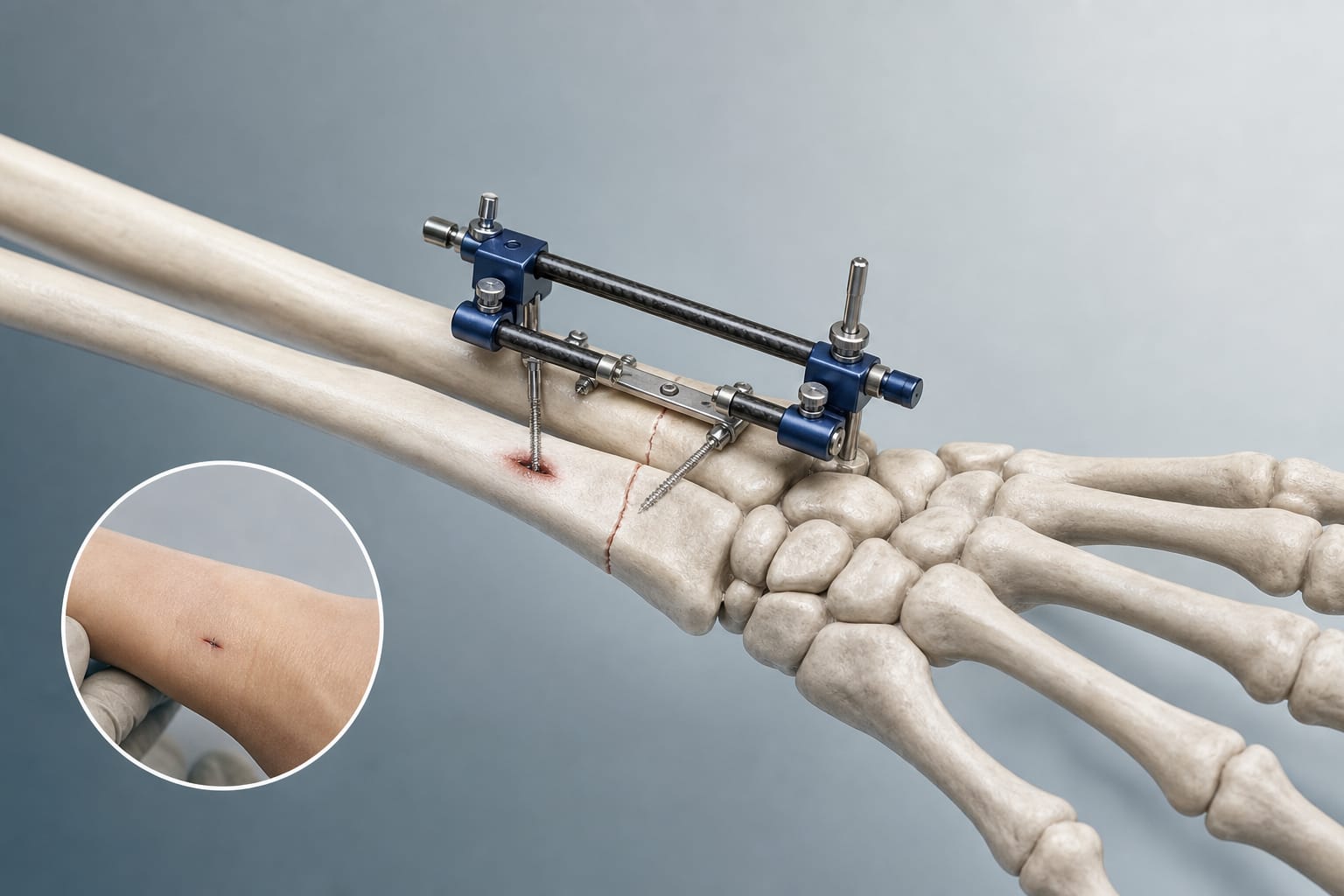
Minimally invasive plate osteosynthesis (MIPO) with screw fixation
Target Population
Elderly patients with traumatic proximal humerus fractures
Care Setting
Level 1 trauma center
Key Highlights
Proximal humerus fractures are common, especially in the elderly.
Operative management has substantial complication rates, including implant loosening and screw cut-out.
Achieving anatomic reduction is crucial for favorable functional outcomes.
The study compares outcomes of four-screw fixation versus multi-screw fixation.
Postoperative care includes physiotherapy and weight-bearing progression based on radiographic evidence.
Guideline-Based Recommendations
Diagnosis
Fractures categorized as AO/OTA type 11-A: C.
Management
Operative treatment indicated for significant displacement patterns.
Monitoring & Follow-up
Routine outpatient follow-up to assess functional outcomes and complications.
Risks
Complications include implant loosening, reduction loss, and screw cut-out.
Patient & Prescribing Data
Patients aged 18 and older with traumatic proximal humerus fractures.
Minimally invasive fixation with up to four proximal screws is utilized.
Clinical Best Practices
Ensure anatomic reduction and medial cortical support during fixation.
Use appropriate screw positioning to enhance stability.
Follow a standardized postoperative care protocol to promote recovery.