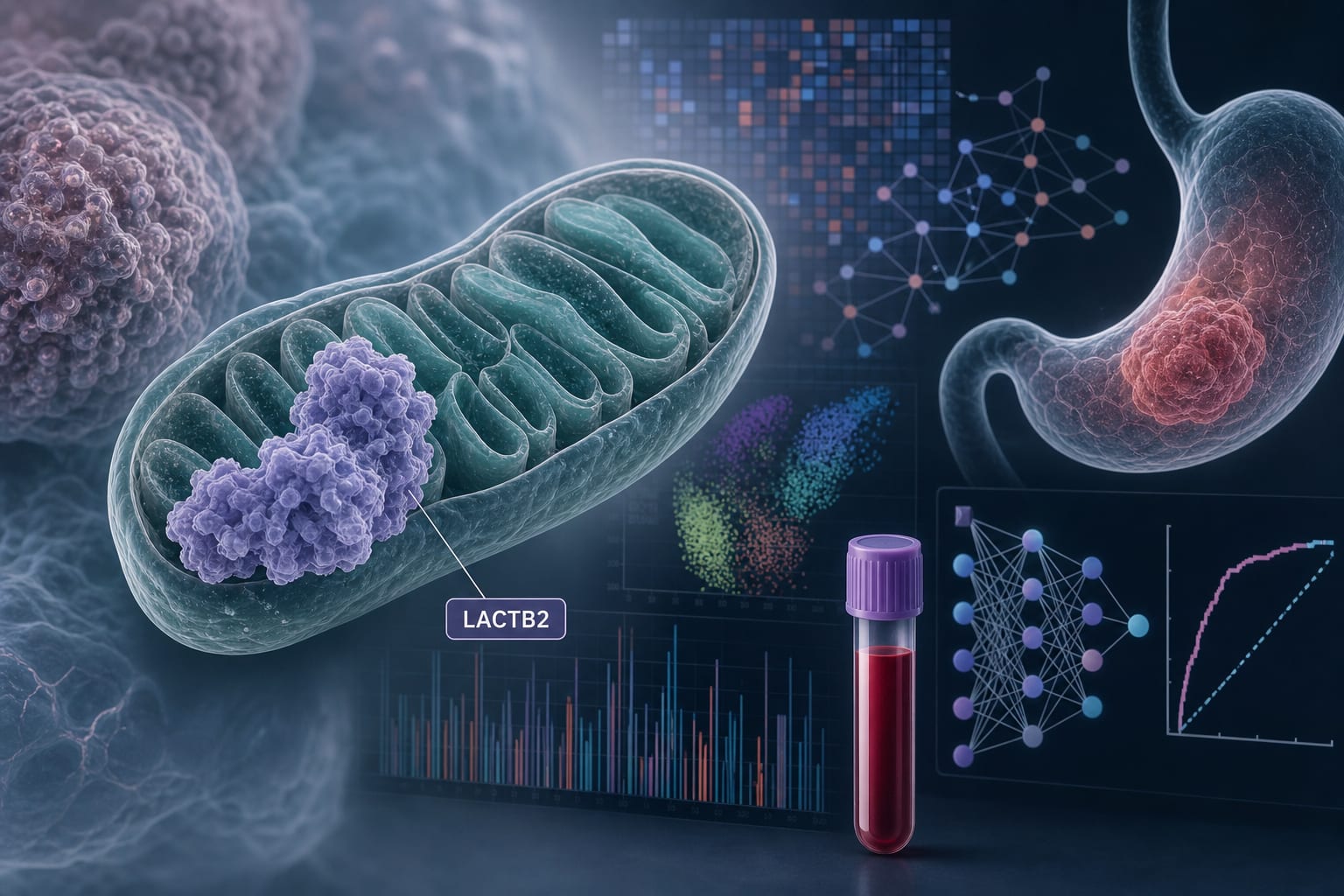
From proteome-wide Mendelian randomization and multi-omics integration to functional validation: TGFB3 as a prioritized candidate in gastric adenocarcinoma
By
Luming Zhao
Chenxi Mao
Yimeng Xu
Kangjie Zhou
Mingtong Liang
Yiqian Han
Jingzhou Zhang
Yidong Hong
Nan Hu
Fenglei Wu
July 6, 2026
Clinical Scorecard: Integrating Multi-Omics and Mendelian Randomization to Identify TGFB3 as a Key Candidate in Gastric Adenocarcinoma
At a Glance
Category Detail
Condition Gastric Adenocarcinoma Key Mechanisms Alterations in epithelial growth, stromal remodeling, angiogenesis, immune regulation, and extracellular matrix organization. Target Population Patients with gastric adenocarcinoma. Care Setting Clinical oncology and molecular profiling.
Key Highlights
Identified 29 circulating proteins with potential causal effects on gastric cancer. TGFB3 was prioritized as a key target based on genetic and spatial analysis. An eight-gene ANN classifier improved diagnostic performance for gastric cancer. Proflavine hemisulfate attenuated TGFB3-driven proliferation and signaling in AGS cells. Guideline-Based Recommendations
Diagnosis
Utilize molecular profiling to classify gastric adenocarcinoma into distinct subtypes. Management
Curative-intent treatment for localized disease includes gastrectomy and perioperative chemotherapy. Monitoring & Follow-up
Monitor circulating biomarkers to assess disease risk and treatment response. Risks
Delayed diagnosis and biological heterogeneity contribute to high mortality. Patient & Prescribing Data
Patients with localized or advanced gastric adenocarcinoma.
Molecularly stratified treatments include HER2-directed therapy and immune checkpoint blockade.
Clinical Best Practices
Integrate proteome-wide MR analyses to identify potential biomarkers. Focus on genetically supported protein candidates for therapeutic strategies. Related Resources & Content